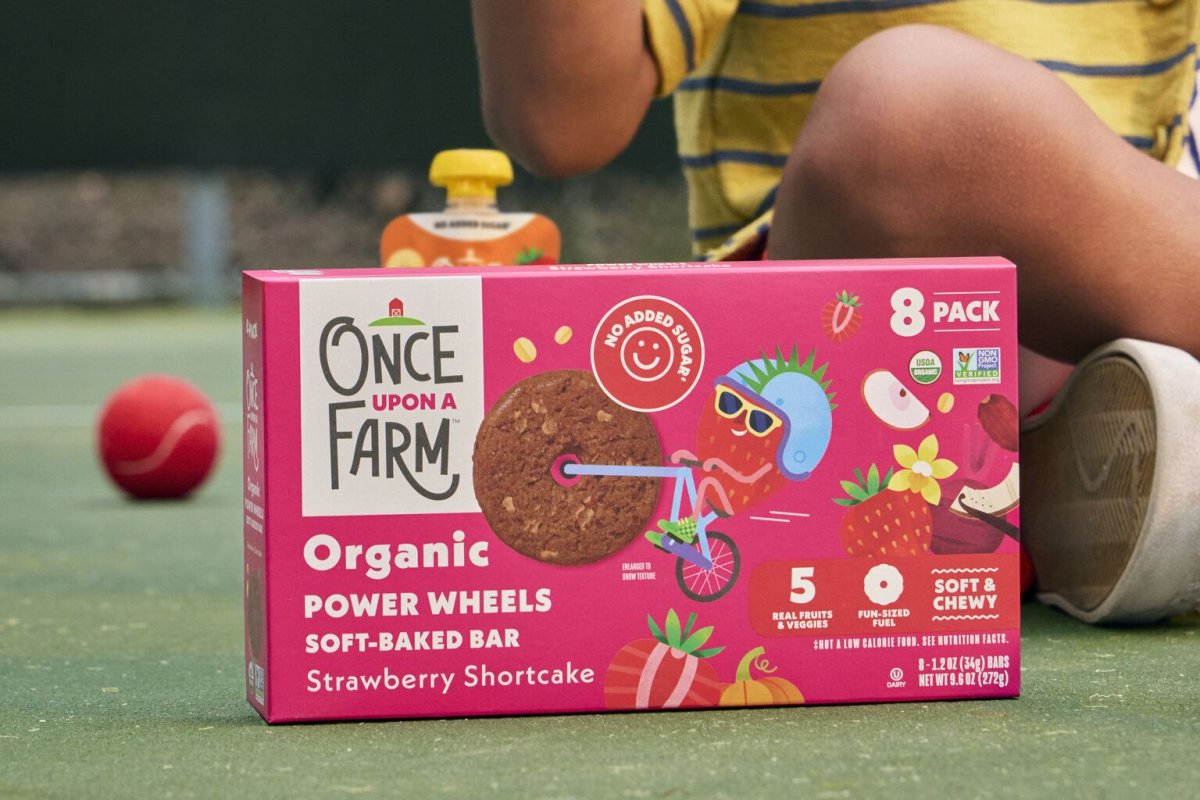
Once Upon a Farm, PBC (NYSE: OFRM) saw its shares close at $16.56 on Friday, September 18, 2026, marking an 8.0% decline from its initial public offering price of $18.00. The stock's performance has been closely watched by investors, especially given the involvement of celebrity co-founder Jennifer Garner, whose reported beneficial ownership in the company is now valued at approximately $50.6 million based on the latest SEC filings.
Garner's reported holdings, as detailed in a Schedule 13G filed on May 15, 2026, include 1,788,861 direct shares (valued at $29.62 million), 146,683 shares held in the Garner Trust (worth $2.43 million), and 1,121,736 exercisable options (with a gross value of $18.58 million). The total of 3,057,280 securities represents a 7.1% ownership stake as of March 31, 2026. It is important to note that the gross value does not account for exercise costs or taxes, which could significantly reduce the realizable value.
The company's second-quarter results, released on August 6, 2026, showed robust top-line growth but raised concerns about profitability. Net sales surged 42.3% year-over-year to $85.39 million, driven by more than 40% volume growth. However, gross margin contracted by 4.8 percentage points to 35.9%, down from 40.7% in the same period last year. The decline was attributed to increased promotional spending and an unfavorable product mix, which pushed cost of goods sold to 64% of sales from 59%.
CEO John Foraker expressed optimism in the earnings release, stating, "We delivered another quarter of high-quality, volume-led growth, with net sales increasing 42% year over year." The company raised its full-year 2026 sales guidance to $327 million–$335 million, signaling confidence in continued momentum. Despite the sales surge, the company reported a net loss of $4.95 million, though this was an improvement from the $9.04 million loss in the prior-year quarter. Adjusted EBITDA turned negative at -$1.7 million, compared to a positive $2.0 million a year ago.
Cash reserves provide a buffer for the company, with $93.5 million on hand as of June 30, 2026. However, operating activities consumed $17.9 million during the first half of the year, raising questions about the sustainability of current spending levels. The company used $52.2 million in IPO proceeds to repay debt, make a spokesperson payment, and fund employee awards, according to its June filing.
Wall Street analysts remain divided on the stock's prospects. MarketBeat's latest data shows five buy ratings, five hold ratings, and one sell rating, with an average price target of $25.88. Targets range widely from $17 to $43, reflecting significant uncertainty about the company's future performance. JPMorgan has an Overweight rating with a $26 target, while Barclays maintains Equal Weight with a $19 target. Notably, Goldman Sachs issued a Buy rating with a $43 target in March, while Deutsche Bank and TD Cowen hold more cautious views.
The stock gained 2.35% last week but remains below its IPO price. Friday's trading volume was approximately 38% above the trailing average, indicating heightened investor interest, though no fresh company news was released. The 52-week range sits between $14.00 and $27.00, with the current price representing an 18.3% gain from the low.
Investors are now looking ahead to the company's third-quarter earnings report, which had not been scheduled as of September 20. The key question is whether back-to-school sales can sustain volume growth without further margin erosion. Promotional spending remains a double-edged sword, potentially boosting sales but compressing profitability.
For Garner, the paper value of her stake underscores her significant financial involvement in the organic baby food company, which she co-founded. However, the gap between gross value and realizable value, due to option exercise costs and taxes, highlights the complexities of celebrity equity holdings.
As Once Upon a Farm navigates the post-IPO landscape, the market will be closely monitoring its ability to balance growth with profitability. The company's premium positioning in the organic food market offers opportunities, but competitive pressures and rising costs pose challenges. With the stock trading below its IPO price, investors are betting on the company's long-term potential to deliver value.
