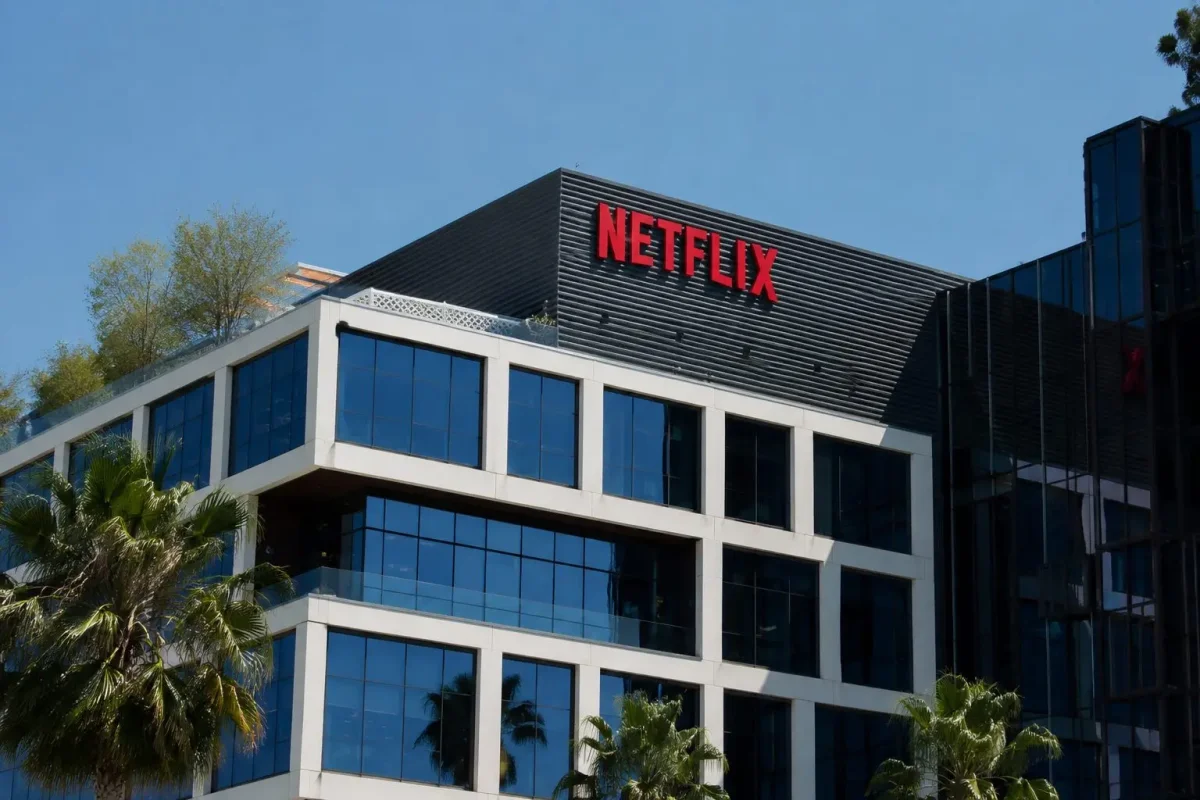
Netflix (NFLX) shares declined nearly 3% in late Nasdaq trading Tuesday, closing at $83.36, as the broader market remained largely flat. The streaming giant's stock underperformed ahead of its annual shareholder meeting scheduled for June 4, with investors questioning the company's ability to sustain revenue growth amid rising content costs and subscriber price sensitivity.
The stock hit a session low of $83.35, reflecting ongoing pressure as Wall Street debates Netflix's 2026 outlook. The virtual meeting, set for 3:00 p.m. Pacific on Thursday, is expected to provide further detail on the company's strategic direction, but analysts caution that the event may not significantly alter the stock's near-term trajectory.
Market Context
U.S. equities showed little direction on Tuesday, with the Dow Jones Industrial Average rising 0.29%, the S&P 500 edging up 0.06%, and the Nasdaq Composite slipping 0.05%. Investor sentiment was tempered by concerns over interest rates and geopolitical tensions in the Middle East, which offset optimism around AI-related spending.
Netflix's decline outpaced that of key competitors. Disney fell 1.6% as it continues to pursue streaming profitability, while Warner Bros. Discovery remained nearly unchanged. Meta Platforms, a dominant player in digital advertising, ended the session flat, suggesting that Netflix's drop was driven by company-specific factors rather than broader sector weakness.
Outlook and Guidance
During its April earnings call, Netflix reaffirmed its 2026 revenue guidance of $50.7 billion to $51.7 billion and maintained its operating margin target of 31.5%. The company also reiterated its advertising revenue goal of $3 billion for 2026, roughly double the prior year's figure. Second-quarter revenue growth is forecast at 13%.
Co-CEO Greg Peters emphasized that Netflix is sticking to its earlier forecasts, which project 12% to 14% revenue growth and a near-doubling of its advertising business. Peters noted that Netflix ended 2025 with over 325 million paid members, but its share of global TV viewing remains only about 5%, signaling room for expansion.
However, management warned that content amortization costs will be higher in the first half of the year, adding near-term pressure on margins. The company's decision to maintain its outlook despite these headwinds has left some investors unconvinced.
Analyst Perspectives
Analysts remain divided on Netflix's prospects. Matthew Dolgin of Morningstar, who holds an $80 fair value estimate on the stock, said after the earnings report that "the market likely hoped for increased full-year guidance." He argued that Netflix is approaching an appealing entry point but still faces considerable uncertainty.
On the more optimistic side, David Joyce of Seaport Research Partners raised his price target to $119 from $115, noting that his earlier target had factored in uncertainty surrounding the failed Warner Bros. Discovery deal. Joyce wrote that a clearer strategic direction could improve investor sentiment.
Strategic Moves
The fallout from the Warner Bros. Discovery saga continues to influence investor perception. Co-CEO Ted Sarandos described the potential deal as "nice to have, not a need to have," and emphasized that Netflix exercised investment discipline by walking away when the price became too high. He added that mergers and acquisitions remain a tool in the company's toolkit, but Netflix will approach any future deals with a "very disciplined" mindset. The company received a $2.8 billion termination fee following the collapse of the Warner Bros. deal.
Additionally, Netflix co-founder Reed Hastings announced he will not seek re-election to the board at the annual meeting, marking the end of an era. His departure raises questions about the company's governance and long-term vision.
Risks and Uncertainties
Despite the company's confident guidance, downside risks persist. Subscribers may resist consecutive price increases, and the ad-supported tier could push users toward lower-cost plans without generating proportional advertising revenue growth. "The ad business is growing but not at the rate marketers expected," said eMarketer analyst Ross Benes. He added that advertising will become increasingly important as Netflix transitions beyond the Hastings era.
With the stock still struggling against tough year-over-year comparisons, Thursday's meeting is unlikely to provide a definitive catalyst. Nevertheless, investors will tune in for any signals that could reinforce or undermine the credibility of Netflix's 2026 targets.