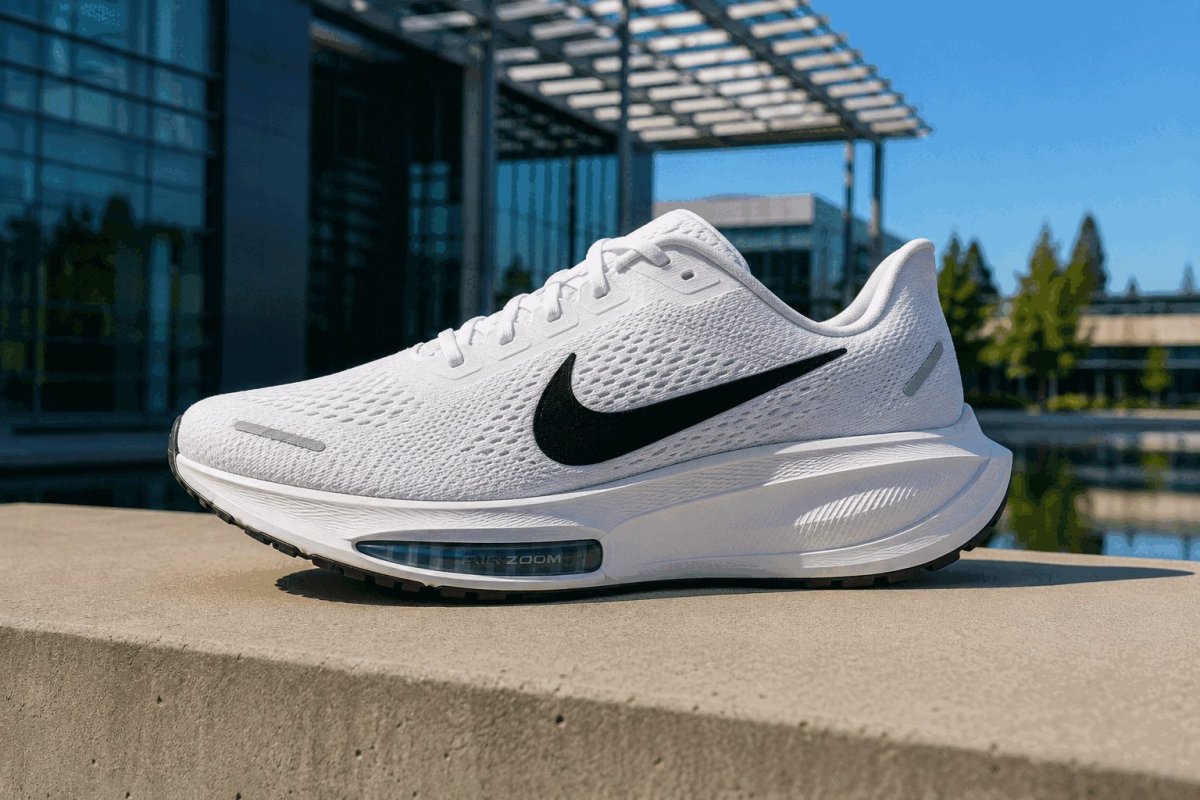
Sportswear giant Nike (NYSE: NKE) introduced its latest performance running shoe, the Pegasus Plus 2, on Thursday, aiming to reinvigorate demand in a challenging retail environment. The launch comes as the company reported a 6.8% decline in North American sales, underscoring the hurdles facing its turnaround strategy.
The Pegasus Plus 2, positioned as a tempo trainer for speed-focused runners, delivers at least 18% greater energy return than its predecessor, according to Nike. The shoe features a curved Air Zoom unit and ZoomX foam, technologies typically reserved for race-day models. Nike says it tested the shoe with over 30 elite athletes before bringing it to market.
“Our goal was simple: speed without sacrifice,” said Deepa Ramprasad, senior footwear director for Nike Running, in a statement. She emphasized that the product offers a race-day feel in an everyday trainer, a key selling point as Nike seeks to drive full-price sell-through.
The timing of the release is critical. JD Sports Fashion (LON: JD), a major retail partner and significant buyer of Nike products, lowered its annual profit outlook on Thursday after reporting a 6.8% drop in comparable sales in North America. The retailer’s warning highlights the broader weakness in discretionary spending, particularly in Nike’s home market.
Nike’s recent quarterly results painted a mixed picture. For fiscal Q4 2026, total revenue came in at $11.0 billion, down 1% year-over-year. Wholesale revenue rose 4% to $6.6 billion, but Nike Direct sales fell 7% to $4.1 billion, indicating persistent softness in its own stores and digital channels. Gross margin expanded to 49.2%, an 890-basis-point improvement, largely attributed to anticipated tariff recapture.
For the full fiscal year, Nike’s revenue held steady at $46.4 billion, with Nike Direct declining 6% and wholesale rising 6%. This shift has made inventory quality a more important metric than mere shipment volumes, as retailers like JD Sports grapple with excess stock and promotional pressure.
Investors are watching the Pegasus Plus 2 launch as a test of Nike’s ability to convert technological innovation into profitable demand. The company’s stock closed at $41.05 on August 19, up 2.47% on the day, but remains 48.8% below its 52-week high of $80.17. The depressed valuation reflects an extended recovery timeline, beyond a single product cycle.
Analyst sentiment is cautious. The S&P Global consensus of 39 analysts rates Nike as a Buy, with an average price target of $50.87, implying roughly 24% upside from Wednesday’s close. However, JPMorgan’s Matthew Boss set an Underweight rating with a $40 price target, expecting turnaround expenses to weigh on profits through fiscal 2028. In July, 25 of 39 analysts assigned a Hold rating, with just 12 positive recommendations.
Key risks to the launch include potential discounting, restrained U.S. consumer spending, and a sluggish recovery in China. Success will hinge on full-price sell-through, wholesale reorder activity, and direct-to-consumer trends. For Nike, an 18% improvement in energy return is significant only if it translates into profitable sales growth.