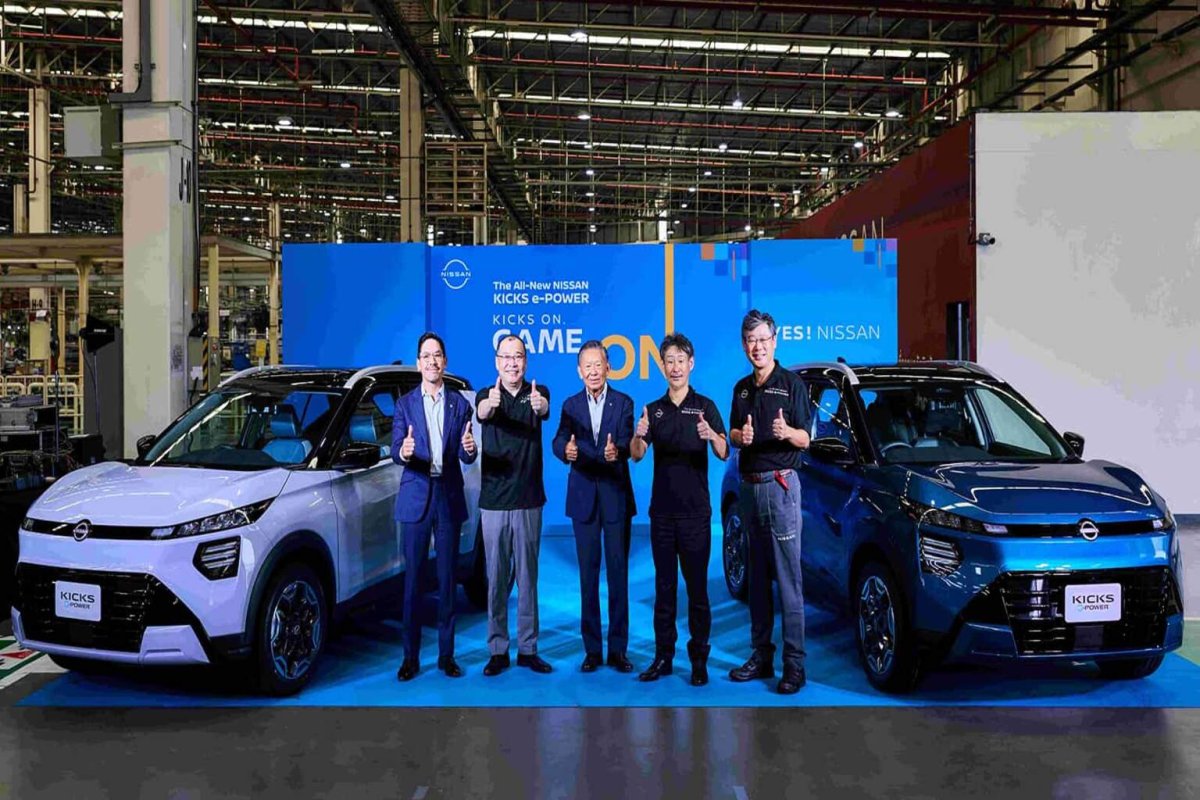
Nissan has announced an investment of up to £170 million to introduce the Kicks e-POWER hybrid SUV to its Sunderland manufacturing facility in the UK. This move adds a fourth model to the plant's lineup, which currently produces the Qashqai, Juke, and Leaf. The announcement comes as Nissan continues to restructure its global operations, including capacity reductions elsewhere.
While the financial commitment is concrete, the company has not disclosed a production start date or expected annual volume. These missing details are critical for investors to assess whether the project will meaningfully improve factory utilization or simply shift the mix of vehicles produced in Europe. Without these figures, the investment's impact on Nissan's earnings and cash flow remains uncertain.
Market Reaction Muted
Nissan's shares closed Wednesday in Tokyo at ¥313.80, up 0.4%, according to delayed market data as of 3:30 p.m. JST. The modest reaction reflects the scale of the announcement: it removes some uncertainty about Sunderland's future but does not yet alter the company's financial outlook.
Reuters reported that the investment will prepare Sunderland to build the Kicks e-POWER for European customers. Nissan has not specified when assembly will begin or how many units it expects to produce annually.
Hybrid Strategy in a Slowing EV Market
The Kicks e-POWER uses Nissan's series-hybrid system, where a petrol engine generates electricity and an electric motor drives the wheels. This approach allows Nissan to offer an electrified SUV without relying on public charging infrastructure, a potentially attractive proposition in markets where battery-electric vehicle adoption has decelerated. Nissan began producing the current Kicks e-POWER in Thailand in April, as detailed in an official release.
Financial Context: Cash Flow and Dividend Prospects
The investment decision must be viewed against Nissan's recent financial performance. In the fiscal first quarter ending June 30, Nissan reported revenue of ¥2.964 trillion and operating profit of ¥77.9 billion, reversing a ¥79.1 billion operating loss from the same period last year. However, the automotive division still posted an operating loss of ¥8.3 billion and negative free cash flow of ¥323.9 billion, according to the company's Q1 presentation.
Automotive net cash stood at ¥969.2 billion as of June 30, below the ¥1 trillion threshold that management has identified as a condition for considering dividend resumption. Nissan has also stated that positive operating income, net income, and free cash flow would be required before any payout. In a May analyst session, management indicated that approximately ¥70 billion of potential restructuring project costs included integration work on Sunderland's production lines, meaning the new Kicks spending is part of a broader effort to enhance plant flexibility.
Strategic Implications
The central question for investors is whether adding a fourth model to Sunderland will spread fixed costs across more vehicles and reduce the risk of the plant becoming stranded as Nissan restructures. However, without a launch date, capacity figures, or sales targets, it is impossible to estimate the contribution margin. There is also the possibility that Kicks sales could cannibalize demand from existing models like the Qashqai or Juke rather than generating entirely new volume.
On the positive side, the investment buys strategic flexibility at a relatively contained cost. Producing a hybrid locally broadens the plant's portfolio beyond battery-electric vehicles, supports a current European demand segment, and signals that Sunderland remains integral to Nissan's Re:Nissan turnaround plan. Evidence of success will come in the form of a dated production schedule, disclosed output targets, and an improvement in automotive free cash flow. Until then, the £170 million is best viewed as a credible factory commitment rather than a near-term earnings catalyst.
