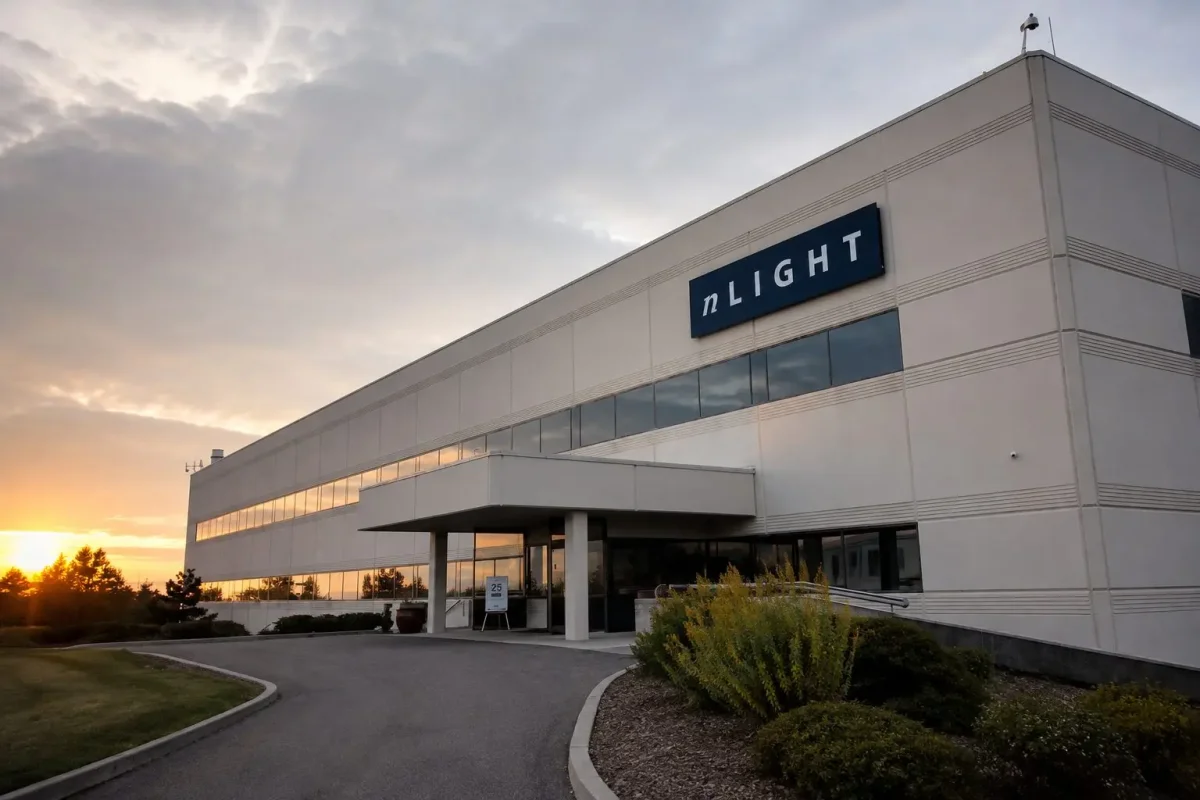
Shares of nLIGHT Inc. (NASDAQ: LASR) experienced a sharp decline on Friday, dropping 23.8% to $57.51 in afternoon trading. The sell-off came after the company disclosed that a shortage of optical components would delay approximately $17 million in product revenue to upcoming quarters. The market's reaction was severe, with the equity value falling by an estimated $1.1 billion—roughly 63 times the amount of deferred revenue.
The magnitude of the stock's decline underscores investor concerns that extend beyond a simple timing issue. While the delayed shipments represent only a fraction of quarterly revenue, the optics shortage raises questions about supply chain resilience and execution risk. Management indicated that the situation could resolve quickly, but also acknowledged it might take "months to quarters" to fully rectify, according to CFO Joe Corso.
Despite the setback, nLIGHT's second-quarter performance was robust. Revenue reached an all-time high of $82.6 million, up 33.8% year-over-year, driven by strong demand in aerospace and defense, which accounted for 69.4% of total revenue. Product revenue climbed 45.4% to $59.4 million, and adjusted EBITDA nearly doubled to $10.7 million.
However, the company's third-quarter guidance painted a less optimistic picture. Management guided revenue to a midpoint of $68 million, representing a 17.7% sequential decline. Even when adding back the deferred $17 million, the adjusted midpoint of $85 million would only represent a 2.9% increase over the second quarter. Gross margins are expected to contract by 4.1 percentage points to 27%, and adjusted EBITDA is projected to fall to $4 million.
CEO Scott Keeney noted that the company "would've guided higher" if not for the supply constraint, attributing the bottleneck to increased Chinese oversight of dual-use products affecting commodity optics. The impact is primarily on commercial products, with defense operations seemingly unaffected, according to analysts.
Despite the steep sell-off, several sell-side firms maintained their bullish stance. Needham, William Blair, and Stifel all reiterated Buy ratings on Friday, with price targets ranging from $85 to $90. The average analyst target price stands at $91.80, implying significant upside from current levels. Notably, no analysts currently rate the stock as Hold or Sell, according to Google Finance.
The long-term growth narrative remains tied to the Joint Laser Weapon System program. In July, nLIGHT received an initial contract valued at $44 million, with a maximum potential value of $627 million. Executives anticipate initial revenue from this program in the current quarter, with a more substantial contribution expected in 2027.
Financially, nLIGHT appears well-positioned to weather the disruption. The company ended June with $330.8 million in cash and investments, paid down a $20 million credit line draw, and generated $20.7 million in operating cash flow during the quarter. This liquidity provides time to qualify new suppliers and address the optics shortage.
Investors will be closely monitoring the company's ability to convert deferred shipments into recognized revenue in the coming quarters. The key risk remains the duration of the supply disruption and its impact on fixed-cost absorption. If the shortage persists, fourth-quarter revenue could be affected, and margins could face further pressure.