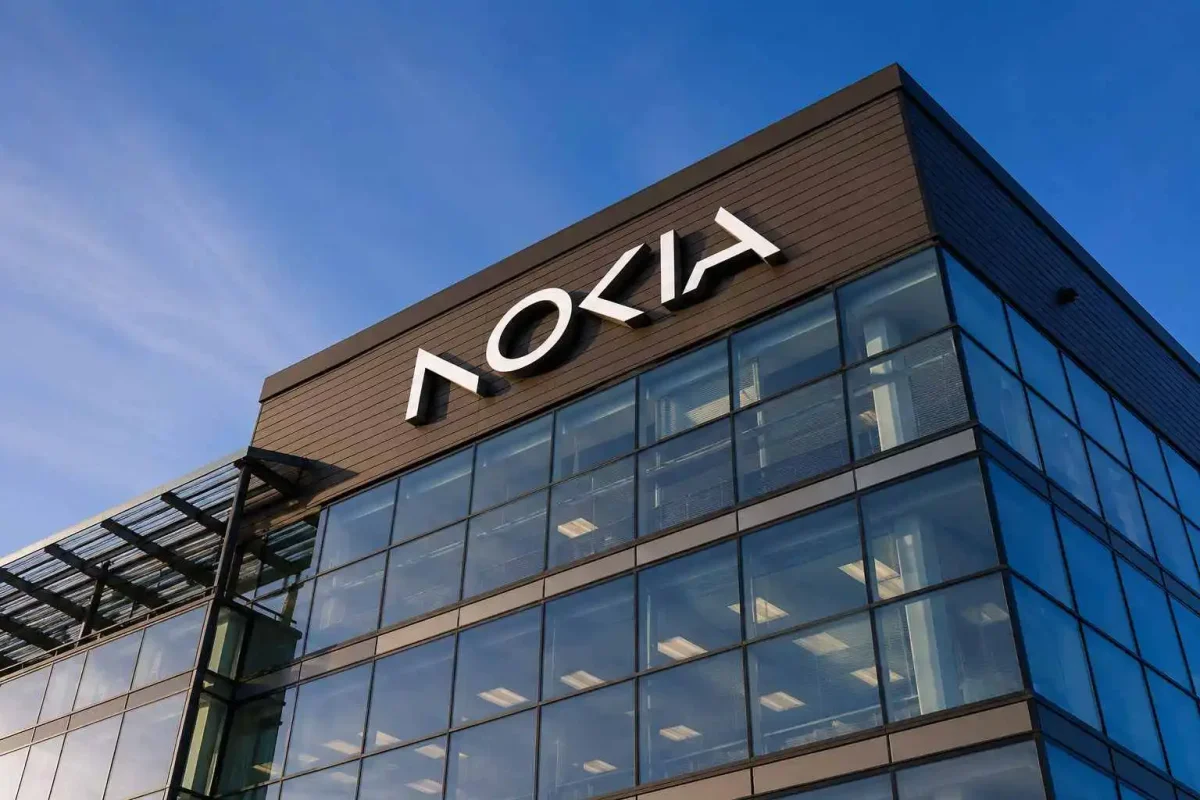
Nokia Oyj (HEL:NOKIA) experienced a notable decline in Helsinki trading on Tuesday, with shares falling 4.1% to €10.58. The stock remains approximately 29% below its 52-week high of €15.00, as market participants largely shrugged off a new memorandum of understanding (MoU) with FiberCop and turned their attention to pricing dynamics in the AI-optics sector.
The MoU, announced on July 6, outlines a collaboration to test fiber-sensing technology that could enable fiber access networks to function as distributed sensors for detecting weather events, faults, and anomalies. While the agreement represents a modest step forward in Nokia's push into AI-enhanced optical networks, investors appeared unimpressed, with trading volume reaching only about 4.91 million shares, roughly 25% of the typical 19.55 million average.
Nokia's U.S.-listed American Depositary Receipts (ADRs) also retreated, giving back some of Monday's 3.65% gain that had outpaced the Nasdaq Composite's 1.12% rise. The ADRs traded at $12.24 early Tuesday, down 2.16% from Monday's close of $12.51.
FiberCop MoU Details
The partnership with FiberCop, which boasts 28 million kilometers of fiber infrastructure and ultrabroadband coverage on over 96% of active lines, aims to explore new application possibilities for fiber networks. Stefano Paggi, chief technology and operations officer at FiberCop, emphasized the goal of identifying "new application possibilities," while Nokia's John Harrington noted that "networks no longer simply carry data; they also help operators understand what is happening in real time." Tests will be conducted in FiberCop labs and on isolated fiber, though financial terms of the agreement were not disclosed.
Valuation and Market Context
Nokia currently trades at a price-to-earnings (P/E) ratio of 75.10, reflecting high valuation expectations that put pressure on the company to deliver strong earnings growth. This multiple is significantly above that of rival Ericsson (NASDAQ:ERIC), which trades at a P/E of 13.91 after adding 1.19% in recent trading. However, Nokia's valuation remains below that of pure-play optical networking firm Ciena Corp (NYSE:CIEN), which has a P/E of 140.76 but dropped 2.52% on Tuesday. Cisco Systems (NASDAQ:CSCO), a broader networking player, trades at a more modest P/E of 37.72, slipping 0.44%.
Upcoming Earnings and AI Growth
Investors are now focusing on Nokia's second-quarter and half-year results, scheduled for release on July 23. Following first-quarter earnings, the company guided for Q2 net sales to increase 5% to 9% sequentially, with comparable operating profit expected to be around 12% to 16% of its 2024 target. In the first quarter, Nokia posted a comparable operating profit of €281 million, up 54% year-over-year, on comparable net sales of €4.5 billion. The company maintained its full-year comparable operating profit forecast of €2.0 billion to €2.5 billion and raised its 2026 Network Infrastructure net sales growth assumption to 12% to 14%.
Nokia's AI and cloud sales surged 49% in the first quarter, with the company securing €1 billion in new orders. CEO Justin Hotard indicated that the company was performing "somewhat above" the midpoint of its full-year profit outlook, according to a Reuters report from April.
Market Implications
The modest market capitalization of approximately €60.75 billion places Nokia above typical legacy telecom names, but the stock's recent pullback from its 16-year high earlier this year suggests that investors are taking a cautious stance ahead of earnings. The low trading volume on Tuesday further indicates a wait-and-see approach, as market participants evaluate whether Nokia's AI-optics push can sustain its growth trajectory amid competitive pricing pressures.