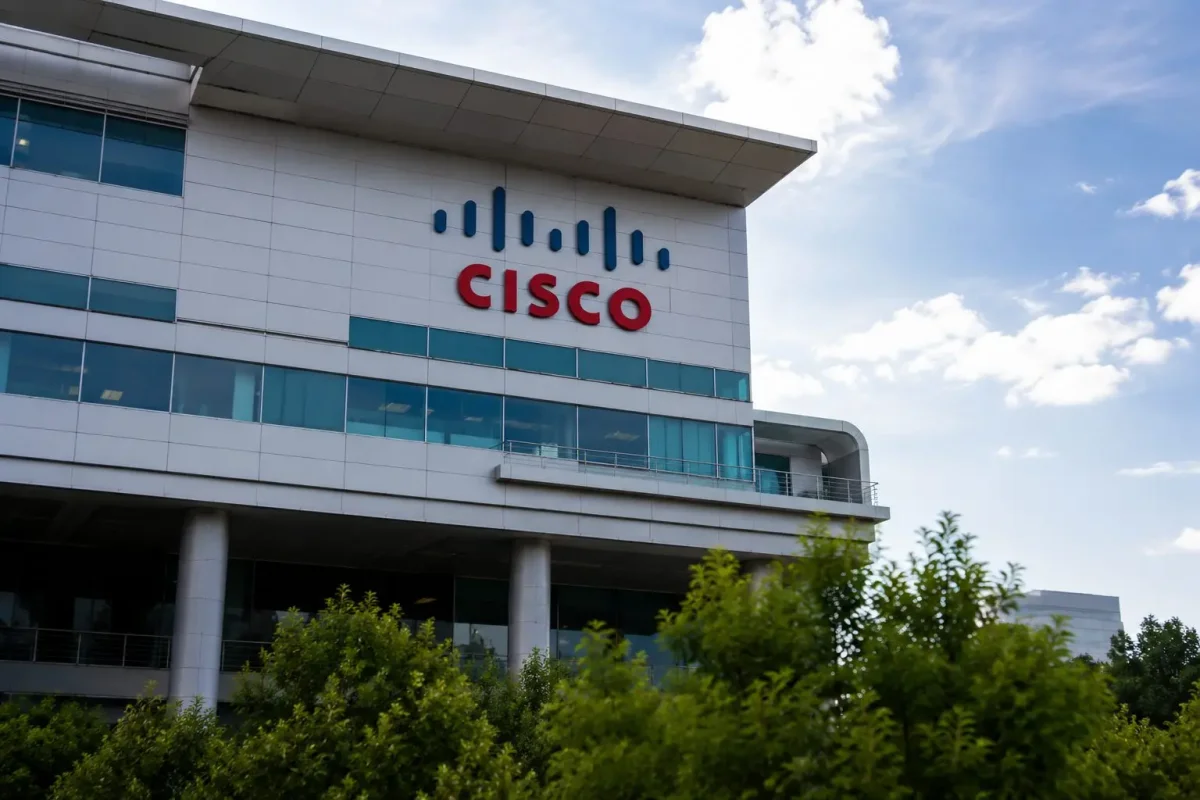
Cisco Systems (NASDAQ:CSCO) experienced a sharp decline on Thursday, shedding $4.32 per share to close at $112.69, a drop of 3.69% ahead of the U.S. Independence Day holiday. The selloff erased more than ten times the value of the company's next quarterly dividend of $0.42, underscoring that the move was driven by broader market concerns rather than payout dynamics. The stock now sits 13.56% below its 52-week high of $130.37, reached on June 4.
The decline marks the third consecutive session of losses for Cisco, with most of the weekly damage concentrated on Thursday. After starting the week on a positive note on Monday, shares slipped for three straight days. The shortened holiday week saw the stock close lower than the previous Friday, with Thursday's drop accounting for the bulk of the weekly retreat. Volume on Thursday was 24.25 million shares, below the 51.64 million on June 26, indicating the move occurred on relatively lighter trading.
The magnitude of the drop relative to the dividend is striking. The $4.32 decline is 10.3 times larger than the $0.42 quarterly payout, which is scheduled to go ex-dividend on July 6. While dividends can sometimes support stock prices, the current selloff clearly reflects other factors. Investors are instead focused on Cisco's AI-networking orders, margin trends, and the positioning of analyst price targets.
Analyst consensus remains largely bullish, with an average price target of $131.15 and a median of $130, according to WSJ and FactSet data. The lowest target stands at $112, meaning Cisco is now trading at the very bottom of the analyst range. KeyBanc's Brandon Nispel and Jackson Ader reiterated a Buy rating with a $130 target on June 25, while Morgan Stanley's Meta Marshall repeated a Buy with the same target on June 12. Bank of America Securities' Tal Liani is more optimistic, with a $150 target as of June 8. The consensus rating is Overweight, with 15 Buys, two Overweights, nine Holds, and two Underweights.
The bullish thesis for Cisco hinges on its strong fiscal third-quarter results reported in May. Revenue jumped 12% to $15.8 billion, product orders rose 35%, and networking product orders surged over 50%. The company raised its fiscal 2026 hyperscaler AI infrastructure order forecast to $9 billion, up from $5 billion previously. CEO Chuck Robbins highlighted that demand is "very strong, broad-based" and that Cisco is "connecting and securing AI." CFO Mark Patterson emphasized "financial discipline." On the earnings call, Robbins noted that AI infrastructure orders from hyperscalers reached $1.9 billion in the quarter, up from $600 million a year ago, and year-to-date orders of $5.3 billion have already surpassed the prior full-year forecast. Cisco now expects roughly $4 billion in AI infrastructure revenue from these customers in fiscal 2026.
Despite these positive signals, the market is testing Cisco's margin outlook. The company guided fiscal Q4 revenue to $16.7 billion to $16.9 billion, with non-GAAP gross margin of 65.5% to 66.5% and non-GAAP EPS of $1.16 to $1.18. If shares break below $112, they would fall under the low end of the analyst target range. Conversely, a rally back above $117 would merely erase Thursday's drop. The stock underperformed the broader market on Thursday, as the S&P 500 ended nearly unchanged at 7,483.24, while the Dow Jones Industrial Average added 1.14% to 52,900.07 and the Nasdaq Composite slipped 0.80% to 25,832.67.
Looking ahead, the key support level for Cisco is around $112, where the lowest analyst target sits. A break below that could trigger further selling, while a recovery above $117 would signal stabilization. The company's AI momentum remains a positive, but near-term price action will likely be dictated by broader market sentiment and any updates on AI infrastructure spending. The dividend, while modest, may offer some floor, but Thursday's action suggests it is not enough to offset current headwinds.