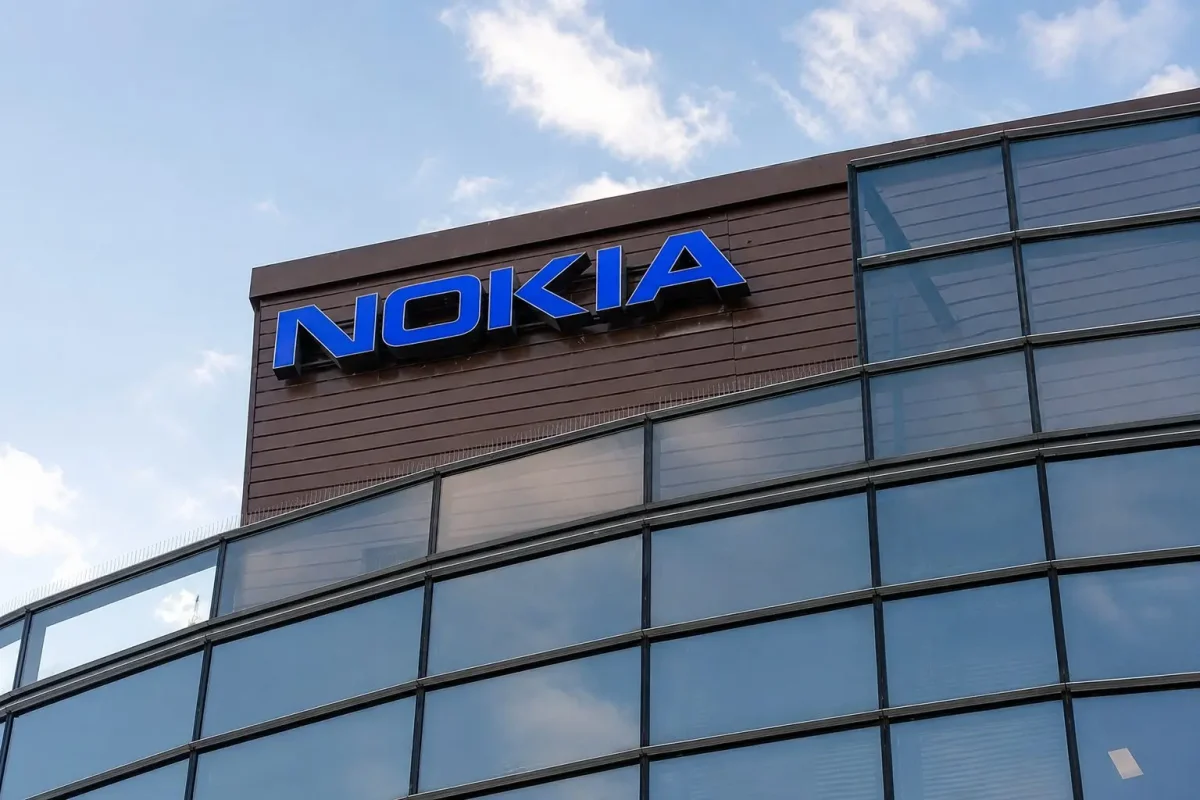
Nokia's stock continued its upward trajectory on Wednesday, touching a new 52-week high in Helsinki trading before settling slightly lower. The Finnish network-equipment maker's shares hit €14.22 earlier in the session before easing to €13.85 by mid-afternoon, representing a modest 0.1% gain on the day. In New York, Nokia's American depositary receipts (ADRs) closed at $16.46 on Tuesday, marking a 6.4% increase and a third consecutive gain, while also hitting a record high. Trading volume was approximately double the 50-day average, indicating strong investor interest.
Earnings and AI Sales Fuel Rally
The recent surge in Nokia's stock is largely attributed to the company's first-quarter earnings report, which showed a 54% jump in comparable operating profit to €281 million, surpassing analyst expectations of €250 million. The company also reported a significant 49% increase in sales to AI and cloud customers, which now account for 8% of total revenue. Optical Networks revenue rose by 20%, and Nokia secured €1 billion in orders from AI and cloud buyers. CEO Justin Hotard noted that the company is "increasing our growth assumption" for Optical and IP Networks, with plans to invest further to meet demand from AI and cloud customers.
Market Context and Analyst Targets
The stock's performance is increasingly reflecting a shift from traditional telecom-equipment provider to an AI data-center supplier. This transition is supported by broader market gains, with the STOXX 600 index rising 0.47% and the Nasdaq Composite gaining 1.19%. However, Nokia's rally has pushed its share price above most analyst targets. The average 12-month price target on Investing.com is €9.375, with a high of €14 and a low of €4.65, all below Wednesday's intraday high. This suggests limited upside potential unless AI order conversion or legacy telecom margins improve.
Innovation Lab and Competitive Landscape
Nokia recently opened its AI Networking Innovation Lab in Sunnyvale, California, where it will test AI data center networks with partners including AMD, Keysight, Lenovo, Nscale, Supermicro, VIAVI, and Weka. The lab aims to reduce deployment risk and push AI networks in real-world conditions. Meanwhile, Nokia's rivals are also adapting to the AI-driven shift. While Nokia remains paired with Ericsson in mobile gear, its AI bets are pushing it closer to optical and data center players like Ciena and Arista. Ericsson, however, missed first-quarter core profit forecasts due to higher AI chip costs and weaker North America sales.
Infrastructure Challenges and Outlook
Despite the positive momentum, there are potential headwinds. Hotard highlighted that Europe "doesn't have the infrastructure" for AI data centers, noting the need for better connectivity and more data-center capacity. Delays in power, permits, or cloud spending could dampen the optical-networking rally. Nokia is scheduled to report its second-quarter and half-year results on July 23. Until then, the stock's performance may depend on AI-cloud order announcements, analyst target revisions, and whether the recent 52-week high holds as support or fades amid heavy trading volume.