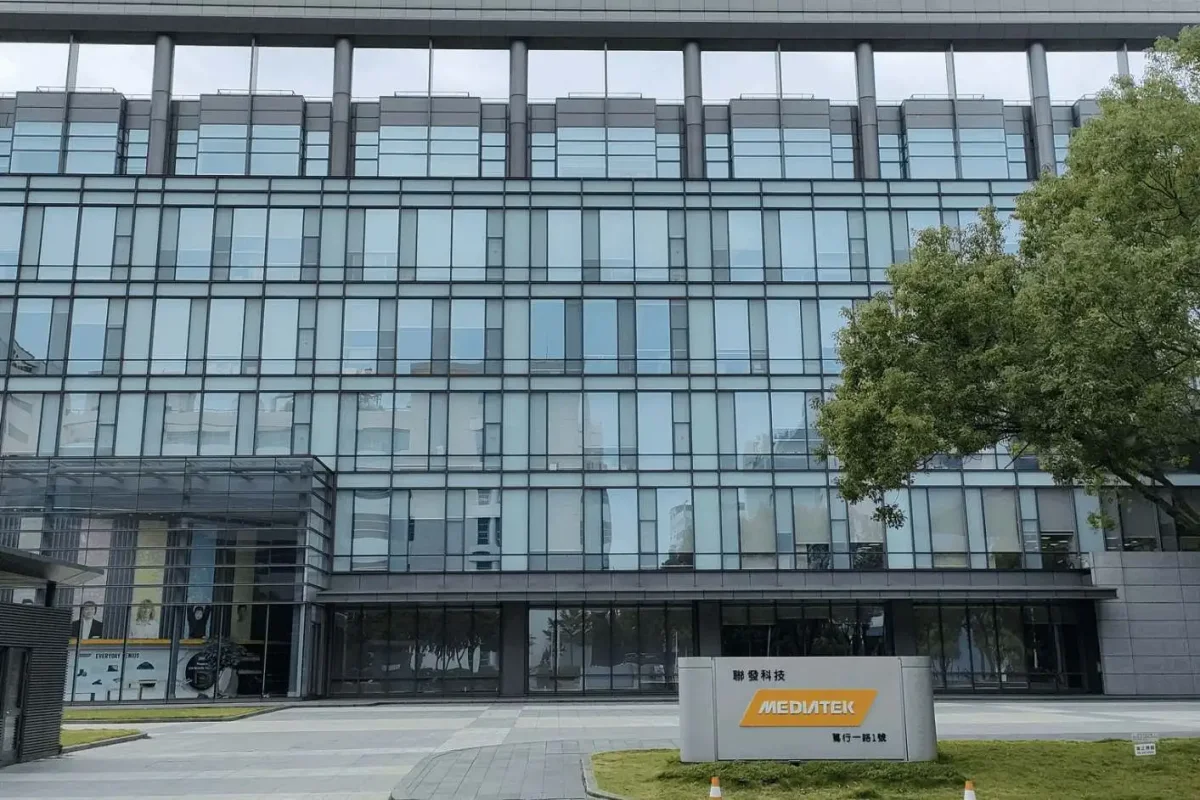
In a significant strategic move, Nvidia (NASDAQ:NVDA) has invested $3.5 billion in convertible bonds issued by Taiwan-based semiconductor designer MediaTek (TPE:2454). The announcement came after the close of trading on the Taiwan Stock Exchange on August 31, 2026, leaving investors to react in the next session. MediaTek's shares had already slipped 1.51% to NT$3,925 during the day's trading, reflecting a cautious market stance ahead of the news.
The bond investment is a major component of MediaTek's broader $5 billion financing framework, representing 70% of the total approved in July. To put this in perspective, the $3.5 billion injection is roughly 74% of MediaTek's second-quarter revenue of $4.71 billion, underscoring the scale of the capital infusion. The funding is earmarked to accelerate MediaTek's expansion into custom AI accelerators, a market the company estimates will reach $80 billion by 2027. MediaTek aims to capture between 15% and 20% of this market, translating to a potential opportunity of $12 billion to $16 billion, based on simple arithmetic—though the company has not issued formal revenue guidance for this segment.
Strategic Collaboration and Market Context
The partnership between Nvidia and MediaTek is not limited to financial backing. The two companies plan to collaborate on AI infrastructure, edge computing, and automotive solutions. MediaTek will leverage Nvidia's NVLink Fusion platform to design custom accelerators that integrate with rack-scale systems, a move that could accelerate chip-to-rack deployment for cloud customers. Nvidia brings certified interconnect, memory, and system architecture expertise, while MediaTek contributes custom silicon development, packaging solutions, and energy-efficient designs.
MediaTek's CEO, Rick Tsai, emphasized that the investment reinforces the company's efforts in cloud infrastructure, PCs, and automotive sectors. However, the announcement did not disclose key terms such as the conversion price, maturity date, coupon rate, or the number of shares that could be issued upon conversion. Investors are now awaiting these details to assess potential dilution and financing costs.
Financial Performance and Strategic Shift
MediaTek's recent financial results paint a mixed picture. The company reported second-quarter revenue of NT$152.18 billion, up 1.2% year-over-year, but net income fell 12.3% to NT$24.6 billion. Mobile-chip revenue declined 20% in the quarter, reflecting a broader slowdown in the smartphone market. In contrast, July revenue rose 12.16% to NT$48.48 billion, and January-to-July revenue increased 0.84% to NT$349.81 billion.
The strategic pivot toward data-center AI is crucial for MediaTek, which has been heavily reliant on the cyclical smartphone market. Management forecasts that data-center AI revenue will exceed $2 billion this year, a significant step toward diversification. The Nvidia investment is expected to bolster these efforts, providing both capital and technical validation.
Market Reaction and Valuation
MediaTek's stock closed at NT$3,925 on August 31, down 1.51%, within a trading range of NT$3,820 to NT$3,945. Despite a stellar 174.5% year-to-date gain, the shares remain 21% below their 52-week high of NT$4,970. The company's market capitalization stands at NT$6.36 trillion, approximately $197 billion, with a trailing price-to-earnings ratio of 64.8x—a premium valuation reflecting AI growth expectations.
Analyst sentiment remains overwhelmingly positive, with 23 buy ratings and zero sell ratings, resulting in a Strong Buy consensus. The average analyst price target is NT$5,503, implying roughly 40% upside from current levels. The next major catalyst is the August sales report, due on September 10, which will provide further insight into demand trends.
Risks and Implications
While the investment is a bullish signal, risks remain. Conversion of the bonds could dilute existing shareholders. Additionally, the custom AI chip market is highly competitive, with players like Broadcom and Marvell vying for market share. Execution risks include customer adoption timelines, production capabilities, and pricing pressures. Furthermore, Nvidia's increasing involvement in financing partners may raise questions about circular AI financing, a concern noted by some analysts.
For Nvidia, this investment deepens its ecosystem moat, ensuring that MediaTek's custom silicon efforts align with Nvidia's interconnect and system architectures. It also provides Nvidia with a strategic foothold in the growing custom AI accelerator market, complementing its own GPU offerings.
As the market digests this news, investors will be watching for the bond terms and MediaTek's next earnings update in October. The collaboration between these two chip giants could reshape the competitive landscape in AI infrastructure, making this a key development to monitor.