Nvidia Corporation (NVDA) saw its shares tumble 3.73% on Wednesday, closing at $200.42, as a broad retreat in artificial intelligence and semiconductor stocks gathered pace. The decline was not triggered by disappointing earnings but rather by mounting concerns over elevated valuations, rising interest rates, and renewed geopolitical tensions tied to China export restrictions.
Market-Wide Selloff
The Philadelphia Semiconductor Index dropped 3.6%, with Nvidia and Broadcom (AVGO) leading the losses in the S&P 500. The technology sector of the S&P 500 closed 11% below its June 2 record high, officially entering correction territory. This is particularly significant for Nvidia, which now carries a market capitalization of nearly $4.9 trillion and acts as a bellwether for AI demand.
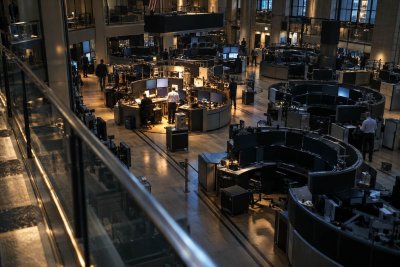
The broader market also suffered: the Dow Jones Industrial Average fell 953.33 points, the S&P 500 lost 1.62%, and the Nasdaq Composite declined 1.98%. The selloff was fueled by a 4.2% jump in May consumer prices, prompting investors to price in at least one Federal Reserve rate hike this year. Higher interest rates disproportionately affect long-duration growth stocks, as future earnings are discounted more heavily.
Nvidia's Revenue Outlook Under Scrutiny
Despite the stock's decline, Nvidia continues to post impressive financial results. In May, the company reported fiscal first-quarter revenue of $81.6 billion, an 85% year-over-year increase. Data Center revenue alone reached $75.2 billion, up 92% from the prior year. CEO Jensen Huang described the buildout of AI factories as "the largest infrastructure expansion in human history," accelerating at extraordinary speed.
However, the market is now focused on Nvidia's second-quarter revenue forecast of $91 billion, plus or minus 2%. This outlook excludes any Data Center compute revenue from China, adding to investor uncertainty. The company's latest filing revealed no shipments of Data Center Hopper products to China, compared to $4.6 billion in such shipments last year. Revenue from customers based in China, including Hong Kong, fell to $4.55 billion from $9.66 billion a year ago.
Customer Concentration and Capital Returns
Nvidia faces additional risks from customer concentration. In the first quarter, three direct customers accounted for 21%, 17%, and 16% of total revenue. The company is also boosting capital returns, having repurchased 108 million shares for $20.2 billion in Q1, authorizing an additional $80 billion for buybacks, and raising its quarterly dividend to $0.25 per share. The dividend is payable June 26 to shareholders of record on June 4.
Broader Implications for AI Stocks
Wednesday's decline raises questions about whether the AI trade is undergoing a shakeout or signaling a more significant shift. With Nvidia's $91 billion second-quarter target now serving as a key benchmark, any weakness in U.S. cloud, enterprise, or sovereign AI demand could leave little room for error, especially given the exclusion of China Data Center compute revenue from the forecast. The broader AI and semiconductor sector remains under pressure as investors reassess growth expectations in a higher-rate environment.