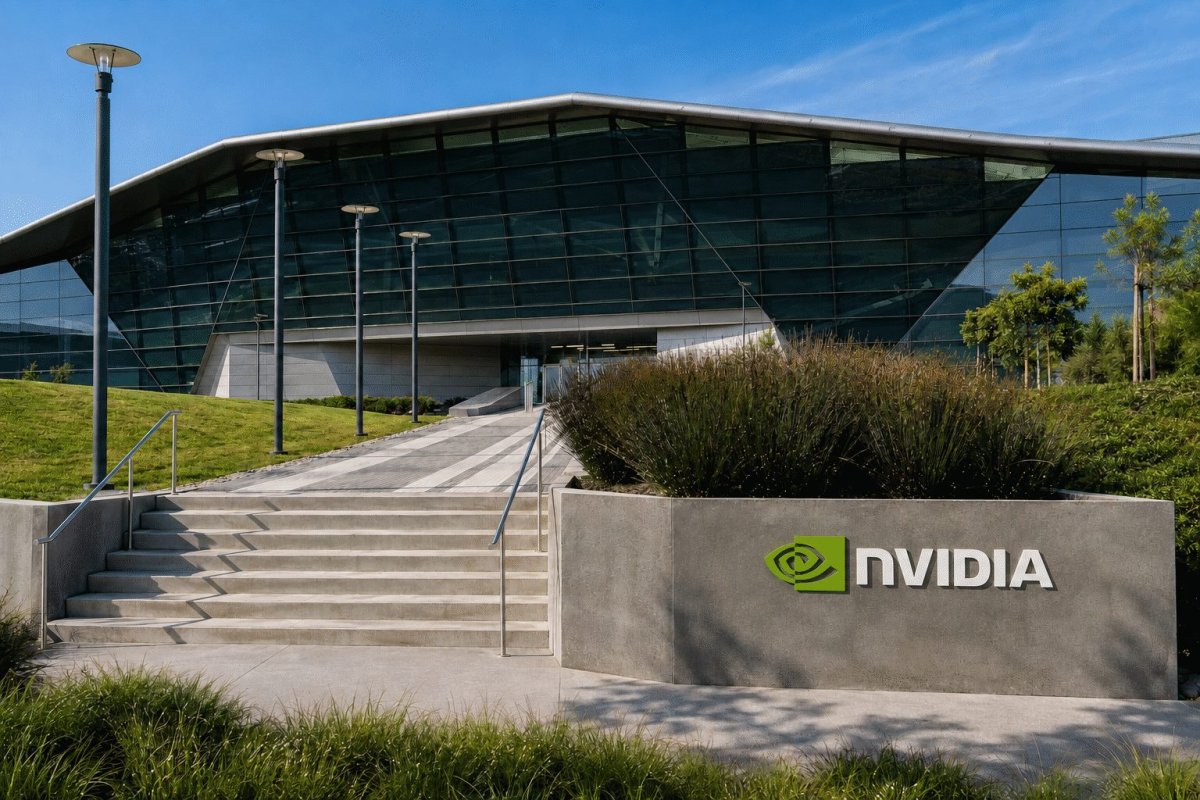
As U.S. markets opened on Friday, August 21, 2026, all eyes were on NVIDIA Corporation (NASDAQ: NVDA) ahead of its fiscal second-quarter earnings release scheduled for August 26. Options pricing indicates that the stock could experience a post-earnings swing of approximately 6%, translating to a staggering $316 billion shift in market capitalization. Such a move would outpace the entire market value of most S&P 500 companies, underscoring the immense scale of Nvidia's influence on the broader market.
Earnings Expectations: A Narrow Path to Satisfaction
Wall Street analysts project Nvidia to report revenue of $92.16 billion for the quarter, a figure that stands just 1.3% above the company's own midpoint guidance of $91 billion. This narrow gap suggests that the bar for a positive surprise is relatively low, but it also leaves little room for error. With data-center revenue expected to contribute over 93% of total sales—projected at $85.67 billion—any weakness in hyperscaler demand could have outsized implications.
The company's guidance range for the quarter is $89.18 billion to $92.82 billion, with consensus estimates clustering near the upper end. Notably, Nvidia's forecast excludes data-center compute revenue from China, a factor that investors will be closely monitoring given ongoing geopolitical tensions and export restrictions.
Market Context: Stock Performance and Analyst Sentiment
Nvidia's stock has climbed roughly 16% so far in 2024, yet it remains about 8% below its May peak. The shares have declined following each of the last four quarterly earnings releases, adding to the pressure for a strong performance this time around. At the time of writing, NVDA was trading at $217.42, up 0.27% at the open, with a market capitalization of $5.26 trillion. The 52-week range stands at $164.07 to $236.54.
Analyst sentiment remains overwhelmingly bullish, with all 26 ratings in the past three months being "buy" recommendations. The consensus price target is $301.82, implying a premium of roughly 39% to current levels. Notable targets include $335 from Benchmark's Cody Acree, $350 from Bank of America's Vivek Arya, and $300 from both RBC Capital and Citi. However, these targets reflect a 12-month horizon, whereas the options market is pricing only the immediate post-earnings move.
Capital and Demand: The 0 Billion AI Infrastructure Initiative
Beyond the earnings report, Nvidia's capital strategy is drawing attention. The company and its partners recently unveiled financing initiatives aimed at raising over $500 billion for AI infrastructure. This includes a partner-backed financing platform targeting more than $500 billion, with Nvidia offering credit assurance and exclusive computing resources. CEO Jensen Huang's assertion that "In AI, compute is revenue" underscores the company's bet on sustained demand.
Additionally, Nvidia has made a $1.5 billion investment in the Ohio PORTS complex, which will host a 4.25 gigawatt first phase with potential for further expansion. These moves signal confidence in long-term growth but also introduce balance sheet risk, as financing guarantees could transfer additional infrastructure risk to Nvidia.
Broader Semiconductor Sector: Headwinds and Reliance
The wider chip sector has been under pressure ahead of the report. The Philadelphia semiconductor index fell roughly 5% this week as bond yields rose, reflecting broader market concerns. "The market is so reliant on the AI trade today," noted Erik Kratz of Arena Private Wealth, highlighting the outsized role Nvidia and its peers play in market sentiment.
Key Risks and What to Watch
Investors will be scrutinizing several factors: the quality of forward guidance, China-related business, and the pace of Blackwell demand ramp-up. A more cautious forecast, postponed data-center projects, or softer demand from China could all trigger a sell-off. Conversely, a significant beat might rapidly unwind short-term hedges, driving the stock higher.
The key metrics are clear: Nvidia must surpass the upper limit of its previous guidance, maintain adjusted gross margins near 75%, and demonstrate that its capital investments are translating into revenue. Falling short on any of these fronts could justify the $316 billion move that options are pricing in.