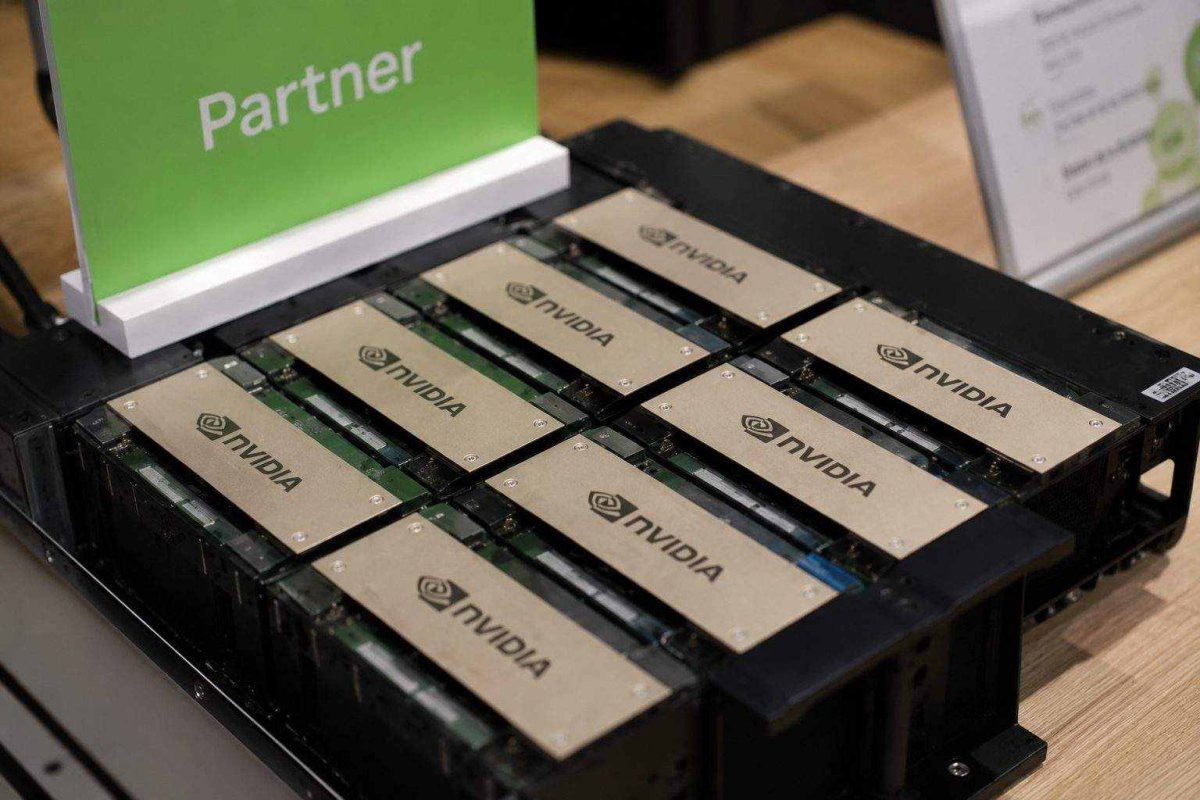
The United States Commerce Department has authorized Nvidia to sell its advanced H200 artificial intelligence chips to approximately ten Chinese companies, including Alibaba, Tencent, ByteDance, and JD.com. Despite the green light from Washington, not a single chip has been delivered to Chinese buyers, according to sources familiar with the matter.
Nvidia CEO Jensen Huang is currently in Beijing as part of US President Donald Trump's delegation, meeting with Chinese President Xi Jinping. The visit comes just six days before Nvidia's scheduled quarterly earnings report on May 20. Huang expressed hope that the two leaders could strengthen US-China relations during an interview with Chinese state broadcaster CCTV.
Each approved Chinese buyer is permitted to purchase up to 75,000 H200 chips under the license terms. However, Chinese customers have stepped back following advice from Beijing, according to a source cited by Reuters. US regulations also require security guarantees that the chips will not be used for military purposes. Lenovo and Foxconn have been cleared as distributors, with Lenovo confirming its authorization to sell the H200 chips in China.
China was once a major revenue driver for Nvidia, accounting for about 95% of the country's advanced chip market before Washington tightened export controls. The region represented 13% of Nvidia's total revenue, and Huang previously estimated China's AI opportunity at $50 billion for this year. However, the current impasse highlights the geopolitical tensions that continue to hamper sales.
Nvidia shares reached a high of $227.84 on Wednesday, settling at $225.83, pushing the company's market capitalization past $5.5 trillion. Bank of America has raised its price target to $320 from $300, while Wells Fargo increased its target to $315 from $265 ahead of the earnings report. Analysts point to several upcoming catalysts, including the earnings release, the Computex trade show, the launch of Nvidia's next-generation Vera Rubin AI chip architecture, and a potential return of cash in the second half of the year.
Prediction markets are leaning bullish in the near term. On Polymarket's May 14 daily event for Nvidia, traders priced in an 85% implied probability that shares would close higher that session, though the bet focuses on short-term price action rather than fundamentals.
Investors are looking for a 'beat-and-raise quarter' from Nvidia, according to Morningstar senior equity analyst Brian Colello. He noted ongoing bottlenecks in AI infrastructure and the risk that major customers could increase use of their own in-house chips. On the global front, competitors like Google's TPUs and AMD's expanding GPU portfolio offer alternatives for large cloud buyers.
Beijing has been working to reduce its reliance on foreign technology, with local players like DeepSeek promoting homegrown chips, including those from Huawei. Division in Washington runs deep, as some argue that any deal allowing Nvidia to sell more chips to China means fewer chips for US firms and a smaller US lead in AI over China, according to Chris McGuire, senior fellow for China and emerging technologies at the Council on Foreign Relations.
The real challenge now is whether Huang's Beijing trip can convert the permitted orders into actual chip shipments before Nvidia's next investor update. The US license alone does not guarantee sales, and the path forward remains uncertain as both Washington and Beijing weigh their strategic interests.