Nvidia Corporation (NASDAQ:NVDA) saw its shares edge higher in U.S. premarket trading on Monday, following the announcement of a $1 billion agreement with South Korean internet giant Naver Corp. The deal, which expands Nvidia's portfolio of sovereign artificial intelligence infrastructure projects, lifted the stock by 1.1% to $209.01 in early trading.
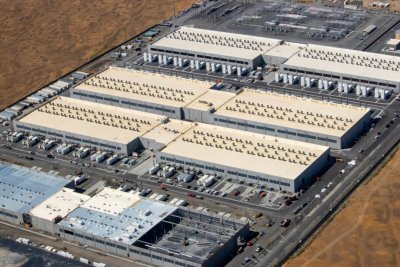
The partnership involves Nvidia acquiring a 4.5% ownership stake in Naver through the issuance of 7.2 million new shares at a price of 204,500 won each, representing a 1% discount from Friday's closing price. The investment, which represents roughly 2% of Nvidia's $50.3 billion cash and marketable securities holdings as of April 26, underpins a 200-megawatt data center project in Sejong, South Korea, set to reach full capacity by 2028.
From a balance-sheet perspective, the deal is modest for Nvidia, but the strategic implications are significant. The project could attract up to $9 billion in additional third-party funding, meaning for every dollar Nvidia invests, as much as nine dollars could flow from external partners. This leverage is a key focus for investors, as it demonstrates Nvidia's ability to catalyze large-scale infrastructure investments without substantial direct capital outlay.
Naver's stock surged over 10% following the news, reflecting market enthusiasm for the partnership. The facility will utilize both Nvidia's Vera Rubin and Blackwell technologies, reinforcing Nvidia's platform choice in the sovereign AI space. Nvidia CEO Jensen Huang highlighted the broader push into South Korea, stating, "Together with SK Telecom and SK hynix, we are building a new generation of AI factories."
The broader context includes a separate agreement with SK Telecom Co Ltd (KRX:017670), which plans to launch a two-gigawatt Vera Rubin cloud, with SK hynix providing advanced high-bandwidth memory technology. These initiatives are still in early stages, with letters of intent signed and the first factory expected to open in 2027. Nvidia has described its South Korean offerings as part of an AI effort valued at more than $500 billion.
Nvidia's financial strength supports these moves. The company reported data-center revenue of $75.2 billion in the first quarter, a 92% year-over-year increase, and projects second-quarter revenue of $91 billion, with a possible variance of 2%. However, the forecast excludes any data-center compute revenue from China, highlighting ongoing geopolitical risks.
Last week, Nvidia shares rose 2.0% from July 17 to July 24, outperforming the Nasdaq Composite, which declined 2.1% over the same period. However, the chipmaker lagged behind peers such as Advanced Micro Devices (NASDAQ:AMD), which gained 5.3%, and Broadcom (NASDAQ:AVGO), up 3.0%. The PHLX Semiconductor Index rose 1.2%.
Investor attention now turns to earnings reports from major customers this week, including Microsoft (NASDAQ:MSFT), Meta Platforms (NASDAQ:META), and Amazon (NASDAQ:AMZN). These reports will provide crucial insights into cloud growth and AI spending, which directly impact Nvidia's demand outlook. Risks remain, including potential delays from power availability, HBM4 supply constraints, customer returns, and export regulations.
The key question for investors is whether Nvidia can leverage a modest portion of its balance sheet to drive significantly larger infrastructure investments, positioning itself as a central player in the global sovereign AI buildout.