PG&E Corporation's shares experienced a notable decline on September 9, closing at $14.19, a drop of 4.25% from the previous close of $14.82. Trading volume was substantial, with 55.4 million shares changing hands—roughly 78% above the company's three-month average. This selloff occurred without any new earnings report, suggesting that investors are still grappling with the implications of California's legislative approach to wildfire liability.
At the current price, PG&E trades at approximately 8.6 times the midpoint of management's 2026 core earnings guidance of $1.64 to $1.66 per share. While a single-digit price-to-earnings multiple might seem attractive for a utility, the market is pricing in significant uncertainty. The core question for investors is whether California will establish a durable financing mechanism for catastrophic wildfire claims. If such a mechanism emerges, the current valuation could be a bargain; if not, the discount is compensation for capital-market risks that traditional utility metrics fail to capture.
Senate Bill 492: Partial Progress, Lingering Risks
California's Senate Bill 492, which is currently active and in the floor process, aims to create a fast-pay program for individual wildfire victims, restrict private-equity purchases of claims, tighten executive-incentive rules, and add financing machinery for the Wildfire Fund's Continuation Account. However, the bill notably lacks provisions that would protect utilities from insurer subrogation claims—the right of insurers to pursue utilities for reimbursement after paying homeowners. This omission has been a major point of concern, leading to analyst downgrades and sharp stock declines for PG&E and Edison International following the bill's introduction.
PG&E has been direct about its concerns. In an August 30 statement, the utility said SB 492 does not adequately address the financing risk created by California's wildfire-liability framework, falling short of the durability needed to attract affordable investment. The company also cited an April California Earthquake Authority report indicating that existing funding mechanisms are insufficient.
The 8.6x Multiple: Not a Free Lunch
PG&E reaffirmed its full-year 2026 non-GAAP core EPS guidance of $1.64 to $1.66 when it reported second-quarter results. Dividing the September 9 close by the midpoint of $1.65 yields the 8.6 multiple. With a market capitalization around $31.3 billion, the stock is priced as a challenged utility rather than a clean regulated-growth compounder.
The balance sheet underscores why the policy question matters. As of June 30, PG&E and its utility subsidiary had approximately $6.5 billion of liquidity, including $5.5 billion available under revolving credit facilities. They also carried roughly $3.8 billion in current and noncurrent Wildfire Fund assets. However, liquidity is not the same as permanent loss absorption. The company's 10-Q filing states that capital expenditures, debt maturities, and dividends are generally expected to exceed operating cash flow, leaving PG&E dependent on capital and credit markets for the difference. The plan to avoid common-equity issuance through 2030 could change, depending on liquidity needs, credit ratings, interest rates, capital spending, or legislative outcomes. A higher perceived wildfire loss changes the price of the very financing on which the plan relies.
PG&E has already demonstrated this sensitivity. On September 2, it announced a strategic review and said it would defer about $2 billion of planned 2027 investment while still spending approximately $11.4 billion. Management framed the deferral as a way to reduce higher-cost borrowing, protecting near-term financing capacity. However, less investment could also slow rate-base growth and grid connections.
The Bull Case: Mitigation and Earnings Support
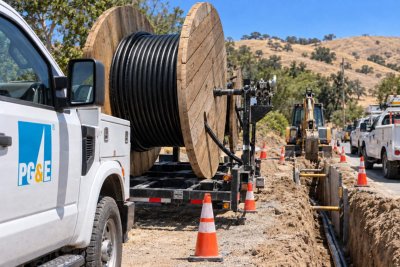
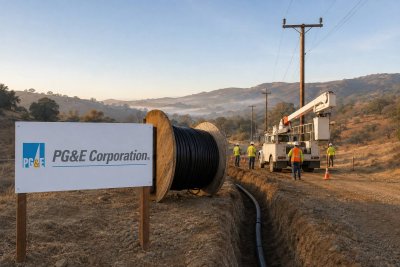
A cheap multiple is not the only support for the stock. PG&E earned $0.83 per share on a core basis in the first half and maintained its full-year target. The utility reported that its continuous-monitoring systems avoided 28 potential ignitions in high-fire-risk areas from January 2025 through June 2026. It also completed 37 miles of underground power lines and 100 miles of strengthened poles and covered lines during the second quarter, according to its SEC-filed earnings release.
If these investments reduce ignition risk while regulators allow timely cost recovery, the current valuation could offer substantial upside without heroic earnings assumptions. SB 492 also is not worthless: faster victim payments and additional Continuation Account financing tools could improve claims handling even if they do not solve the subrogation issue.
Key Signals to Watch
Investors should monitor the final legislative outcome, any renewed proposal addressing insurer recoveries, and PG&E's borrowing costs. Credit-rating commentary and revisions to the no-equity-through-2030 plan would reveal whether the financing problem is becoming operational.
The core trade-off is now visible. PG&E offers regulated earnings at a single-digit multiple, but those earnings require years of external financing and wildfire mitigation investment. The stock is cheap enough for an investor who believes California will eventually preserve affordable utility capital. It is not obviously cheap for anyone treating catastrophic wildfire liability as an ordinary quarterly expense.