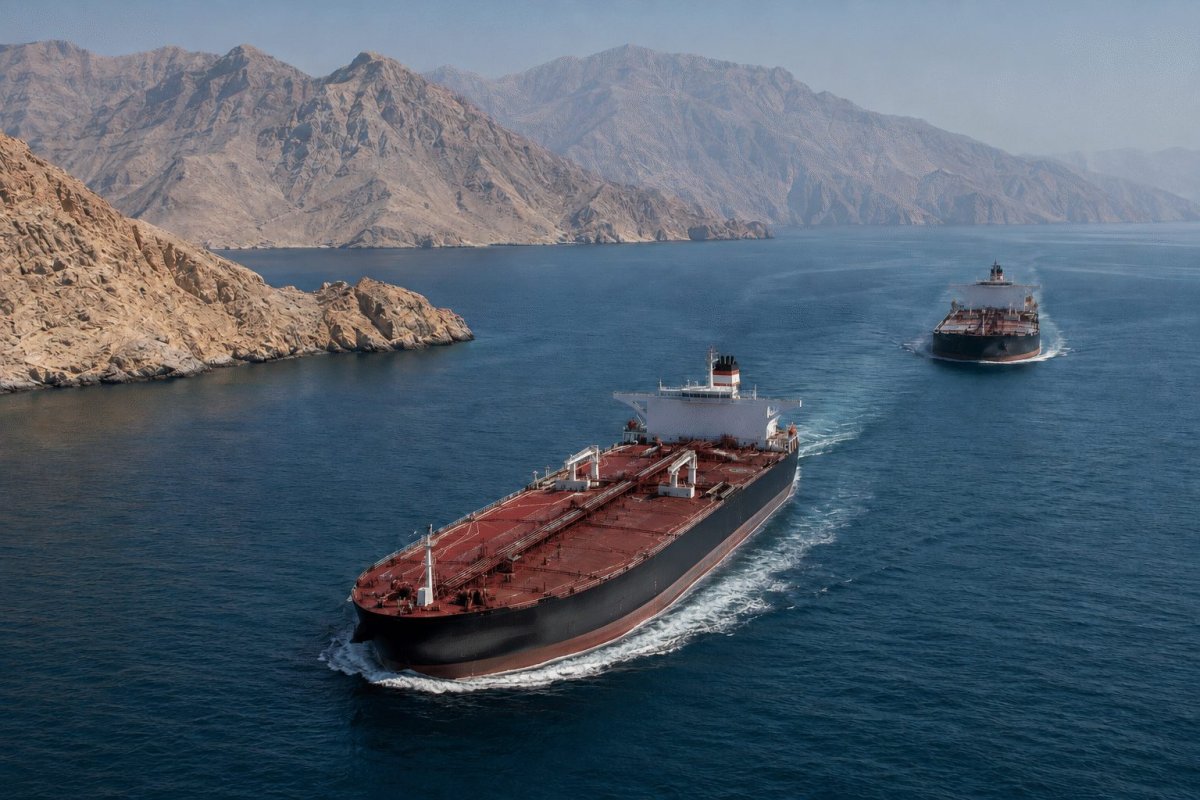
Crude oil futures edged higher on Thursday as traders weighed persistently depressed tanker traffic through the Strait of Hormuz against ongoing diplomatic efforts to reopen the vital waterway. Brent crude rose 0.58% to $88.35 per barrel, while West Texas Intermediate (WTI) gained 0.22% to $82.41, according to Reuters data. Despite the uptick, both benchmarks remain roughly 6% below their August 20 settlement levels, reflecting a partial unwinding of geopolitical risk premiums even as physical supply constraints persist.
Hormuz Flows Remain Severely Depressed
Data from the U.S. Energy Information Administration (EIA) shows that average daily flows through the Strait of Hormuz during the second quarter stood at just 4.9 million barrels per day, a 77% decline from the 21.6 million barrels per day recorded in late 2025 before the conflict erupted. This represents a shortfall of approximately 16.7 million barrels per day, underscoring the scale of disruption to global oil supply routes.
Shipping data indicates that only five commodity vessels transited the strait on Tuesday, well below the recent daily average of 15. This persistent bottleneck has kept physical markets tight, limiting the downside for prices even as some investors have priced out part of the geopolitical premium.
Market Volatility and Negotiation Efforts
Thursday's trading session saw significant intraday swings, with Brent dipping to $86.22 before rebounding, while WTI touched $80.65. Both contracts climbed more than 2% from their lows, highlighting the market's sensitivity to headlines and diplomatic developments. Iran and Oman are reportedly negotiating a control agreement for the waterway, while Qatar's prime minister is in Tehran for further discussions. However, analysts caution that a quick return to pre-conflict conditions is unlikely.
"A more extensive reopening could weigh on crude prices, but markets are not pricing in an immediate normalization," said Tim Waterer of KCM. The physical deficit, he noted, restricts bearish pressure even if talks progress.
Inventory Data and Supply Outlook
On the inventory front, U.S. commercial crude stockpiles rose by 95,000 barrels to 428.9 million barrels last week, well below the 597,000-barrel increase analysts had forecast. Refinery utilization climbed to 97.4%, indicating robust demand for crude inputs. The EIA projects that global inventories will decline by 3.8 million barrels per day in the current quarter, supporting prices in the near term.
The agency forecasts Brent to average $85 in the third quarter, dropping to $78 in the fourth quarter as output and shipments gradually recover. Current Brent prices sit 3.9% above the Q3 forecast and 13.3% above the Q4 estimate, reflecting the lingering premium from unresolved diplomatic efforts, delays in mine clearance, and fresh attacks on shipping.
Broader Market Implications
The ongoing disruptions have broad implications for energy stocks, inflation expectations, and transport costs. A sustained reopening of the strait would challenge producers but lower expenses for airlines, chemical companies, and freight operators. Conversely, if talks falter, the risk premium could quickly return, according to UBS analyst Giovanni Staunovo. With strategic petroleum reserve sales nearly exhausted, commodity stockpiles are set to decline more rapidly unless Gulf flows increase.
Investors are now closely monitoring actual shipping traffic as the key indicator. Persistently higher vessel counts compared to recent averages would confirm a downward trend in prices. However, if transits fall back toward Tuesday's tally of five, it would highlight the extent to which optimism is already embedded in futures prices.
As the situation evolves, market participants remain focused on the delicate balance between diplomatic progress and physical supply realities. The coming days will be critical in determining whether the recent price stabilization can hold or if renewed volatility is on the horizon.