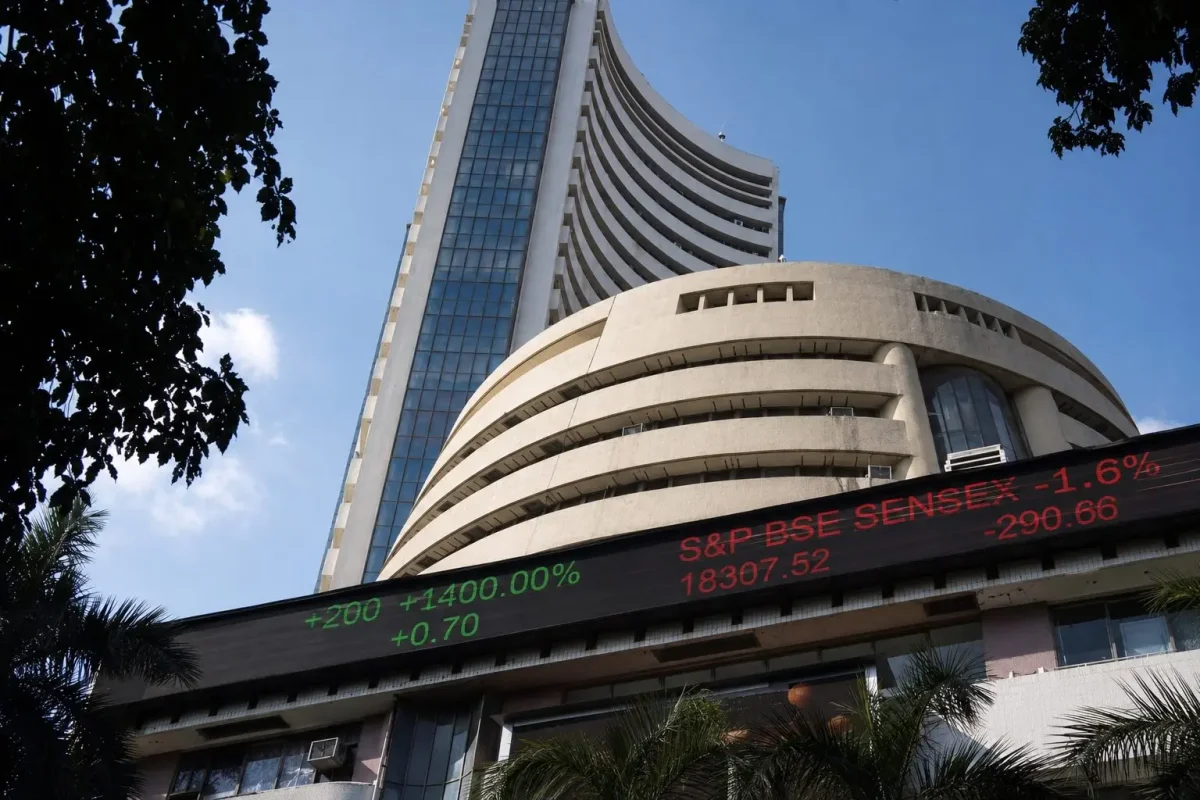
Indian equity markets closed lower by roughly 1% on Monday, dragged down by a sharp spike in global crude oil prices and a broad selloff across Asian markets. The Nifty 50 index fell 1.04% to settle at 23,124.35, while the BSE Sensex declined 694.45 points, or 0.94%, to 73,548.89, according to data from Trendlyne.
Oil Shock Fuels Concerns
The trigger for the decline was a surge in Brent crude oil prices above $97 per barrel after Israel confirmed it had struck an Iranian petrochemical facility. This escalation in Middle East tensions raised fresh alarms about energy supply disruptions, which are particularly significant for India given its heavy reliance on imported crude. Higher oil prices typically fuel worries about a weaker rupee, rising inflation, and compressed corporate margins.
Broad-Based Weakness
The selloff was widespread, with 13 of the 16 major sectoral indices ending in the red. High-weightage sectors such as financials and information technology—especially software and outsourcing firms with substantial overseas revenue—were among the hardest hit. Small-cap and mid-cap stocks also lost about 1% each. Hariprasad K, research analyst and founder of Livelong Wealth, noted that the combination of geopolitical tension in the Middle East and an AI-driven unwind in global tech stocks had "intensified investor nervousness."
Asian Markets Under Pressure
India's losses mirrored a broader downturn across Asia. South Korea's KOSPI index plunged 8.3%, its steepest decline since March, as chip-making giants Samsung Electronics and SK Hynix fell 10.2% and 7.7%, respectively. The rout was triggered by stronger-than-expected U.S. payrolls data, which boosted expectations that the Federal Reserve might raise interest rates further. Han Ji-young, an analyst at Kiwoom Securities, commented that the jobs surprise "provided an excuse for correction" in a market already stretched by semiconductor gains.
Rupee Weakens, Volatility Rises
The Indian rupee opened weaker at 95.32 against the U.S. dollar, compared to Friday's close of 94.9450, despite the Reserve Bank of India's efforts to attract $30 billion to $50 billion in dollar inflows. Amit Pabari, managing director at CR Forex, identified oil as the "biggest risk for the rupee." Meanwhile, the India VIX, a measure of expected stock market volatility, rose 8.49% to 17.13, indicating that traders are paying more to hedge against sharp moves.
Global Tech Selloff Adds to Gloom
The global technology sector also weighed on sentiment. David Chao, global market strategist for Asia-Pacific at Invesco, pointed out that Asian tech stocks are closely tied to the U.S. semiconductor cycle and that "market expectations have become too high" for AI guidance to keep being raised. This sentiment spilled over into Indian IT shares, even though their direct exposure to the chip cycle is limited.
Market Outlook
While a pullback in crude oil or a calmer session in Asian tech could stabilize the market, the downside risk remains if oil prices stay elevated and foreign selling persists. Technical analysts at ETMarkets noted that the Nifty 50 has immediate support near 23,100, with a sustained breach potentially leading to a fall toward 23,000 to 22,800. Pabitro Mukherjee at Bajaj Broking added that flows would remain "highly sensitive" to developments in U.S.-Iran relations and oil prices. For now, the story is less about a single domestic trigger and more about India catching a global risk-off wave at an inopportune moment: oil up, the rupee soft, overseas investors cautious, and Asia's high-flying technology trade suddenly looking vulnerable.