Global oil benchmarks posted significant gains in Friday trading, shrugging off potential weekly losses as geopolitical tensions and supply constraints dominated trader sentiment. Brent crude futures advanced 3.3% to settle at $111.52 per barrel, while U.S. benchmark West Texas Intermediate (WTI) climbed 4.3% to $98.54. Despite the daily surge, Brent remained on track for its first weekly decline since early February, highlighting the volatile and conflicting forces at play in the market.
Geopolitical Skepticism Drives Risk Premium
Market participants expressed pronounced doubt regarding recent optimistic comments from U.S. officials concerning negotiations with Iran. Analysts noted that traders are looking beyond headlines and focusing on the prolonged nature of regional conflicts and their tangible impact on supply. Priyanka Sachdeva of Phillip Nova observed that the market's attention is fixed on "war longevity, not just headlines." Giovanni Staunovo from UBS quantified the ongoing deficit, stating that each additional day of constrained supply leaves the global market short by over 10 million barrels.
Unprecedented Supply Shock
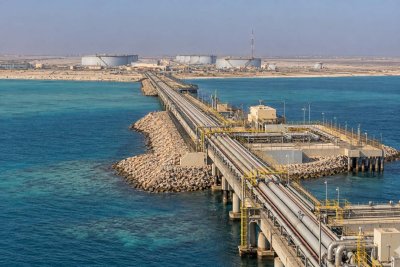
The International Energy Agency (IEA) has characterized the current situation as the most severe disruption ever witnessed by the global oil market. The critical Strait of Hormuz, a maritime passage that typically handles approximately 20 million barrels per day of crude and refined products, is experiencing a near-total halt in traffic. This collapse in flows has compelled IEA member nations to undertake a historic coordinated release of 400 million barrels from their strategic petroleum reserves.
Options Market Bets on Further Spike
Traders are actively positioning for the possibility of even higher prices. Open interest in Brent call options with a $150 strike price for June delivery has skyrocketed to 28,941 lots, representing a nearly tenfold increase from levels seen just one month ago. These contracts, which grant the right to buy oil at a predetermined price, are attracting attention as a hedge against extreme market outcomes. Tim Skirrow of Energy Aspects interpreted this activity as investors seeking protection against "tail risk outcomes" linked to the ongoing war.
Diverging Analyst Views and Asian Market Shifts
Analyst forecasts present a wide range of potential outcomes. Barclays maintains a base case that assumes normal traffic resumes through the Strait of Hormuz by early April, aligning with a 2026 Brent price target of $85. However, the bank warned of a significant upside risk: a prolonged blockage could remove 13 to 14 million barrels per day from global supply, potentially pushing Brent to $100 by late April and $110 if disruptions persist into May. A Reuters survey of 13 analysts produced an average Brent price of $134.62 under current conditions, jumping to $153.85 if Iran's key export terminal at Kharg Island is targeted.
Asian markets are already adapting to the new price reality. Japan's industry ministry has instructed fuel wholesalers to reference Brent crude instead of Dubai for gasoline pricing in an effort to moderate retail costs. Concurrently, refiners across Asia have begun pricing U.S. crude cargoes against the Brent benchmark, while the Middle East's traditional Dubai benchmark soared to a record $169.75 last week.
Earnings Revisions and Sluggish U.S. Supply Response
The surge in crude is prompting analysts to revise earnings estimates for major oil producers upward. Data from LSEG indicates that first-quarter profit forecasts for Chevron (CVX) have been raised by roughly 40%, with Shell's (SHEL) outlook lifted by about 15%. Exxon Mobil (XOM) saw a more modest adjustment. Leo Mariani of Roth Capital Partners commented, "The first quarter is going to be phenomenal" for the energy sector.
Despite prices holding above $90, the U.S. supply response remains muted. Oilfield services firm Baker Hughes reported that the number of active U.S. oil and gas rigs fell by nine this week to 543, the lowest count since mid-January. The U.S. Energy Information Administration projects domestic crude output will reach only 13.61 million barrels per day in 2026, a marginal increase from 13.59 million in 2025.
Regional Risks and Broader Implications
Market watchers continue to monitor negotiations, tanker routing, and the status of key export infrastructure like Kharg Island. DBS Bank's Suvro Sarkar cautioned that "all Asian countries will feel the pinch" for as long as the Strait of Hormuz remains obstructed. The same Reuters poll that highlighted upside risks also noted the potential for a sharp price correction should the conflict conclude swiftly and shipping risks diminish, underscoring the fragile and binary nature of the current market equilibrium.