Rigetti Computing Inc. (NASDAQ: RGTI) reported first-quarter revenue of $4.4 million, up from $1.5 million in the same period last year, representing a near tripling of top-line results. However, the company's operating loss expanded to $26.0 million, compared with a $21.6 million loss a year earlier, as spending on research, fabrication, and system development intensified.
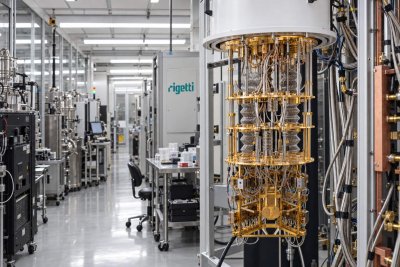
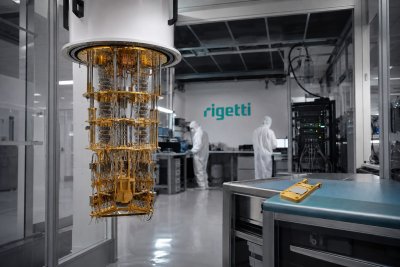
The Berkeley, California-based quantum computing company said its 108-qubit system, dubbed Cepheus-1-108Q, is now available through its own Quantum Cloud Services as well as major platforms including Amazon Braket, Microsoft Azure Quantum, and qBraid. In quantum computing, qubits are the fundamental units of information, and higher qubit counts allow for more complex calculations, provided error rates remain low.
Rigetti's modular architecture uses twelve linked nine-qubit chiplets, which the company believes will simplify scaling compared to building a single larger chip. The firm reported a median two-qubit gate fidelity of 99.8% on one of its nine-qubit modules, a key benchmark for accurate quantum operations.
Chief Executive Subodh Kulkarni described the shift from small prototypes to systems with over 100 qubits as "extremely complex" during the earnings call. He emphasized that error mitigation, rather than full fault-tolerant error correction, remains the company's near-term focus. Quantum advantage—where a quantum computer outperforms a classical one on a practical task—remains a key goal but is not yet achieved.
Revenue in the quarter was boosted by quantum processing unit shipments and related contracts. Rigetti delivered a nine-qubit Novera QPU to the University of Saskatchewan and is fulfilling previously announced Novera orders. This highlights that near-term revenue remains tied to system deliveries and government or research client contracts.
The company ended March with $569.0 million in cash, cash equivalents, and available-for-sale investments, and no debt. This liquidity provides a cushion for continued execution on its technology roadmap, though the company's 10-Q filing warned of ongoing losses ahead. Rigetti also plans to invest up to $100 million in the United Kingdom over the next few years, targeting a system exceeding 1,000 qubits, with funds allocated to staff, hardware, facilities, and scaling its UK operations.
Rigetti's filing cautioned that it remains in the technology development stage and lacks a scalable business model. The company noted it has previously missed or adjusted technology milestones and may not meet upcoming targets. The competitive landscape is shifting, with Quantum Computing Inc. reporting Q1 revenue of approximately $3.7 million and a net loss of $4.1 million, boosted by acquisitions. D-Wave Quantum is scheduled to report earnings before markets open Tuesday.
For Rigetti, the narrow revenue beat is less significant than customer retention and continued investment in hardware and cloud access. With ample cash, the company has time to prove its technology, but investors are watching closely for signs that the company can translate its quantum advances into sustainable commercial success.