Quantum Computing Inc. (QCi) saw its stock climb approximately 14% in U.S. premarket trading on Tuesday, following the release of its first-quarter 2026 financial results. The surge was largely attributed to a significant revenue increase driven by two recent acquisitions, although the company's core business remains modest in scale.
Revenue Growth Driven by Acquisitions
For the quarter ended March 31, 2026, QCi reported revenue of roughly $3.7 million, a dramatic jump from just $39,000 in the same period last year. The bulk of this growth came from the acquisition of Luminar Semiconductor in February, with a smaller contribution from NuCrypt, acquired in March. However, excluding these deals, core revenue stood at only $204,000, primarily from foundry bookings and a research and development subcontract with NASA.
Financial Performance and Cash Position
Despite the revenue boost, the company posted a net loss of $4.1 million, with operating expenses reaching $19.8 million. QCi ended the quarter with approximately $1.4 billion in cash, cash equivalents, and investments, down slightly from $1.5 billion at the end of 2025. The contract backlog was around $16 million, providing some buffer as the company continues to integrate its new assets and expand manufacturing capabilities.
Operational Challenges and Strategic Focus
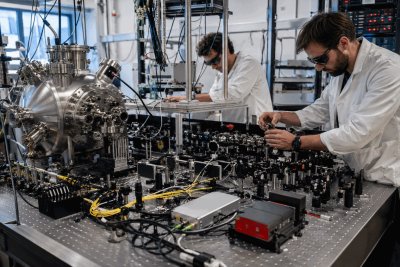
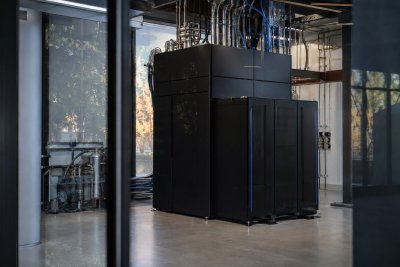
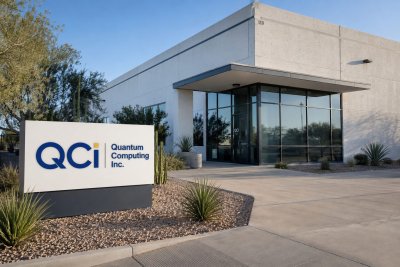
Chief Financial Officer Christopher Roberts highlighted that "underutilization" weighed on gross margins, as chip plants incur costs regardless of production levels. Chief Executive Yuping Huang noted that the company's Fab One facility in Tempe, Arizona, has started small-batch production but remains primarily focused on research and development. Huang emphasized that Fab One is not intended to be a major revenue driver but rather a precursor to a larger Fab Two foundry.
Market Context and Industry Comparisons
QCi's results come amid broader scrutiny of the quantum computing sector. Rigetti Computing reported first-quarter revenue of $4.4 million, while D-Wave Quantum is set to release its numbers later Tuesday. Shares of publicly traded quantum companies have been volatile as investors weigh technical progress against persistent losses and limited commercial traction.
Outlook
For QCi, the immediate challenge is to convert its substantial cash reserves, new assets, and backlog into organic revenue growth rather than relying on acquisition-driven boosts. With a strong balance sheet and ambitious plans for a larger foundry, the company's next test will be managing expenses and scaling its core business. Investors are closely watching whether QCi can achieve sustainable commercial success beyond the laboratory and pilot projects.