Global oil benchmarks climbed sharply on Monday, March 30, 2026, as escalating military conflict in the Middle East fueled supply disruption fears. The international benchmark, Brent crude, edged closer to $116 per barrel, while U.S. West Texas Intermediate (WTI) held above $101. The moves put Brent on track for its most significant monthly percentage increase since at least 1988, with WTI tracking its strongest month since May 2020.
Conflict Widens, Disrupting Critical Shipping Lanes
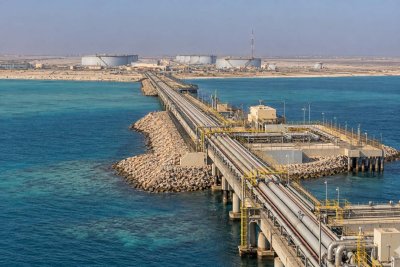
The price surge followed weekend attacks by Yemen's Houthi forces on Israel, broadening a regional conflict that now directly threatens the Gulf. A key driver of market anxiety is the severe disruption to global shipping. Iran has effectively sealed off the Strait of Hormuz, a vital maritime chokepoint that typically handles approximately 20% of the world's seaborne oil and liquefied natural gas (LNG). Concurrently, Houthi threats are escalating around the Bab el-Mandeb Strait, the narrow passage linking the Red Sea to the Gulf of Aden, just as exporters increase cargo traffic through Red Sea routes.
Israel reported fresh barrages of Iranian missiles on Monday, alongside intercepting drones originating from Yemen. Commentary from former U.S. President Donald Trump added to geopolitical uncertainty; while noting that direct and indirect talks with Iran were ongoing, he also suggested U.S. troops could potentially take control of Iran's key export terminal, Kharg Island—a move that would involve deploying ground forces.
Market Sentiment Shifts from Transient Shock to Sustained Risk
Analysts note a fundamental shift in trader psychology. The rally is no longer viewed as a short-lived spike. The fact that longer-dated Brent futures have again topped $100 per barrel signals that the market is pricing in a prolonged period of tight supply and enduring inflationary pressure from energy costs. Vandana Hari of Vanda Insights observed that most traders have abandoned hope for a negotiated settlement and are instead preparing for a "sharp escalation in military hostilities." Eren Osman, Managing Director at Arbuthnot Latham, described oil as "the lightning rod right now" for global market anxiety.
In response to the crisis, Group of Seven officials and central bankers scheduled a virtual meeting for Monday to assess the energy market fallout. Saudi Arabia has attempted to alleviate pressure by rerouting crude shipments toward the Red Sea port of Yanbu, with Kpler data showing flows of 4.658 million barrels per day down that path last week. However, JPMorgan analysts, led by Natasha Kaneva, warn that the conflict's expansion into the Red Sea and Bab el-Mandeb has created a new flashpoint for crude and refined product risks, extending far beyond the Persian Gulf.
Consumer and Equity Market Impact
The price shock is beginning to filter through to consumers. On Monday, the average price for U.S. regular gasoline sat just below $4 per gallon. Bob McNally, President of Rapidan Energy, warned that smaller nations, particularly in Asia, would be hardest hit. He cautioned that if the situation deteriorates further, it might require nothing short of a global recession to "kill oil demand."
Equity markets reflected the divergent impact of higher oil. In Europe, shares of major energy producers Shell (SHEL) and TotalEnergies (TTE) advanced, buoyed by stronger crude prices. Conversely, airline stocks like Air France and Lufthansa declined as investors recalculated soaring fuel costs for transport-reliant companies.
Downside Risks and Stark Warnings
Despite the bullish momentum, a reversal remains possible. Pakistan is attempting to broker talks between Tehran and Washington, and President Trump has held off on strikes against Iranian energy assets until April 6. A recent European Union briefing flagged no immediate supply crunch, even as diesel and jet fuel markets tighten. However, the risks are severe. Bruce Kasman, Global Head of Economics at JPMorgan, stated that a further month of disruption in the Strait of Hormuz could propel oil prices to $150 a barrel. Morgan Stanley issued a concurrent warning, suggesting that if crude sustains a range of $150 to $180, global equity values could plummet by nearly 25%.
For now, traders are focused on battlefield developments over diplomatic efforts. Brent has soared nearly 59% this month, with U.S. crude up roughly 51% since the conflict's intensification on February 28. The market's attention is firmly fixed on the Strait of Hormuz, Kharg Island, and the Red Sea, watching for any sign that what began as a short-term shock is becoming a entrenched, structural risk to global energy supplies.