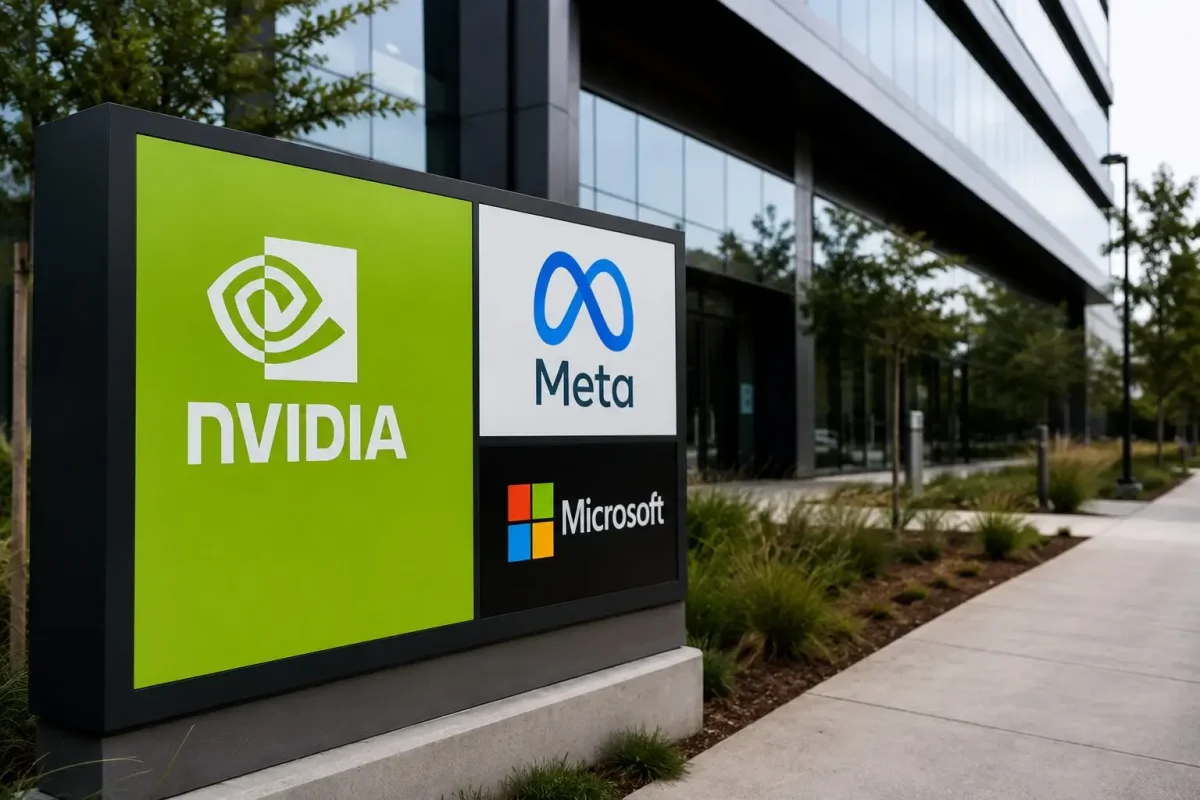
NEW YORK, July 25, 2026, 09:09 EDT — U.S. markets have closed. The open-weight AI movement gained significant momentum over the weekend, with Microsoft's public letter listing 35 signatories, up from the 25 originally cited by Nvidia. This 40% expansion underscores a growing industry consensus favoring targeted regulation rather than broad prohibitions.
The coalition's growth is particularly notable as it brings together key players from across the technology spectrum, including chipmakers, cloud providers, model developers, and enterprise software firms. The unified stance emphasizes that users should have the ability to download, inspect, and modify AI models, arguing that such flexibility reduces costs and fosters competition while clearly distinguishing legitimate model distillation from illegal extraction.
Nvidia's CEO Jensen Huang commented, "Open models strengthen safety and cybersecurity," highlighting their role in driving innovation and adoption. OpenAI's Sam Altman also expressed support, stating his desire for the United States to succeed in "both open source and proprietary models."
The campaign arrives amid escalating tensions over Moonshot AI's Kimi K3 model. White House technology adviser Michael Kratsios alleged that Moonshot replicated content from Anthropic, while Treasury Secretary Scott Bessent warned that penalties could be imposed for improper extraction. These allegations remain unverified in the cited reports.
For investors, the central question is how open models will impact profitability. Lower model costs could pressure pricing and reduce dependency on specific vendors, but broader adoption may also drive increased demand for chips and cloud infrastructure. This dynamic could particularly benefit high-volume suppliers as utilization rates rise.
Last week's market movements largely predated Friday's letter and reflected this economic divide. Nvidia (NASDAQ:NVDA) rose 2.0% over the week, adding approximately $98 billion in market value. In contrast, Microsoft (NASDAQ:MSFT) declined 3.1%, losing about $90 billion, while Meta (NASDAQ:META) dropped 7.9%, shedding roughly $130 billion. Combined, the three companies saw a net decrease of about $122 billion in value. The Nasdaq Composite fell 2.1% during the same period.
Both Microsoft and Meta are scheduled to report earnings after the market close on Wednesday. Microsoft will release its fiscal fourth-quarter results, while Meta will announce its second-quarter numbers. Analysts expect the earnings calls to focus heavily on AI demand, margins, and capital expenditure plans.
According to Visible Alpha, a unit of S&P Global (NYSE:SPGI), hyperscaler capital expenditures are projected to reach $682 billion in 2026, nearly $300 billion higher than the previous year. The forecast rises to $878 billion for 2027, pushing total spending over two years above $1.5 trillion. Preliminary consensus estimates suggest Azure AI Services could generate $23.7 billion in revenue for Microsoft in fiscal 2026, while Meta is expected to report $60.2 billion in second-quarter revenue. Meta's 2026 capex is projected at $136.7 billion, up $67 billion year-over-year.
Key risks include the difficulty of tracking or retracting open-weight models once released, potential pressure on software profit margins from lower pricing, and the possibility that sanctions or tighter security measures could limit deployment. There is also concern that massive capital expenditures may outpace revenue growth.
Investors face their first major test on Wednesday. The question is not whether open models will proliferate, but whether the expansion will generate sufficient paid usage to offset the substantial infrastructure costs involved.