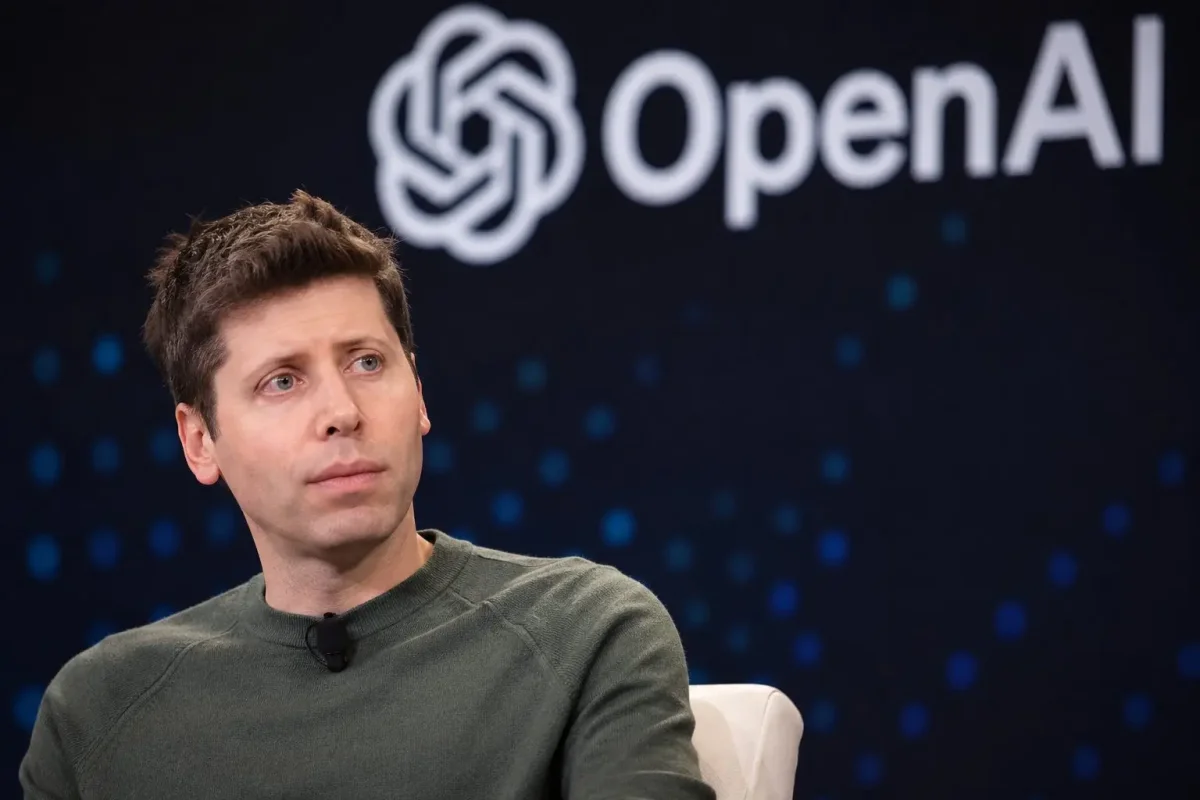
OpenAI has taken a significant step toward becoming a publicly traded company, confirming a confidential S-1 filing with the U.S. Securities and Exchange Commission. The move sets the stage for what could be one of the most anticipated initial public offerings in recent history, with the artificial intelligence leader reportedly targeting a valuation of up to $1 trillion.
Altman's Internal Timeline
According to a report from Reuters citing The Information, OpenAI CEO Sam Altman has communicated to staff that he expects the company to go public "within the next year." This internal timeline provides more clarity than the company's initial announcement, which stated that no specific date had been set. The confidential filing, made on June 8, 2026, did not include details on share count, price range, exchange, or underwriters.
Tender Offer and Valuation
Altman also informed employees that a tender offer is imminent, with shares priced at $687.69 apiece, according to Reuters. Such private transactions allow existing holders to sell their stakes and often serve as a valuation benchmark ahead of an IPO. OpenAI's last reported post-money valuation stood at $852 billion, following a $122 billion capital commitment in March 2026. The company now generates $2 billion in monthly revenue, with ChatGPT boasting over 900 million weekly active users and more than 50 million subscribers.
Market Context and Competitive Landscape
OpenAI is not alone in pursuing a public listing. Rival Anthropic has also filed confidentially for a U.S. IPO, while SpaceX is working on its own offering, partly driven by its artificial intelligence initiatives. The convergence of these mega-cap IPOs presents a test for public markets, which will need to absorb potentially trillions in new supply. Gil Luria, managing director at D.A. Davidson, cautioned that if Anthropic or SpaceX list first and attract significant capital, OpenAI could face challenges in achieving its desired valuation.
Revenue Shifts and Investor Appeal
OpenAI is increasingly positioning itself as an enterprise-focused company, with business clients now accounting for over 40% of revenue. The company expects enterprise sales to match consumer revenue by the end of 2026. This shift is strategically important, as public investors typically assign higher multiples to firms with recurring, contractual revenue streams compared to those reliant on viral consumer adoption. The company is actively working to shed its image as merely a chatbot provider.
Risks and Uncertainties
The path to an IPO is not without risks. The eventual public S-1 filing will reveal detailed financials, including potential losses, capital commitments, and governance structures that could impact valuation. Regulatory oversight and unresolved legal questions add further uncertainty. Altman reportedly told staff that if recursive self-improvement advances faster than expected—where AI systems become capable of designing more advanced AI—it could be a reason to delay the public listing.
What's Next for Investors
For now, the market's focus is on the next public filing, which will provide the first comprehensive look at OpenAI's financial health, revenue quality, compute spending, ownership structure, and risk factors. Until then, the key takeaway is that OpenAI has formally initiated the regulatory process, and internal communications suggest a listing is expected within the next year.