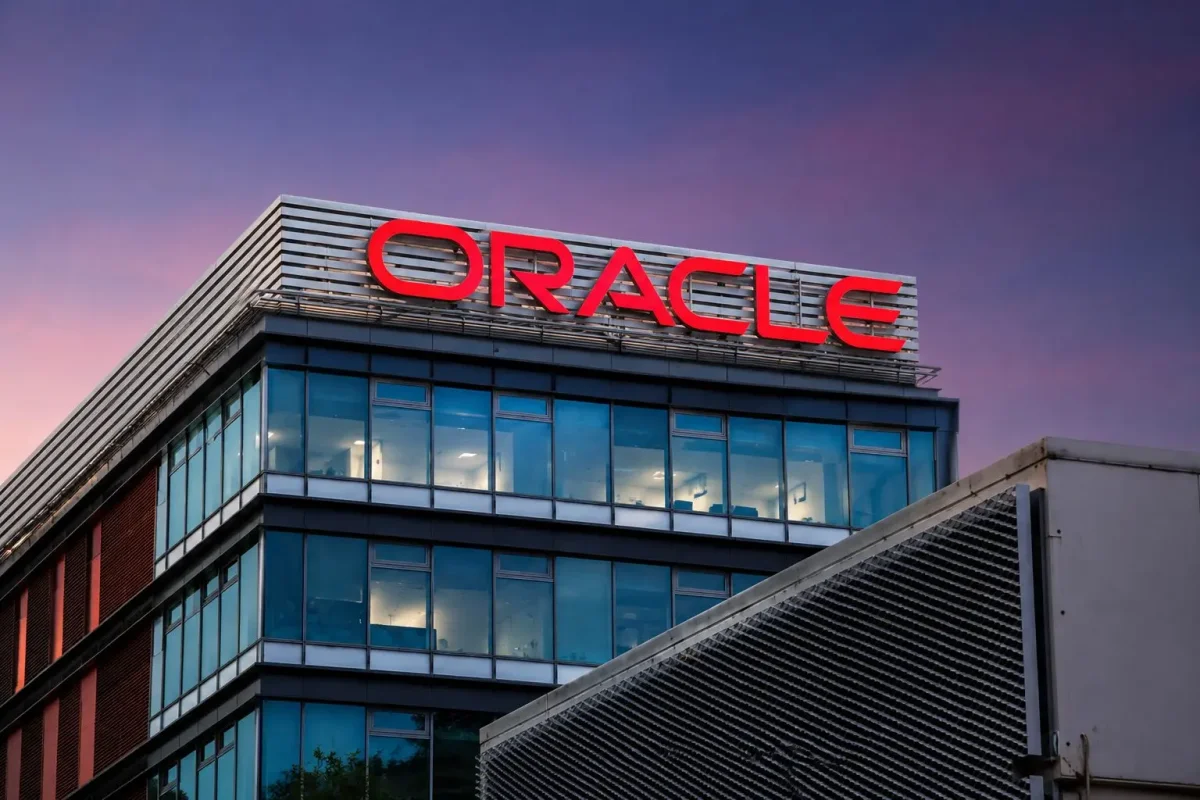
Oracle's stock took a 5.4% hit on Wednesday, sliding to $231.41 as the market refocused on the steep costs of scaling its cloud infrastructure. The decline, which sliced the company's market capitalization to roughly $674 billion, came as investors weighed the sustainability of its AI-driven growth narrative against mounting capital expenditures.
The sell-off follows Alphabet's announcement of an $80 billion stock sale to fund its own AI buildout, which has cast a spotlight on the immense cash requirements facing tech giants. Microsoft and Amazon also edged lower in early trading, reflecting broader unease about the industry's spending spree.
Oracle is slated to report fiscal fourth-quarter results after the market closes on June 10, a report that will test whether shareholders remain willing to back its aggressive expansion. Capital spending on data centers and equipment has been climbing sharply, with the company projecting $50 billion in capex for fiscal 2026.
The numbers paint a stark picture: free cash flow was negative $24.7 billion over the trailing four quarters through Q3, as capital expenditures hit $48.3 billion. Meanwhile, remaining performance obligations (RPO) ballooned to $553 billion, up 325% year-over-year, driven largely by massive AI contracts. Oracle has said much of the required hardware, including graphics processing units, is either prepaid by customers or provided by them.
To fund its ambitions, Oracle aims to raise up to $50 billion through a mix of debt and equity. It has already secured $30 billion from investment-grade bonds and mandatory convertible preferred shares, but has yet to tap the at-the-market equity component. The cost of insuring Oracle's debt has risen sharply, with its five-year credit default swap widening to 150 basis points from about 30 a year ago, signaling heightened credit risk.
Analysts remain divided. Seeking Alpha contributor Oliver Rodzianko holds a Hold rating, noting that while Oracle shares have surged over 75% since February, rich valuation, heavy spending, and free cash flow challenges are red flags. On the other hand, some investors see opportunity. Marc Dizard of Huntington National Bank told Reuters he favors Oracle because its large customer base gives it "more time to get their pricing model correct."
Software stocks broadly have been performing better, with AI reshaping the industry rather than destroying it, according to Daniel Morgan at Synovus Trust. Cantor's Thomas Blakey noted that software names are becoming "beneficiaries of AI" after recent earnings, with Oracle, Microsoft, Datadog, Palo Alto Networks, and Synopsys among top picks.
On the hardware front, Arm CEO Rene Haas revealed at Computex that both Oracle and ByteDance are using Arm's AGI CPU chips for general computing in AI data centers. Yet timing risks loom: if customer deployments slow, chip supplies tighten, or prepayments cover less of the expansion, Oracle could be left absorbing debt payments and data-center costs before revenue materializes.
As earnings approach, Oracle faces a straightforward but demanding task: demonstrate that its $553 billion backlog can convert into cash flow quickly and profitably enough to justify the spending. The market is no longer content with size alone—it wants proof of execution.