U.S. equity markets were closed on Friday, July 3, in observance of the Independence Day holiday, providing a brief respite for Oracle Corporation (NYSE:ORCL) after a turbulent week. The stock closed at $140.27 on Thursday, July 2, marking a 1.56% decline on volume of 44.27 million shares, which was 1.56 times the 65-day average.
Oracle shares have been under significant pressure, shedding 5.6% during the holiday-shortened week and plunging 23.9% over the last nine consecutive trading sessions. The stock now sits just 4.2% above its 52-week low of $134.57, highlighting the severity of the recent downturn.
Massive Backlog vs. Capital Demands
The company disclosed that its remaining performance obligations (RPO) have swelled to $638 billion, a figure that is approximately 1.56 times its current market capitalization of $408.5 billion. This backlog underscores the immense demand for Oracle's AI cloud services, but it comes with a hefty price tag. Oracle has outlined a capital expenditure plan of up to $95 billion for fiscal 2027, which includes $70 billion in direct spending and an additional $20 billion to $25 billion earmarked for repayment.
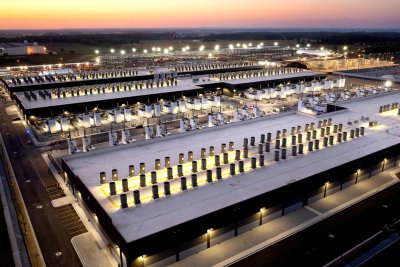
This aggressive spending is driven by the need to build out data centers to support its AI infrastructure. However, the timing mismatch between upfront capital outlays and revenue recognition is causing investor unease. In fiscal 2026, Oracle generated $32.0 billion in operating cash flow but reported negative free cash flow of $23.7 billion, highlighting the strain.
Funding Strategy Under Scrutiny
To bridge the gap, Oracle raised $43 billion in debt and $5 billion in equity in fiscal 2026. For fiscal 2027, the company plans to secure approximately $40 billion through a mix of debt and equity, including a previously announced $20 billion at-the-market equity offering. Despite these measures, Oracle stated it does not intend to issue additional debt in calendar 2026.
CFO Hilary Maxson warned that gross margins will "step down" as the company ramps up data center projects, while CEO Clay Magouyrk assured analysts that delivery is "continuing to accelerate." However, Jacob Bourne, an analyst at eMarketer, noted that "the funding question is getting harder, not easier."
Market Context and Analyst Views
Oracle's struggles stand in stark contrast to the broader market. The Dow Jones Industrial Average closed at a fresh record high on Thursday, while the S&P 500 ended flat and the Nasdaq Composite slipped 0.8%. For the week, the S&P 500 gained 1.8%, the Dow added 2.0%, and the Nasdaq rose 2.1%.
Despite the stock's sharp decline, Wall Street remains largely bullish. According to FactSet, 38 out of 45 analysts rate Oracle as Buy or Overweight, with only 6 Holds and 1 Sell. The average price target stands at $254.84, implying an 81.7% upside from the current price. Mizuho's Siti Panigrahi maintains a $320 target, while KeyBanc has a $300 target, even as Oracle endures its longest losing streak since 2021.
Dividend Announcement
Oracle's board declared a quarterly dividend of $0.50 per share, payable on July 24 to shareholders of record as of July 10. This move provides some income for investors amid the volatility.
As U.S. markets reopen, Oracle faces the immediate challenge of breaking its nine-day losing streak. The company's ability to execute its AI strategy while managing its capital structure will be closely watched by investors.