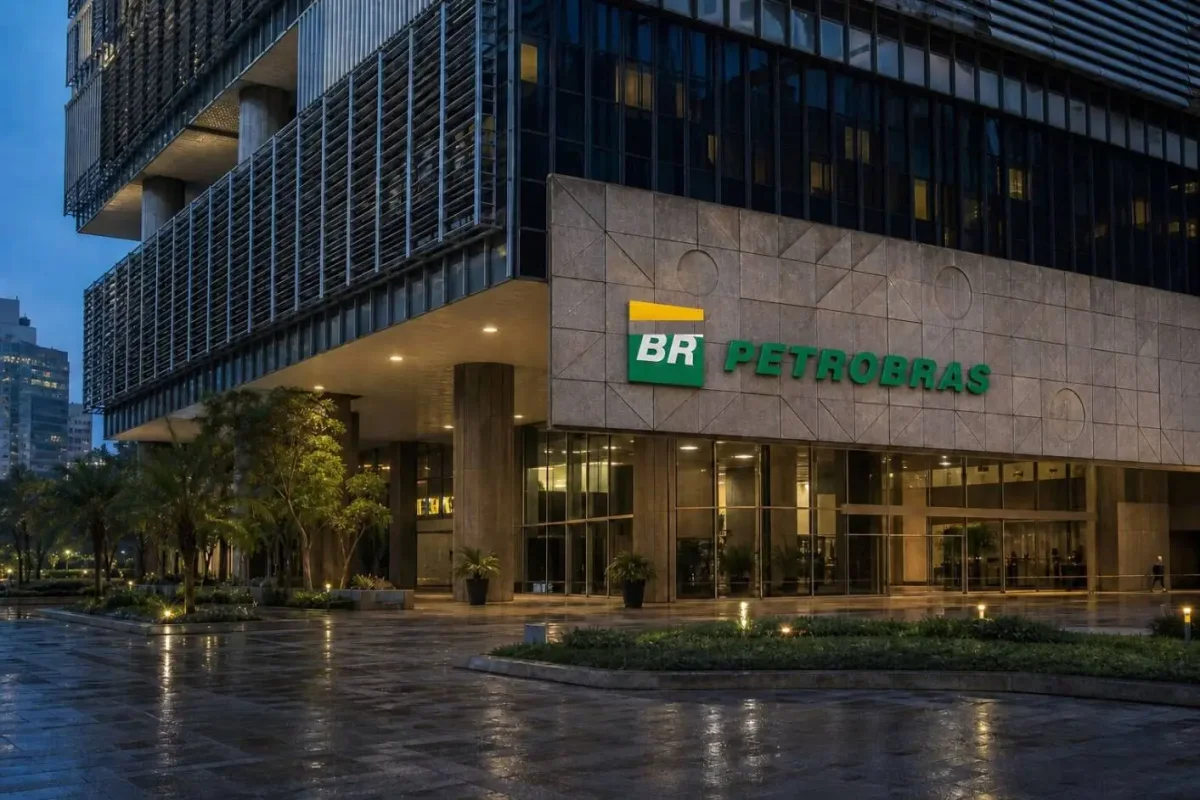
RIO DE JANEIRO — Shares of Petróleo Brasileiro S.A. (NYSE: PBR) climbed 5.06% on Tuesday, closing at $20.33, as escalating Middle East tensions pushed crude oil prices to their highest level in five weeks. The move mirrored a sharp rally in Brent crude, which settled at $94.65 per barrel, up 4.6%, while West Texas Intermediate (WTI) advanced 5.2% to $90.22.
The Brazilian state-controlled oil giant's American Depositary Receipts (ADRs) traded 31.04 million shares during the session, reflecting heightened investor interest. The stock's performance outpaced major international peers: BP (NYSE: BP) rose 3.73%, Chevron (NYSE: CVX) gained 2.38%, and Exxon Mobil (NYSE: XOM) advanced 2.24%.
Cash-Flow Leverage Amplifies Oil Price Gains
Analysts noted that Petrobras's response to the oil price spike indicates a high degree of operating leverage. With crude prices climbing, the company's cash-flow generation is directly amplified, providing a larger buffer before shareholder distributions and capital allocation decisions.
In its most recent quarter, Petrobras reported robust operational metrics. Own oil and gas production reached 3.336 million barrels of oil equivalent per day (boed), a 14.1% increase year-over-year. Revenue surged 59.8% to $33.607 billion, while operating cash flow jumped 62.7% to $12.250 billion. After deducting capital expenditures of $4.559 billion, the company generated a straightforward $7.691 billion buffer ahead of financing activities and dividend payments.
Geopolitical Risk Premium Returns
Tuesday's rally was fueled by renewed clashes between the United States and Iran, which raised concerns about supply disruptions. John Evans, an analyst at PVM, commented that the missile strikes reinforced worries that the conflict "will run and run," adding a fresh risk premium to crude prices.
The broader equity market, however, moved in the opposite direction. The S&P 500 slipped 0.7% as higher oil prices and rising yields pressured valuations. Investors rotated into energy names, with Petrobras leading the pack among oil majors.
Production and Refining Strength
Petrobras's operational performance remains a key differentiator. Refinery utilization stood at 101.2%, and exports approached one million barrels per day, according to the company's SEC filing. The strong output levels have positioned the firm to capitalize on elevated oil prices, though management remains cautious about potential headwinds.
Dividend Schedule and Risks
The next scheduled cash distribution is set for September 21, with a gross value of R$0.350486 per underlying Brazilian share. Additional installments are due in November and December, according to the company's dividend schedule.
However, significant risks persist. Oil prices could retreat if geopolitical tensions ease, and government intervention, energy policy changes, taxation, currency fluctuations, or increased capital spending could consume surplus cash, as highlighted in the company's 2025 Form 20-F.
For investors, the immediate hurdle is whether oil can sustain above $90 per barrel. Persistently high prices would allow more of Petrobras's recent production to benefit from elevated realizations, while a swift price drop would unwind Tuesday's operating-leverage move.
As the market digests these dynamics, Petrobras's ADRs remain a high-beta play on crude oil, with its cash-flow sensitivity to price shocks now clearly on display.