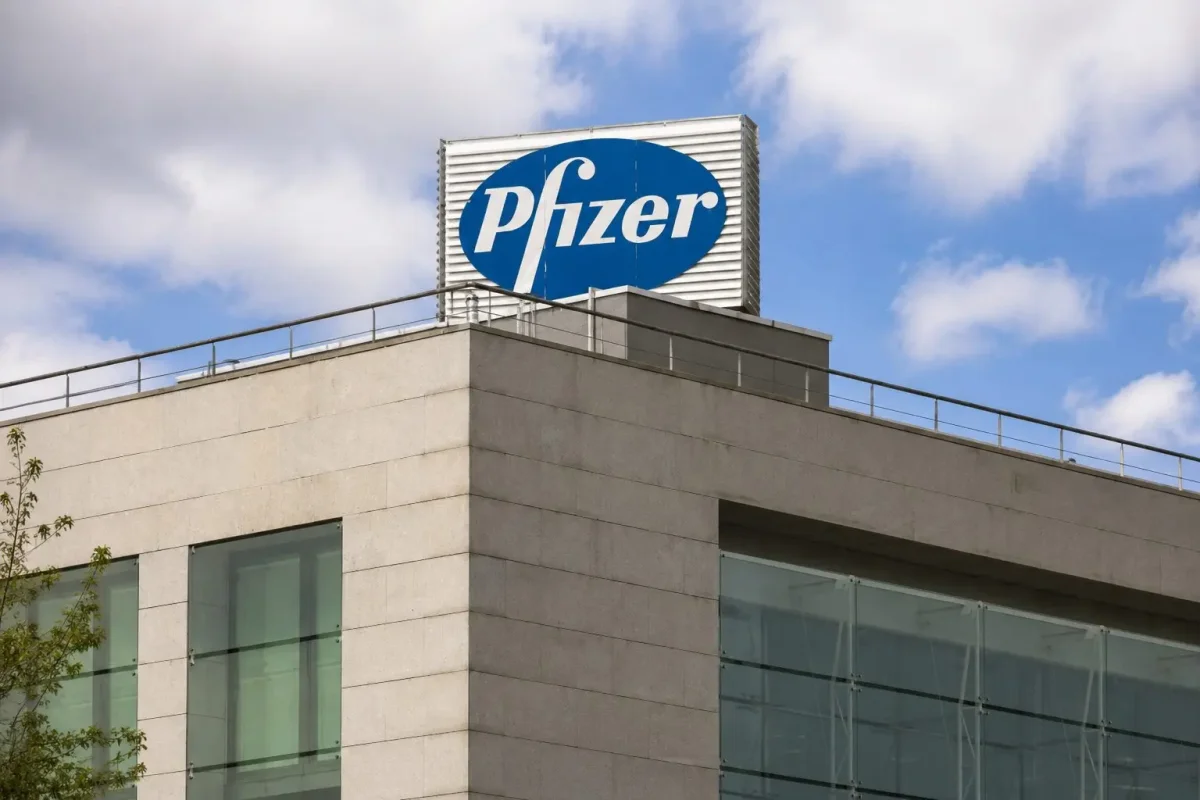
Pfizer Inc. (NYSE: PFE) ended Friday's trading session at $26.21, a modest gain of $0.04 or 0.15%, on trading volume of approximately 38.77 million shares. The stock's market capitalization now stands near $149.38 billion. While the broader market posted stronger gains—the S&P 500 rose 0.5%, the Dow Jones Industrial Average added 0.7%, and the Nasdaq Composite climbed 0.3%—Pfizer managed to outperform its sector benchmark. The Health Care Select Sector SPDR ETF (XLV) slipped 0.18% on the day.
Dividend and Guidance in Focus
Investors are increasingly drawn to Pfizer's attractive dividend profile. The pharmaceutical giant offers a dividend yield of approximately 6.56%, supported by a recently declared second-quarter dividend of $0.43 per share, payable on June 12. This marks the company's 350th consecutive quarterly dividend payment. Management has reaffirmed its full-year 2026 revenue guidance of $59.5 billion to $62.5 billion and adjusted diluted EPS of $2.80 to $3.00. Adjusted EPS excludes amortization, acquisition-related costs, and other one-time items.
European Pricing and Legal Headwinds
Drug pricing in Europe remains a key overhang. Germany's health minister, Nina Warken, stated that pharmaceutical companies will not be exempt from upcoming cost-cutting measures, saying, "Every sector must play its part in this reform." This follows a Reuters report that Pfizer CEO Albert Bourla informed German Chancellor Friedrich Merz that the company is "reviewing our external engagements as well as the timing, scope and future prioritization" of certain planned investments in Germany. Additionally, an adviser to the European Union's top court recommended that the European Commission's appeal over the disclosure of COVID-19 vaccine contracts—including those with Pfizer and BioNTech—be rejected. While not an immediate earnings threat, the legal development adds to post-COVID franchise uncertainty.
Pipeline Progress: Obesity and Oncology
Pfizer's pipeline is showing signs of life. The U.S. Food and Drug Administration (FDA) has approved a broader label for HYMPAVZI, expanding its use to treat hemophilia A and B in patients as young as six years old. More notably, the company reported Phase 2b results for berobenatide, its once-monthly GLP-1 receptor agonist targeting obesity and blood sugar control. Pfizer plans to launch 10 Phase 3 studies for berobenatide in 2026 as part of a broader push involving over 20 trials in obesity. However, safety concerns persist: in the VESPER-3 trial, 38% of participants experienced nausea and 23.3% reported vomiting. JPMorgan analyst Chris Schott flagged these side-effect rates as key investor red lines.
Financial Performance and Valuation
In the first quarter of 2026, Pfizer reported revenue of $14.45 billion, a 5% year-over-year increase. Excluding sales of Comirnaty and Paxlovid, operational revenue grew 7%, while new and acquired products surged 22% operationally. Despite the top-line growth, adjusted diluted EPS fell 18% year over year to $0.68, underscoring margin pressure. Pfizer trades at roughly 9 times the midpoint of its 2026 adjusted EPS guidance, with a trailing P/E of about 20. Wall Street analysts have set a 12-month consensus price target of $29.05. Of 23 analysts covering the stock, 8 rate it a buy, 13 a hold, and 2 a sell, reflecting cautious optimism.
Looking Ahead
The next major catalyst for Pfizer is its second-quarter earnings report, scheduled for August 4, 2026. Wall Street expects EPS of $0.68. Investors will be watching for any changes to the 2026 outlook, signs that European pricing pressure could impact capital spending, and whether pipeline updates in obesity and oncology are enough to shift the narrative from a value play to a potential turnaround story.