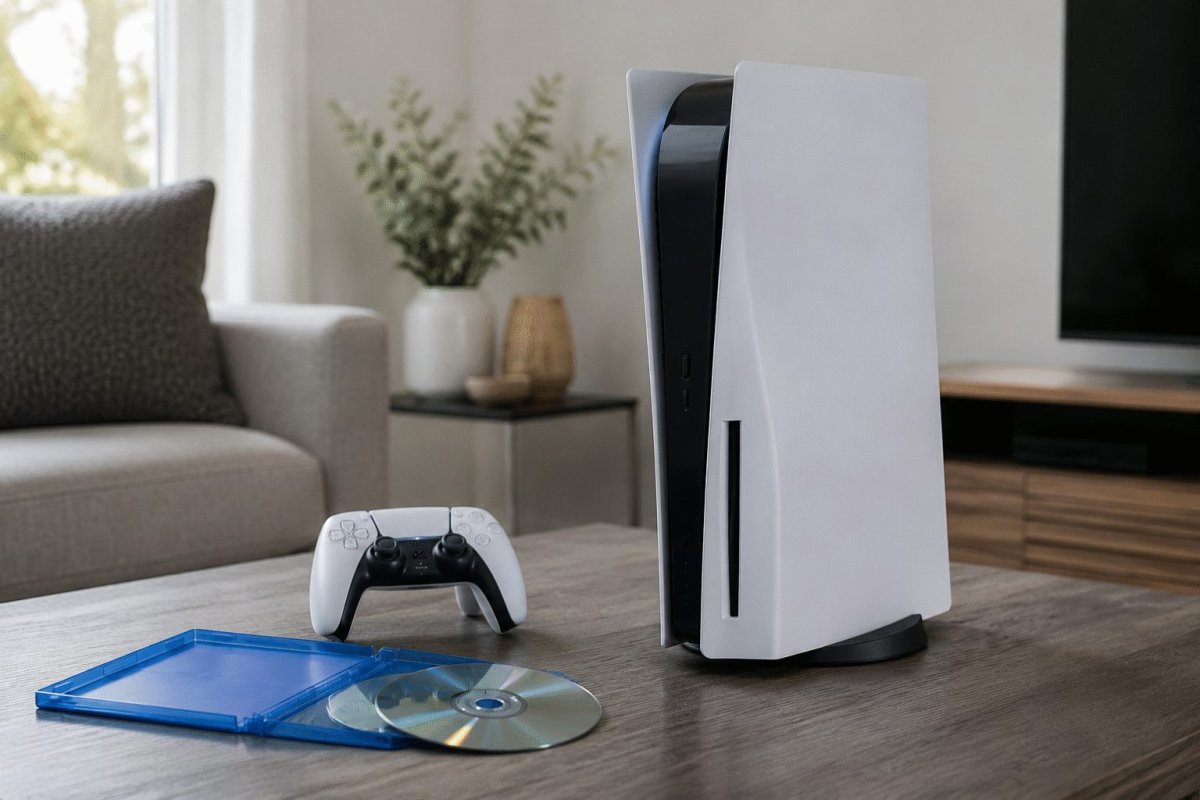
Tokyo, August 25, 2026 — As Tokyo cash trading closed and U.S. premarket activity continued, Sony Group Corporation (NYSE: SONY) faces a pivotal test of its digital-first gaming strategy. A consumer boycott, now in its third day, has targeted the company's proposal to cease production of physical game discs by January 2028. The protest, which runs through August 30, urges players to refrain from purchases, log out of their accounts, and cancel subscriptions.
Digital Dominance
The financial stakes are clear: Sony's latest quarterly report reveals that physical software revenue totaled ¥20.5 billion, a mere 2.2% of its gaming segment sales. In stark contrast, digital software, add-on content, and network services generated ¥693.8 billion — roughly 34 times the physical figure. This digital-heavy mix underscores why the company views the boycott as a manageable risk.
Breaking down the digital categories, full-game downloads contributed ¥192.0 billion, add-on content brought in ¥293.2 billion, and network services — including PlayStation Plus and advertising — added ¥208.6 billion. Combined, these streams dwarf the physical segment, which now represents a fraction of the business.
Management's Stance
Chief Financial Officer Lin Tao stated that Sony has observed no business impact from the disc-production decision, citing digital content's market leadership. The company's official investor Q&A reiterated a commitment to monitoring player preferences. This confidence is backed by robust operating figures: gaming revenue held steady at ¥937.1 billion, while operating income surged 37% to ¥202.0 billion, lifting the operating margin to 21.6% from 15.8% year-over-year.
Engagement Metrics Under Scrutiny
Despite the strong financials, a cautionary note emerges from engagement data. Monthly active users reached a record 125 million in June, yet overall playtime declined by 4% — the first such dip in recent quarters. A short-lived protest may go unnoticed, but a sustained drop in playtime, in-store spending, or subscription renewals would signal real damage.
Retail and Market Context
Retailers continue to play a role, with PlayStation accounting for nearly half of UK boxed game sales in 2025, according to the Entertainment Retailers Association. Sony plans to introduce physical download codes when discs are phased out, preserving a retail presence even after physical media disappears.
The stock has yet to price in boycott risks. Sony shares in Tokyo closed at ¥3,832 on August 25, down 0.47%, while the U.S. ADR last traded at $24.13, down 0.54% in premarket, after a 1.42% gain on Monday. Analyst targets vary widely: Bernstein's $22 price target implies a 9.3% downside, while Bank of America's $34 target suggests a 40% upside, reflecting ongoing debate about the company's growth trajectory.
Looking Ahead
The critical test comes after August 30. Investors should monitor retail spending, PlayStation Plus churn, and engagement metrics in September. Management projects gaming sales of ¥4.54 trillion and operating income of ¥660 billion for fiscal 2026, both upgraded in July. Risks include unverified participation numbers, currency fluctuations, and new title launches that could mask boycott effects.
As the boycott unfolds, Sony's ability to navigate this digital transition will be closely watched. The company's long-term strategy hinges on maintaining engagement in a landscape where physical media is becoming an afterthought.