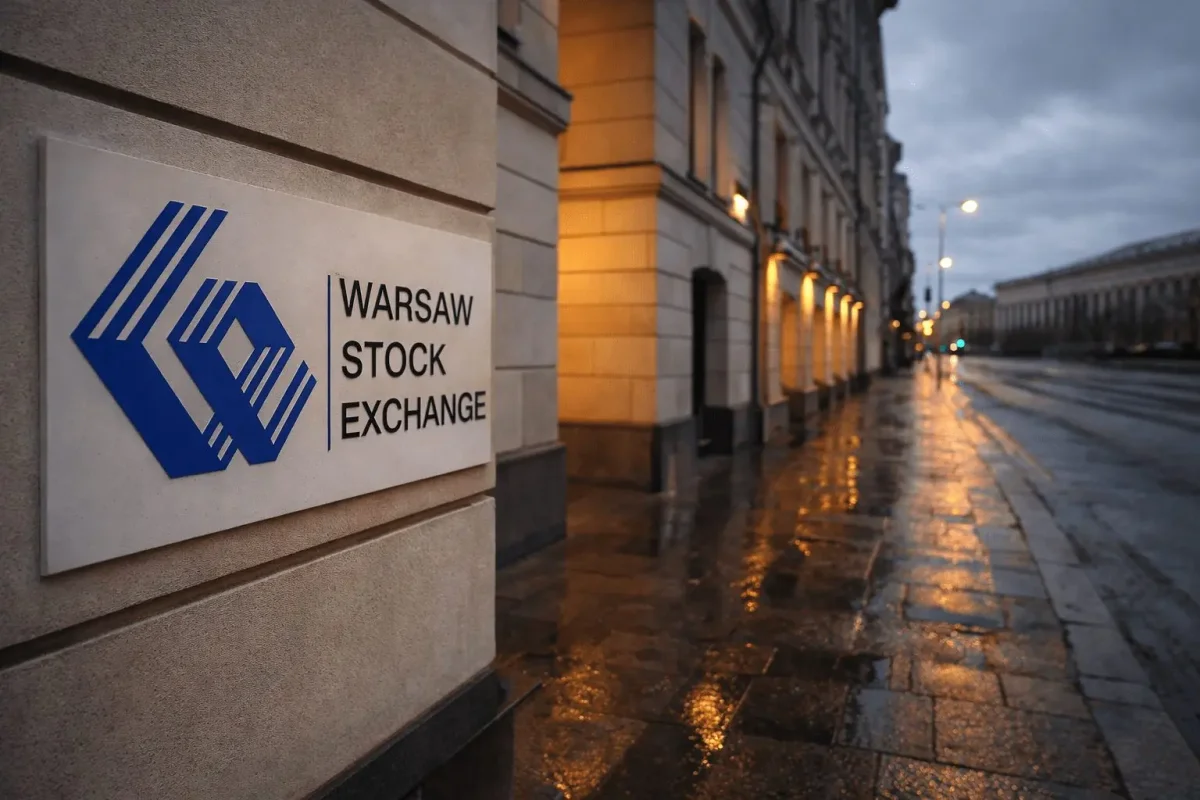
The Warsaw equity market begins the week under the shadow of a crucial monetary policy decision, with the National Bank of Poland's Monetary Policy Council (MPC) scheduled to convene on March 3-4. This gathering represents the most significant domestic macroeconomic event for Polish assets, potentially setting the tone for bank stocks and broader index performance. The central bank held its reference rate steady at 4.00% during its early-February meeting, pausing after a series of cuts implemented last year.
Market Performance and Technical Levels
On Friday, the benchmark WIG20 index concluded trading at 3,440.02, marking a decline of 0.24%. The broader WIG index experienced a more modest retreat, edging down 0.08%. Analysts are closely monitoring the 3,500-point level on the WIG20, which is viewed as a critical psychological and technical barrier. Adam Stańczak, an analyst at DM BOŚ, highlighted the risk of a potential "double top" formation—a chart pattern that can signal a reversal if the index fails to break decisively above a prior high on two separate occasions.
Friday's session displayed a mixed performance among blue-chip constituents. Mining giant KGHM led the advancers with a substantial gain of 4.26%. In contrast, the banking sector faced selling pressure. PKO BP shares fell 1.22%, while Santander Bank Polska declined 1.50%. Technology company CD Projekt also weighed on the index, dropping 2.61%.
Corporate and Regulatory Developments
Several notable corporate actions and regulatory directives emerged. The Polish Financial Supervision Authority (KNF) issued a recommendation to Alior Bank, advising the lender not to distribute more than 50% of its 2025 net profit as dividends. The regulator also instructed the bank to refrain from any actions that could reduce its regulatory capital, or "own funds," without prior consultation.
E-commerce platform Allegro finalized the sale of its Slovenian and Croatian business units to Mutares SE. The transaction involved the full transfer of ownership of Mimovrste d.o.o. and Internet Mall d.o.o., along with associated technology assets and business support teams. Allegro stated the financial impact aligns with previous forecasts and confirmed the divested operations will be excluded from its future consolidated financial results.
Political and Fiscal Backdrop
Political developments continue to influence market sentiment. Poland's parliament recently approved legislation to access 43.7 billion euros in European Union defense loans. However, a potential presidential veto looms, creating uncertainty for investors who remain alert to possible disruptions in fiscal policy messaging.
In a separate market development, the Warsaw Stock Exchange (GPW) introduced a new listing format for Exchange-Traded Notes (ETNs). These debt securities are linked to underlying assets. The debut products include Poland's first ETNs tied to physically backed digital assets, issued by Sweden's Virtune AB.
Economic Data and Global Context
The domestic data calendar offers key insights early in the week. The S&P Global Poland Manufacturing Purchasing Managers' Index (PMI) for February, released on Monday, provides a timely snapshot of factory sector health, influencing assessments of domestic economic growth and interest rate expectations.
Internationally, the flash estimate of Eurozone inflation from Eurostat, due on Tuesday, March 3, carries weight for European bond yields and could spill over into Central and Eastern European (CEE) risk appetite. Furthermore, global sentiment remains a key driver for Warsaw's export-oriented companies and financial institutions. The U.S. non-farm payrolls report on Friday is a critical data point that frequently reshapes expectations for Federal Reserve policy and the outlook for global dollar liquidity.
Outlook and Risks
The primary risk for Polish equities this week is a hawkish tilt from the MPC. Any indication of a less dovish future policy path could immediately pressure banking stocks, potentially pulling the main index away from its recent highs. Additionally, disorderly political negotiations concerning fiscal and defense budgets pose a threat to market stability. Externally, a deterioration in global risk sentiment following key U.S. economic releases could have a similarly negative impact on Warsaw-listed shares.
The week's defining event is the MPC's interest rate announcement scheduled for Wednesday, March 4. Market participants are focused not only on the decision regarding the benchmark rate itself but also on the nuanced language of the accompanying statement for clues about the future direction of monetary policy in Poland.
On the ratings front, Fitch Ratings affirmed Poland's Long-Term Foreign-Currency Issuer Default Rating (IDR) at 'A-' on February 27. The outlook remains Negative, reflecting ongoing concerns regarding the country's fiscal trajectory.