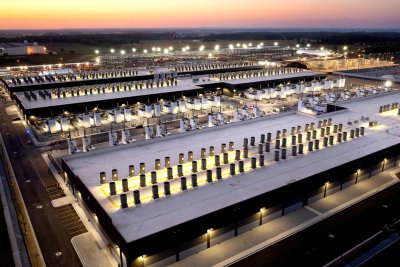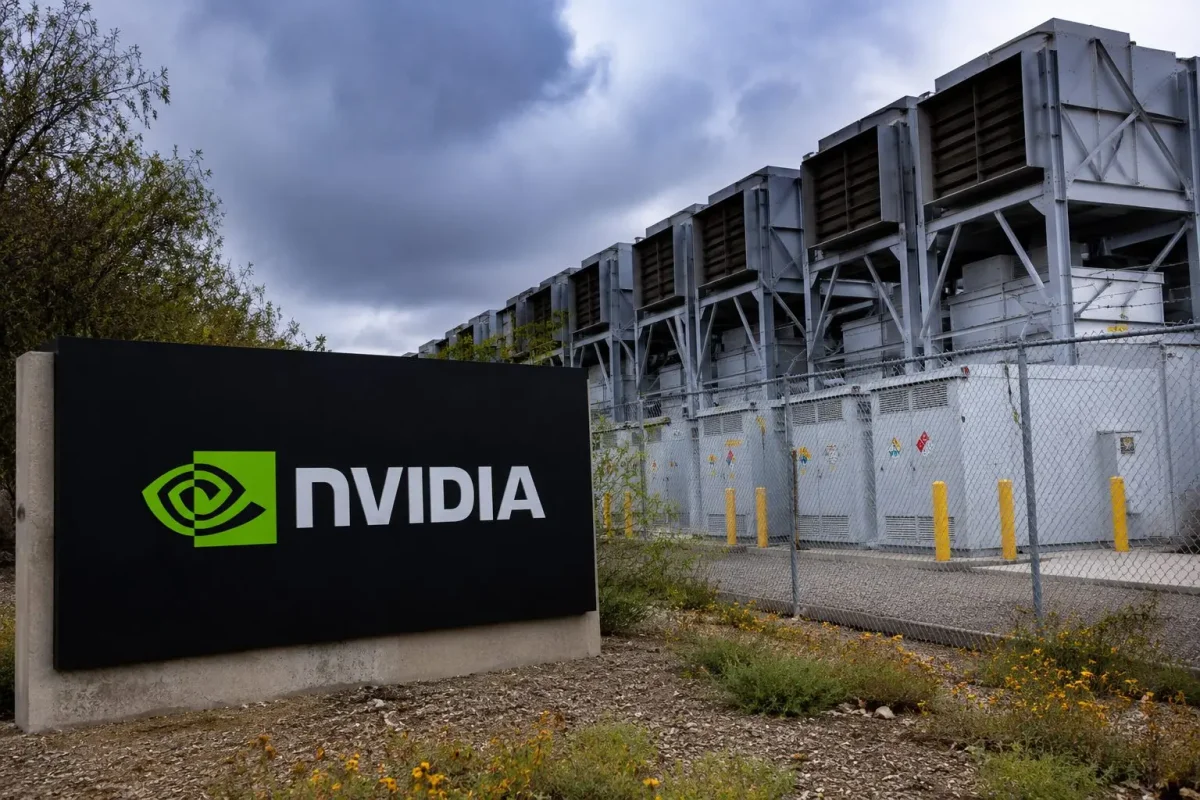
In a holiday-shortened trading week, shares of companies supplying the electrical infrastructure for artificial intelligence surged, highlighting a critical bottleneck in the AI boom: the power grid. GE Vernova led the rally with an 18.0% gain, followed by Vertiv at 10.0% and Eaton at 7.8%, while Nvidia, the chip giant at the heart of AI, rose just 2.7%.
The divergence reflects a growing recognition among investors that the AI trade is expanding beyond semiconductor makers to the so-called 'picks and shovels'—the firms that build the power generation, distribution, and cooling systems needed to run massive data centers. The shift comes as the U.S. Federal Energy Regulatory Commission (FERC) ordered six regional grid operators to justify or revise their rules for connecting large electricity users, including data centers.
FERC's directive gives the operators 60 days to defend their grid tariffs—the rules governing network service—or propose changes. The order targets faster connection studies, cost allocation, on-site generation, and flexible service options. 'The grid and prior policy were not built for the pace and scale of demand we’re seeing from AI infrastructure,' said Robert Montejo, a partner at Duane Morris who represents data-center developers and power companies.
The rally underscores a physical constraint: processors can be delivered faster than the electricity infrastructure can be approved, built, and connected. The U.S. Energy Information Administration expects electricity consumption to rise from a record 4,195 billion kilowatt-hours in 2025 to 4,271 billion this year and 4,397 billion in 2027.
GE Vernova, with the broadest exposure to utility-scale supply, reported first-quarter orders of $18.3 billion, up 71% on an organic basis. Its backlog reached $163 billion, and its electrification unit booked $2.4 billion in equipment orders tied to data centers—more than in all of 2025. 'Demand is accelerating for our Power and Electrification solutions,' CEO Scott Strazik said.
Vertiv, which supplies backup power and liquid cooling systems for server racks, posted first-quarter sales of $2.65 billion, up 30%, with organic sales in the Americas rising 44%. The company raised its full-year sales forecast to between $13.5 billion and $14 billion as customers prioritize 'optimized design, deployment speed, and operational efficiency,' CEO Giordano Albertazzi noted.
Eaton, which bridges utility power and server rooms through switchgear and distribution systems, saw its 12-month average of orders in its Electrical Americas business rise 42%, driven by data-center demand. Group sales increased 17% to $7.5 billion. 'Strong demand across our markets drove solid first quarter performance,' CEO Paulo Ruiz said.
The three companies are not interchangeable: GE Vernova focuses on turbines and high-voltage grid hardware, Vertiv on power and cooling inside facilities, and Eaton on distribution equipment in between. Their collective performance suggests investors increasingly view AI infrastructure as an end-to-end power chain, not a single-chip market.
Looking ahead, markets reopen Monday with key events on the calendar. Micron Technology reports fiscal third-quarter results after Wednesday's close, offering a read on memory demand from AI servers. Thursday brings May personal-income and spending data, including the personal consumption expenditures inflation gauge, and durable-goods orders. These reports could move bond yields and valuations across fast-growing industrial stocks.
However, the trade depends on planned data-center campuses becoming firm orders and cash flow. Morgan Stanley estimates the largest cloud operators will spend more than $800 billion on capital projects in 2026, yet DC Byte data compiled for Reuters show 68% of 679 U.S. data-center projects tracked were not yet under construction. Higher borrowing costs, permitting delays, or tougher grid cost-sharing rules could slow projects and leave suppliers carrying capacity built for demand that arrives later.