Quantinuum Inc. shares surged in Tuesday afternoon trading, gaining 14.6% to $78.21, as investors reacted to a series of favorable developments for the quantum computing sector. The stock, which debuted on the Nasdaq earlier this month at $60 per share, now trades roughly 30% above its initial public offering price.
The rally was sparked by two executive orders signed by President Donald Trump on Monday, aimed at accelerating the development of quantum computing in the United States and mandating the migration of government systems to post-quantum cryptography. The White House set a target of 2028 for a powerful research-grade quantum computer capable of supporting scientific discovery. Michael Kratsios, director of the White House Office of Science and Technology Policy, told reporters that the administration believes this goal is achievable within that timeframe.
One executive order calls for the development of a quantum computer powerful enough to advance scientific research, along with plans to deploy quantum-enabled sensors and networks over the next five years. The second order directs federal agencies to transition sensitive systems to post-quantum cryptography by 2030 and 2031, depending on the specific use case, to protect against future quantum-based cyber threats.
Adding to the positive sentiment, Quantinuum announced a strategic collaboration with Hewlett Packard Enterprise (HPE) to integrate quantum computing with high-performance computing (HPC) and artificial intelligence infrastructure. Quantinuum CEO Rajeeb Hazra emphasized the company's focus on developing practical, hybrid solutions, while Masoud Mohseni, HPE's quantum director, described the effort as a deeply integrated hybrid approach.
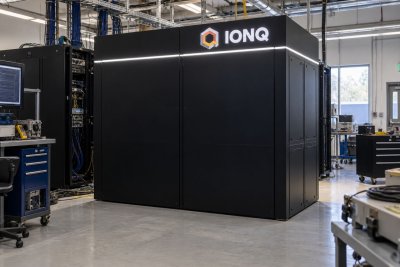
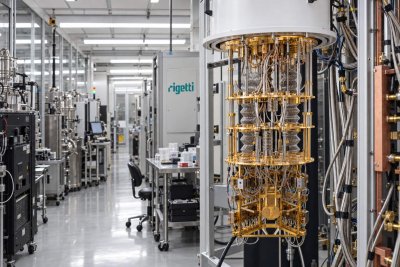
The sector-wide enthusiasm was evident, though not uniform. D-Wave Quantum rose 3.8%, Rigetti Computing was little changed, and IonQ slipped about 1.0%, reflecting a selective bid across quantum stocks. HPE, Quantinuum's new partner, also saw its shares climb 2.6%.
Federal support remains a key backdrop for the industry. In May, the Commerce Department announced letters of intent for $2.013 billion in CHIPS Act incentives across nine quantum companies, including a planned $100 million allocation for Quantinuum to address manufacturing bottlenecks in fault-tolerant trapped-ion computers. These systems are designed to operate reliably even when errors occur, a critical step toward practical quantum computing.
Despite the rally, risks remain. Quantinuum reported 2025 sales of $30.9 million and a net loss of $192.6 million. Japan's RIKEN research institute accounted for roughly 60% of its 2025 revenue. Edward Best, a partner at Willkie Farr & Gallagher, cautioned that investors should monitor whether the company can diversify its customer base and increase both the number and value of commercial contracts.
Tuesday's rally reflects a policy-and-positioning trade as much as an earnings-driven move. The government has set a timeline for the quantum race, and Quantinuum now offers a publicly traded vehicle for investors to express that thesis. The longer-term challenge will be converting federal support and partnerships into sustainable, repeatable revenue before development costs dilute the current excitement.
Disclaimer: This article is for informational purposes only and does not constitute investment advice. All investments carry risk, including the potential loss of principal. Readers should conduct their own research and consult with a qualified financial advisor before making any investment decisions.