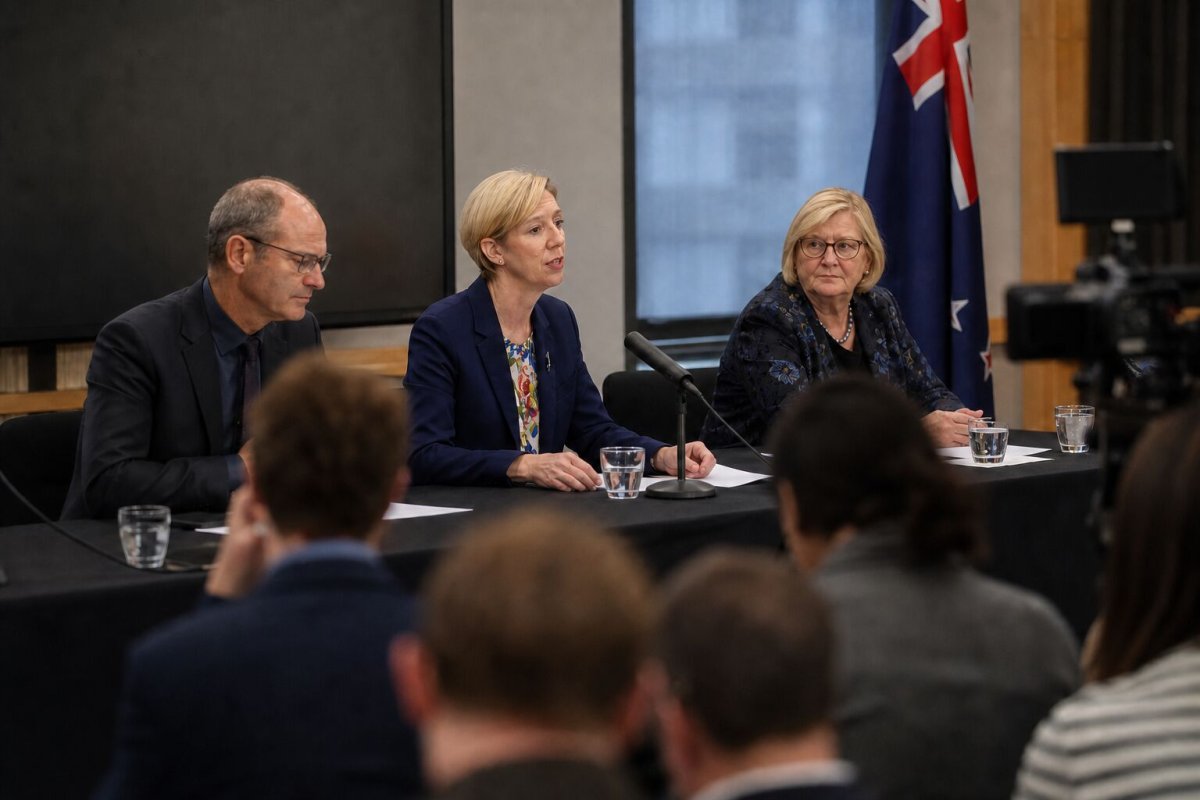
The Reserve Bank of New Zealand (RBNZ) raised the Official Cash Rate (OCR) by 25 basis points to 2.75% on Wednesday, marking the second consecutive increase. However, the currency reaction told a different story: the New Zealand dollar tumbled 1.1% to US$0.5830, as investors focused on the central bank's forward guidance rather than the widely anticipated move.
Prior to the 14:00 NZST announcement, the kiwi was trading near US$0.5896. It slipped to US$0.5857 immediately after the decision and continued to slide through the afternoon, reaching US$0.5830 by 17:04 NZST. The market's interpretation was clear: the RBNZ's statement carried a dovish tilt, despite the rate hike.
Kiwibank described the statement as "clearly dovish," noting that market expectations had been running high. The central bank's projection of a lower future rate path overshadowed the immediate increase, a signal that policymakers may be nearing the end of their tightening cycle.
Inflation Still Above Target
New Zealand's headline inflation rose to 4.1% in the June quarter, well above the RBNZ's 1%–3% target band. Excluding vehicle fuel, inflation was 2.9%. Tradable inflation—prices of imported goods and services—accelerated to 4.9% from 2.5% in March, driven by a 27.5% surge in petrol prices. Non-tradable inflation edged down to 3.4% from 3.5%.
The RBNZ forecasts that headline inflation will remain above the target range through 2026, only returning to the 2% midpoint after mid-2027. The bank acknowledged that while the economy is rebounding, unemployment remains elevated, adding complexity to the inflation outlook.
Policy Split Emerges
The Monetary Policy Committee voted 6–0 to raise the OCR, but the risk assessment was divided. Four members, including Anna Breman, viewed inflation risks as skewed to the upside, while two members—Paul Conway and Carl Hansen—considered the risks balanced. This split suggests that further rate hikes are possible but not certain.
Economists are already debating the timing of the next move. ANZ chief economist Sharon Zollner maintains a forecast for an October increase, while Westpac's Kelly Eckhold expects the next adjustment in December. Both see the potential for additional tightening if inflation proves sticky.
Currency Weakness Adds to Inflation Pressures
The New Zealand dollar's decline raises the cost of imported fuel and other goods, potentially adding to inflationary pressures. The RBNZ noted that financial conditions had already tightened ahead of the meeting, with higher wholesale rates translating into increased mortgage and business loan rates. The recent rate hike partially unwinds earlier currency tightening, but a persistently soft kiwi could slow the pace of disinflation and bolster the case for another hike.
Risks to the outlook are two-sided. Oil prices could fall faster than expected, easing inflation pressures, while sluggish employment and falling house prices could dampen demand. Conversely, an extended energy shock or broader price increases would force the central bank to act more aggressively.
For investors, the key takeaway is the contrast between the current rate and the projected path. The RBNZ's guidance suggests a lower peak than markets had priced in, and the October 28 decision will reveal which signal the committee trusts more. Until then, the kiwi is likely to remain sensitive to domestic data and global risk sentiment.
