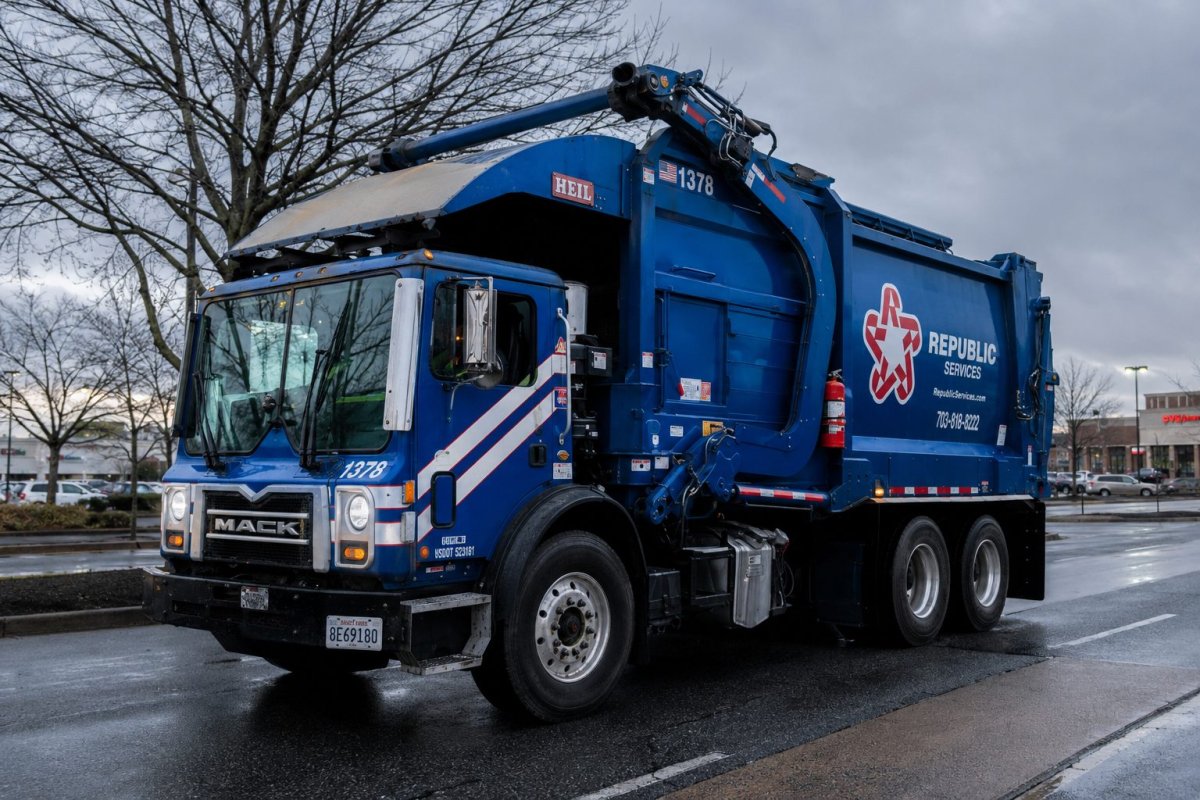
Republic Services (NYSE:RSG) and Rumpke Waste & Recycling are implementing schedule changes for residential trash and recycling pickups in parts of Ohio and Indiana next week, responding to forecasts of dangerously high temperatures. The adjustments, while seemingly minor, carry significant implications for investors as waste management margins hinge on efficient route completion and labor cost control.
In Dayton, Ohio, Rumpke will begin residential routes early each day during the week of June 29 to serve customers before the worst of the heat. Vice President Jake Rumpke emphasized safety as the top priority, noting that the extreme conditions make the job more hazardous. District Manager Kevyn Vasquez added that earlier starts help prevent service delays. Meanwhile, in Carmel, Indiana, Republic Services will start collections at 5 a.m., two hours earlier than the usual 7 a.m. start, with residents instructed to place their carts out the night before.
The weather risk is immediate and severe. Forecasts predict Dayton highs of 93°F on Monday and 97°F on Tuesday. The National Weather Service has issued a heat advisory for Indianapolis from June 29 to July 2, with heat index values potentially reaching 102°F. Such conditions not only endanger workers but also threaten operational efficiency.
The financial stakes are clear: In Kettering, Ohio, where Rumpke holds the residential contract, standard curbside service costs $51.66 per quarter, or $17.22 per month. Missed routes, overtime pay, or worker injuries can quickly erode margins on such thin monthly revenue. Republic Services reported to investors in May that first-quarter core pricing added 6.8% to revenue, while volume declined by 1.0%. Adjusted EBITDA margin improved by 50 basis points to 32.1%, driven by disciplined pricing and effective cost management, according to CEO Jon Vander Ark.
WM (NYSE:WM) provided a similar weather-sensitive outlook in April. The company reported a 1.5% decline in collection and disposal volume, partly due to harsh winter weather, while core pricing rose 6.3%. CEO Jim Fish noted that pricing and cost actions helped adjusted operating EBITDA grow 5.9% despite challenging conditions.
Safety data underscores why operators are willing to alter schedules. The Solid Waste Association of North America, citing Bureau of Labor Statistics, reported that refuse and recyclable-material collectors had a fatality rate of 37.4 per 100,000 full-time workers in 2024, ranking fifth among civilian occupations. SWANA CEO Amy Lestition Burke stressed that the industry still has a long way to go on safety and that workers' lives must never be the cost of the job.
Rumpke's operational footprint extends beyond Ohio, serving customers across Kentucky, Indiana, Illinois, and West Virginia, with 14 regional landfills and 23 transfer stations. This makes the Dayton schedule change more than a local adjustment—it reflects broader industry challenges.
As of the last trading session, Republic Services shares stood at $216.39, with a market capitalization of approximately $66.9 billion. WM traded at $225.53, valuing the company at about $90.6 billion. No regular U.S. equity session was underway at press time.