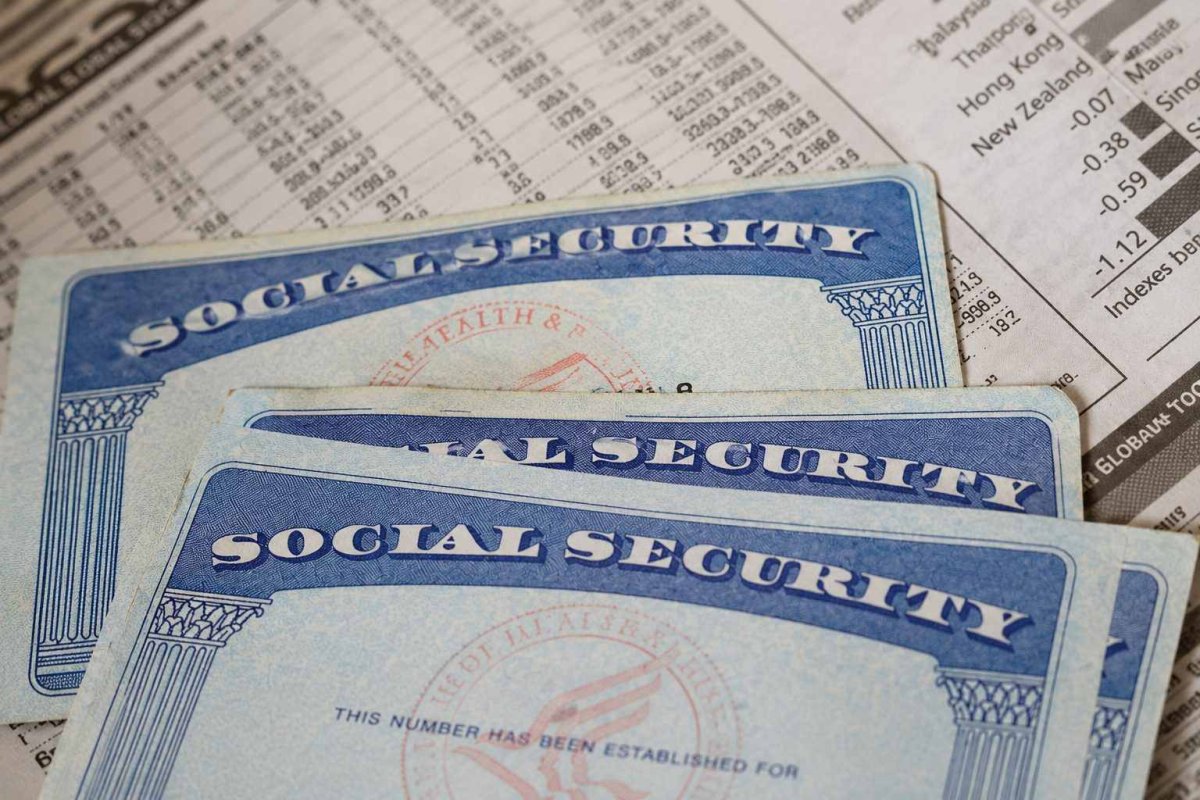
Washington, D.C. – July 6, 2026 – Retailers across the United States are closely monitoring the upcoming Social Security payment schedule, as an estimated $149.3 billion in benefits will flow into bank accounts during July. This figure, derived from the Social Security Administration's (SSA) May run-rate, represents a significant influx of cash for millions of Americans, particularly those on fixed incomes. The payments are scheduled to hit accounts on July 1, 2, 8, 15, 22, and 31, with the July 31 date being an early disbursement of August's Supplemental Security Income (SSI) due to the first of the month falling on a Saturday.
For investors, the key factor is not the total amount but the timing. Since many low-income and older shoppers tend to spend their benefits shortly after receiving them, the distribution calendar can create noticeable weekly fluctuations at retailers that specialize in necessities. Companies like Walmart (WMT), Dollar General (DG), Dollar Tree (DLTR), and Kroger (KR) are particularly sensitive to these patterns, as their customer bases often rely heavily on Social Security income.
The July payment calendar is unusually complex due to the Independence Day holiday. The July 2 payment was pulled forward for recipients who were paid before May 1997, some dual beneficiaries, and those overseas. The July 31 SSI payment, while technically an August benefit, will be deposited early, effectively giving SSI recipients two payments within the month. This quirk means that while total household income for July remains unchanged, the cash-on-hand timing is shifted, which could influence weekly sales data before it is reflected in quarterly reports.
According to the SSA, approximately 75.6 million people received Social Security, SSI, or both in May. The agency disbursed $137.8 billion in Social Security benefits and $5.7 billion in SSI that month. If benefit levels remain flat from May, the combined July payout would reach $149.3 billion, including two SSI payments. This is not an increase in benefits but a calendar effect. The 2026 cost-of-living adjustment (COLA) was 2.8%, and the average retired worker benefit stood at $2,082.76 in May, up from $2,071 in January.
The Bank of America Institute, part of Bank of America (BAC), has noted that spending per household on older-generation cards has been above broader trends since 2022, but they caution that spending patterns change as cardholders age. Senior Economist David Michael Tinsley and his team wrote that the 2026 COLA “looks unlikely to be a big driver” of spending differences. Their analysis found that 69-year-olds spent about 10% less than 60-year-olds in 2025, with necessity spending remaining “fairly flat.”
This context directs attention to retailers with significant exposure to basic goods. Walmart reported U.S. comparable sales up 4.1% (excluding fuel) for its fiscal first quarter, with market share gains led by groceries, general merchandise, and higher-income shoppers. Dollar General saw same-store sales increase 2.0% for the quarter, driven by 1.4% more traffic. CEO Todd Vasos noted “positive customer traffic.” The company’s consumables sales totaled $8.892 billion, representing roughly 82% of net sales, underscoring its reliance on benefit-day grocery and household visits.
Dollar Tree raised its adjusted EPS forecast to a range of $6.70 to $7.10, with same-store sales up 3.5% in Q1. CEO Mike Creedon said he was “encouraged by the progress.” Meanwhile, Kroger posted a 1.0% rise in identical sales (excluding fuel) for its first quarter, with gross margin at 22.7%. The company kept its outlook unchanged, with CEO Greg Foran stating there is “more work to do.”
In after-hours trading on July 4, following the market close, Walmart was down 1.6%, Kroger fell 1.6%, Dollar General dropped 2.5%, and Dollar Tree slipped 0.8%. These declines are not solely attributable to the benefit calendar but reflect broader market movements.
The vast majority of Social Security payments are made via electronic deposit. According to AARP, SSA data shows that as of June 2026, only about 283,000 people—less than 0.4% of all beneficiaries—still receive paper checks. This shift to electronic payments ensures faster and more reliable access to funds, further smoothing the impact on retail sales patterns.