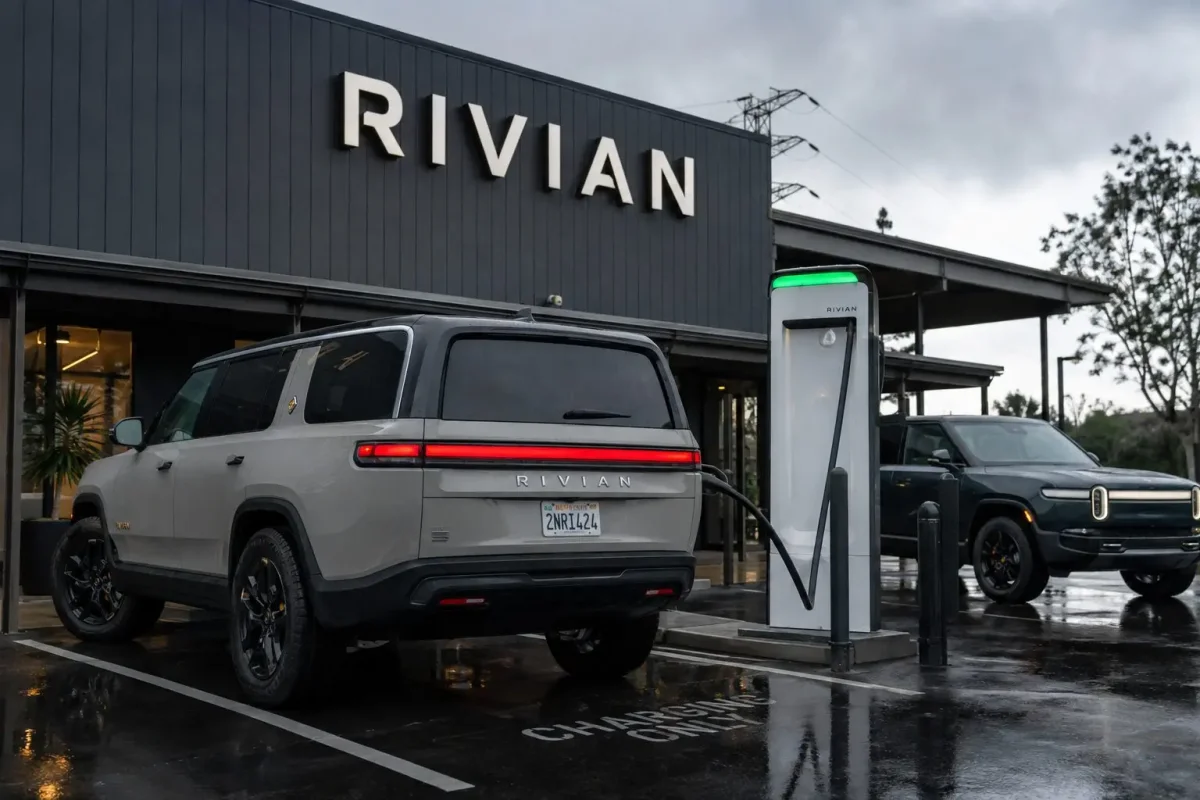
Rivian Automotive (NASDAQ: RIVN) saw its shares fall sharply on Friday, closing at $15.22, a decline of 9.6%. The drop came despite the company reporting second-quarter results that surpassed Wall Street expectations on both the top and bottom lines. Trading volume was notably heavy, coming in at 156% above the stock's 65-day average.
The market's negative reaction underscores the significant challenges Rivian faces in scaling up production of its R2 vehicle. The company's updated guidance for the second half of the year implies a need to deliver between 42,441 and 47,441 vehicles, a substantial increase from the 22,559 units delivered in the first half. This translates to a required growth rate of 74% to 94.5% compared to the second-quarter delivery pace.
While Rivian's headline numbers were encouraging—revenue rose 27% to $1.658 billion against a consensus estimate of $1.51 billion, and adjusted loss per share of 46 cents beat the forecast for a 63-cent loss—the underlying profitability picture remains mixed. The automotive segment, which accounts for 69% of total revenue, posted a gross loss of $36 million, resulting in a negative gross margin of 3.1%. In contrast, the software and services segment delivered $215 million in gross profit, representing a 41.7% margin and more than offsetting the automotive losses. Software and services contributed 120% of total gross profit, highlighting the growing importance of non-vehicle revenue streams.
A significant portion of the software and services revenue came from Volkswagen AG (ETR: VOW3), which contributed $308 million, or 60% of that segment's revenue. Rivian also generated $108 million from regulatory credits. The partnership with Volkswagen is a key strategic element for Rivian, providing both capital and credibility as it seeks to expand its software offerings.
CEO RJ Scaringe told Reuters that the conversion rate of R2 orders has surpassed internal expectations, and he anticipates the vehicle will achieve a positive gross margin in the latter part of the year. However, the financials indicate that achieving this goal will require not only a significant increase in delivery volume but also improved unit economics. Rivian incurred approximately $100 million in additional R2 ramp expenses during the quarter, contributing to the automotive segment's continued losses.
Cash flow remains a concern. Free cash flow was negative $849 million, nearly 4.7 times the reported gross profit. As of the end of June, Rivian held $5.31 billion in cash and short-term investments. The company raised approximately $1.32 billion in net proceeds from a share issuance in July, bringing pro-forma liquidity to $7.16 billion, providing some cushion but also diluting existing shareholders.
Friday's selloff was in stark contrast to the broader market. The Nasdaq Composite rose 1% on the day, and Tesla (NASDAQ: TSLA) gained 0.8%. Rivian's decline also stood out among EV peers, though Lucid Group (NASDAQ: LCID) also fell 9.1%, albeit after a strong weekly performance. Rivian ended the week down 3.9%, while the Nasdaq advanced 1.6%.
Investors will be watching closely as Lucid reports its second-quarter results on Tuesday, which will provide additional insight into the EV demand environment and cost pressures. For Rivian, the focus will be on two key metrics: the pace of R2 deliveries and the trajectory of automotive gross margin. The company needs to nearly double its delivery numbers and achieve profitability in vehicle manufacturing to satisfy investors, and Friday's price action suggests that surpassing earnings estimates alone is not sufficient.