Rocket Lab (NASDAQ: RKLB) shares struggled to hold early gains on Wednesday, August 5, 2026, even after the company announced a $397 million contract from the U.S. Space Force to build, launch, and operate a fleet of satellites designed to track airborne targets. The stock touched a high of $78.38, up 5.2% from Tuesday's close, before fading to trade nearly flat at $74.50 by late morning.
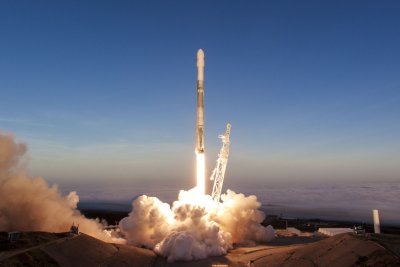
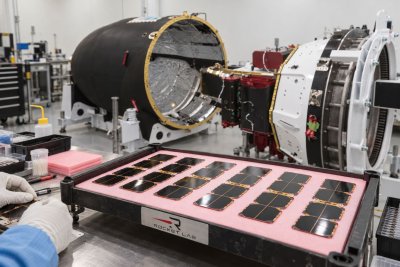
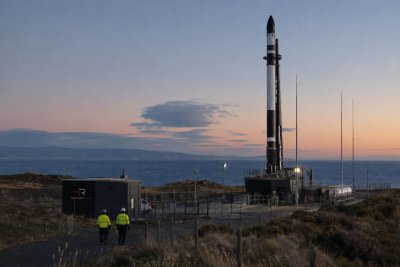
The contract, part of the Space Force's second task order under the Satellite-Based Airborne Target Monitoring Initiative (SB-AMTI), calls for Rocket Lab to deliver multiple 'Flatellite' spacecraft equipped with advanced sensors and low-latency communications links. The company will also provide launch services using its in-development Neutron rocket, mission operations, and tracking data. The agreement includes options for additional satellites.
Contract Size vs. Market Expectations
While the award is substantial in absolute terms, its relative size to Rocket Lab's financial metrics offers a more nuanced picture. The $397 million contract represents 1.98 times the company's first-quarter revenue of $200.3 million and roughly 18% of its $2.2 billion backlog as of March. However, it equates to just 0.88% of Rocket Lab's $45.1 billion market capitalization, which may explain the muted investor reaction.
The contract also accounts for 64.6% of the total $615 million second task order, with the remainder split between STR and an undisclosed vendor. This follows a $4.16 billion first task order awarded to SpaceX in May, which is a separate program covering a different scope. Col. Ryan Frazier of the Space Force emphasized that the second order is designed to 'diversify our capabilities' and avoid over-reliance on a single supplier.
Neutron Development Under the Microscope
Investor attention is now shifting to the upcoming Neutron rocket test flight, which will be a critical milestone for the program. The contract's fixed-price nature means Rocket Lab bears the risk of cost overruns, and any delays in Neutron's development or subpar sensor performance could push revenue recognition and pressure margins. The company has not provided a specific date for the test, but analysts expect it within the coming months.
Rocket Lab has now announced $753 million in Space Force contracts since May, including a $90 million GEO space-domain awareness award and a $266 million suborbital missile-defense testing contract. However, these figures represent gross announced value, which includes optional work and does not translate directly to immediate backlog additions due to accounting timing.
Earnings Preview and Analyst Sentiment
Rocket Lab is scheduled to report second-quarter earnings after Monday's market close. The company has guided for revenue between $225 million and $240 million, with GAAP gross margin of 33% to 35% and an adjusted EBITDA loss of $20 million to $26 million. Management has not updated guidance since the contract award, but investors will be listening for updates on Neutron's timeline and contract execution.
Wall Street remains largely bullish, with 15 Buy ratings, three Overweight, and four Hold recommendations, according to MarketWatch. The consensus price target is $116.24, implying a 56% upside from the current price. Recent analyst actions include a Buy from Clear Street with a $129 target (Aug. 3), a Buy from KGI Securities at $107 (July 27), and a Buy from Stifel at $132 (July 22). However, Piper Sandler maintains a Neutral rating with an $83 target, and Goldman Sachs holds a Neutral with a $76 target.
Risks and Strategic Positioning
Despite the positive contract flow, risks remain. The SB-AMTI contract is structured as a firm-fixed-price agreement, meaning Rocket Lab absorbs any cost overruns. Optional task orders are not guaranteed, and the program's operational capability is not expected until 2028, with full global coverage likely further out. Sensor performance, data processing speeds, and connectivity will be as important as spacecraft count.
CEO Sir Peter Beck highlighted the company's 'vertically integrated, constellation-class satellite capabilities' as key to winning the contract, which simultaneously tests three of its business units. The outcome will provide a clearer picture of whether Rocket Lab can execute on its full-spectrum defense strategy, and whether the market's premium valuation is justified.