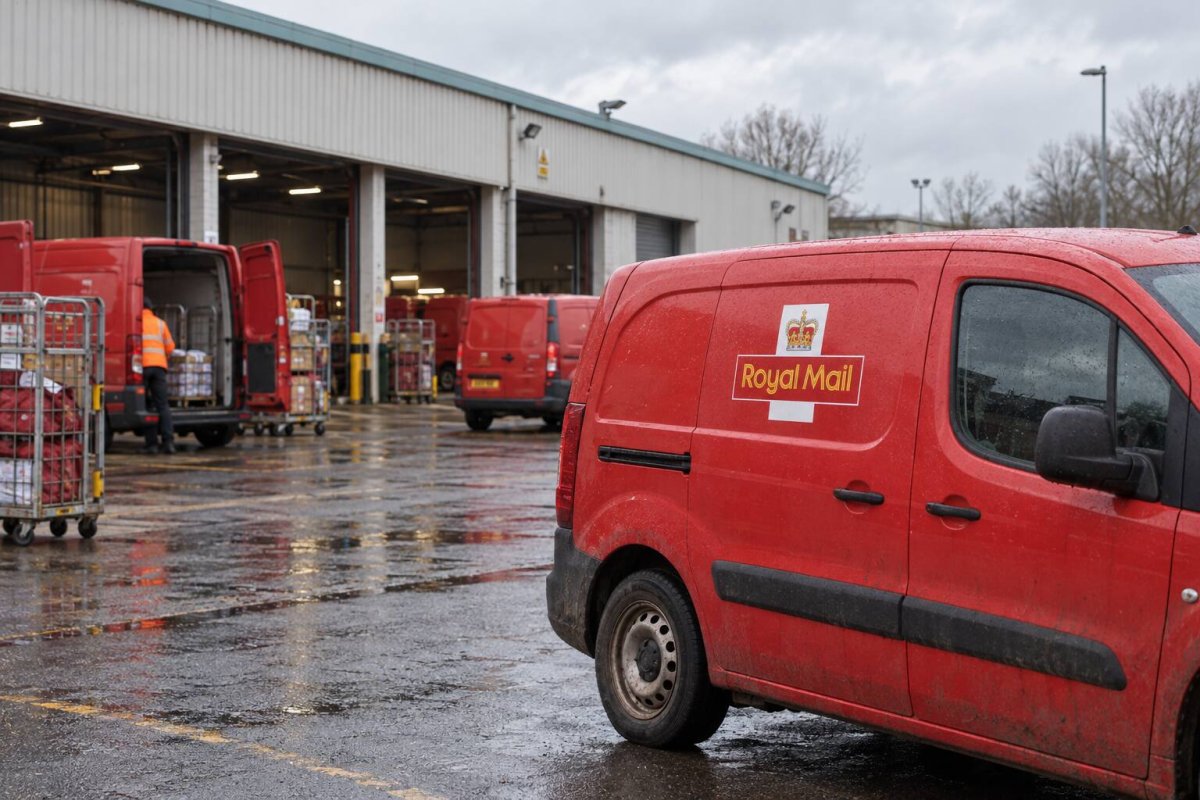
Royal Mail's September 8 operational hiccup in Nottingham, while localized, offers a lens into the broader challenges facing the postal operator's ambitious modernization program. The company confirmed that its national air and road networks remained on schedule, but the Nottingham Mail Centre failed to process and dispatch some mail destined for the DE and NG postcode areas. This singular event, on its own, is unlikely to move the needle for credit investors, but it comes at a pivotal time when Royal Mail is executing a £500 million transformation of its delivery network.
The incident is notable not for its immediate impact but for what it signals about the execution risks embedded in the company's overhaul. Royal Mail is in the midst of reconfiguring its operations across approximately 1,200 delivery offices, a process slated for completion by Christmas 2026. The new model separates higher-priority parcel and first-class mail from lower-priority second-class letters, which may be delivered on alternate weekdays under the reformed universal service rules. This structural shift aims to better align costs with the declining letter volumes while capitalizing on parcel growth.
The £500 Million Execution Problem
The economic rationale is sound. Letter volumes have been on a secular decline, while parcels require distinct routes, vehicles, and handling processes. Royal Mail has committed £500 million over five years to enhance service and modernize the network. It has also expanded its out-of-home parcel network to roughly 30,000 points, with volumes through those locations surging 40% in the latest financial year. Yet, the latest annual results from International Distribution Services (IDS), Royal Mail's parent, underscore the fragility of the current position. Royal Mail's revenue grew 2.6% to approximately £8.4 billion, but addressed letter volumes (excluding election mail) fell 10%. Group-wide, IDS revenue rose 3.6% to £13.6 billion, but adjusted operating profit declined by £56 million to £222 million. With letter traffic shrinking, the margin for error is thin.
Regulatory Relief and New Standards
The new regulatory framework offers some breathing room. From April 2026, Royal Mail will be required to deliver 90% of first-class mail by the next working day and 95% of second-class mail within three working days—targets that are lower than the previous headline standards. Additionally, new 'tail' standards mandate that 99% of first-class mail arrives within three days and 99% of second-class mail within five days, making it harder to mask severe delays within averages.
However, Royal Mail enters this overhaul with a tarnished service record. Ofcom's ongoing investigation into its 2025-26 performance reveals that only 75.7% of first-class mail arrived within one working day and 90.2% of second-class mail within three days, against the then-applicable targets of 93% and 98.5%, respectively. The regulator has already imposed over £37 million in quality-of-service fines over the past three financial years.
Credit Implications and What to Watch
For bondholders of IDS Financing's €650 million 3.25% notes due 2029 and €750 million 4% notes due 2032, the immediate Nottingham disruption is immaterial. The more critical indicators are whether other mail centres repeatedly appear in Royal Mail's daily operational updates, whether quarterly service scores trend toward the April 2027 target date, and whether productivity gains translate into improved operating profit and cash flow. The outcome of Ofcom's investigation will provide the next hard data point on the financial cost of past underperformance.
It is essential to keep perspective. A single delayed dispatch at one processing centre is normal noise in a national logistics operation. EP Group, the new owner of IDS, reported nearly €7 billion of underlying EBITDA across its businesses in 2025, providing a robust financial cushion. Moreover, the reformed universal service framework grants Royal Mail greater flexibility to align its cost base with demand. Investors should neither overreact to a localized alert nor dismiss it entirely. During a network-wide operational transformation, small failures are the earliest indicators of the trend that ultimately matters: whether Royal Mail can modernize without eroding service quality or financial stability.
