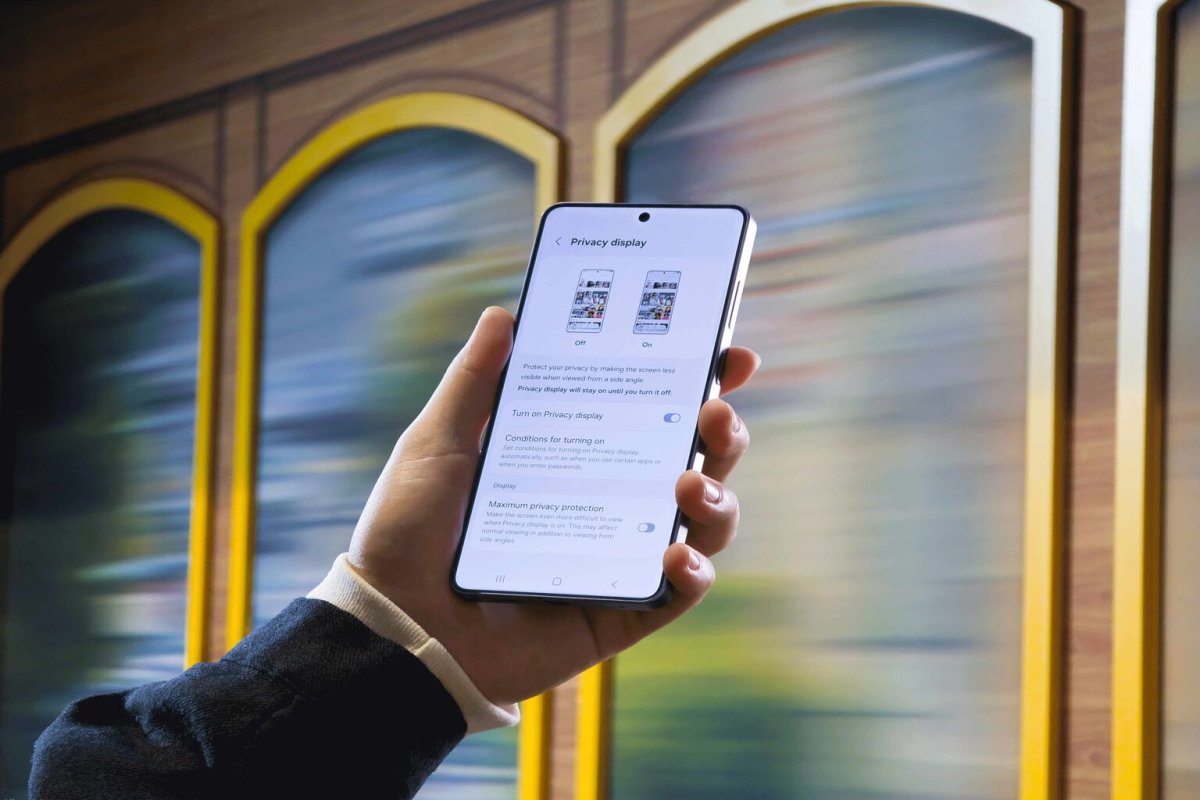
Samsung Electronics has confirmed that the maximum privacy setting on its Galaxy S26 Ultra may slightly blur the display or shift color accuracy. The admission, made in an official statement, highlights the inherent trade-off of the feature, which is designed to prevent side-angle viewing of sensitive content.
The Privacy Display, a key differentiator for the $1,299.99 flagship, uses a technology called Flex Magic Pixel to control light emission. Users can apply the shield to specific apps, password entry screens, or notification pop-ups. At maximum protection, the viewing angle narrows further and the screen dims, which can affect visibility in outdoor conditions. Samsung advises caution when handling confidential material, noting that some information may still be visible depending on angle and brightness.
Despite the phone's commercial appeal, Samsung's mobile division faced significant headwinds in the second quarter. The MX and Networks segment swung to a loss of KRW 0.7 trillion, as component costs rose and competition intensified. Revenue grew 13.7% year-over-year to KRW 33.2 trillion, but operating profit turned negative, a stark contrast to the prior-year quarter's 10.6% margin.
Investors, however, have focused on the broader semiconductor cycle. Samsung shares closed at KRW 285,500 on September 23, up 3.25% for the day. The stock has gained 9.4% over the past week, buoyed by memory chip pricing and hopes for share buybacks. Trading volume was 20.86 million shares, 1.06 times the recent average. Korean markets are closed for the Chuseok holiday and will reopen on September 28.
The company's financial health is heavily tied to its semiconductor business. In Q2, Device Solutions contributed KRW 89.2 trillion of Samsung's total operating profit of KRW 89.5 trillion. This disparity explains why analysts remain bullish on the stock despite mobile losses. The consensus 12-month price target is KRW 478,628, implying 67.6% upside from the current price. All five major brokers—JPMorgan, Goldman Sachs, BofA Securities, UBS, and Nomura—maintain Buy ratings, with targets ranging from KRW 400,000 to KRW 670,000.
The Galaxy S26 Ultra's launch specs show modest improvements over its predecessor: it's thinner (7.9 mm vs. 8.2 mm) and lighter (214 g vs. 218 g). Samsung claims up to 19% higher CPU performance and 39% higher NPU performance. However, these claims are based on Samsung's own benchmarks and may not reflect real-world usage.
CEO TM Roh emphasized the company's focus on making AI "feel effortless," but the Privacy Display is a tangible feature that buyers can see and test. It adds a layer of security that rivals lack, but the cost to display quality may deter some users.
The upcoming Q3 earnings report will be crucial. The market will be watching whether mobile margins recover from the Q2 loss. Meanwhile, the dividend record date is set for September 30, and the next trading session on September 28 could see volatility as global semiconductor news over the holiday period is priced in.