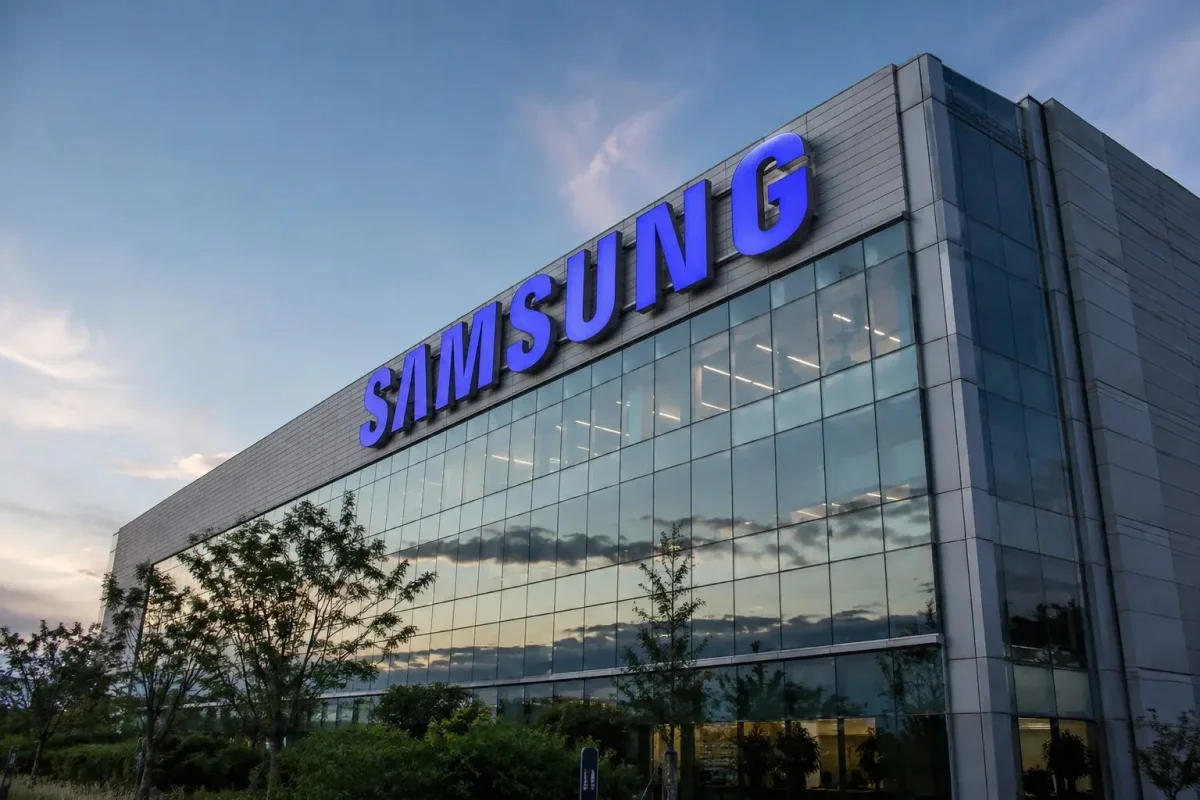
Samsung Electronics Co., Ltd. (KRX:005930) closed Friday at 262,500 won, marking a 26.8% surge, though the stock's weekly gain was a more modest 5.2% after midweek volatility. The surge follows the company's second-quarter earnings report, which revealed an extraordinary reliance on its semiconductor division, which accounted for 99.7% of operating profit.
According to Samsung's segment data, the company posted a consolidated operating profit of 89.5 trillion won on revenue of 171.5 trillion won, a margin of 52.2%. The Device Solutions unit, which houses memory, logic, and foundry operations, contributed 89.2 trillion won in operating profit on sales of 127.5 trillion won, achieving a 70% margin. In contrast, the Device Experience segment, covering smartphones, TVs, and appliances, reported a loss of 800 billion won, with a negative 2% margin.
This stark concentration has raised concerns among investors and analysts. "The chip narrative has weakened. Investors are questioning how long their record-high margins will be sustainable," said analyst Kim Seok-hwan. The reliance on a single segment exposes Samsung to significant risk if memory prices decline or AI investment slows.
To mitigate this, Samsung is pivoting toward contracted supply, aiming for multi-year deals covering roughly two-thirds of its memory production. "Almost all customers are requesting multi-year supply contracts," said Jaejune Kim, head of memory business. These agreements include upfront payments and price floors, providing earnings stability. Samsung has already signed contracts with five leading data-center operators and is close to securing five more, with most deals expected to run at least five years.
The company's outlook remains robust, with HBM4 sales projected to more than triple in the third quarter. Samsung anticipates continued tightness in memory supply throughout the second half of the year, supported by surging demand. South Korean chip exports jumped 179% in July year-over-year, while overall exports rose 62.8% to $98.89 billion, beating the 59% growth forecast in a Reuters survey.
Despite the strong performance, Samsung's semiconductor margin lags behind its memory-centric rivals. SK hynix (KRX:000660) reported a preliminary 76% operating margin in Q2, while Micron Technology (NASDAQ:MU) posted an 80.4% GAAP margin in its fiscal Q3. However, comparisons are not precise due to differing business mixes, as Samsung's chip division includes logic and foundry operations.
The company's financial flexibility remains strong, with operating cash flow minus capital expenditures totaling approximately 91.0 trillion won and net cash at 167.59 trillion won. Management is in discussions regarding special dividends and broader shareholder return policies. Investors will watch two key events this week: the conclusion of domestic investor meetings on August 3 and the release of new foldable phones on August 7.
Key risks include a downturn in memory prices, which would hit the bulk of group profits, a slowdown in AI investment affecting contract orders, and persistently high component prices that could increase consumer losses. As Samsung navigates these challenges, its strategic shift toward long-term contracts may provide a buffer against cyclical volatility.