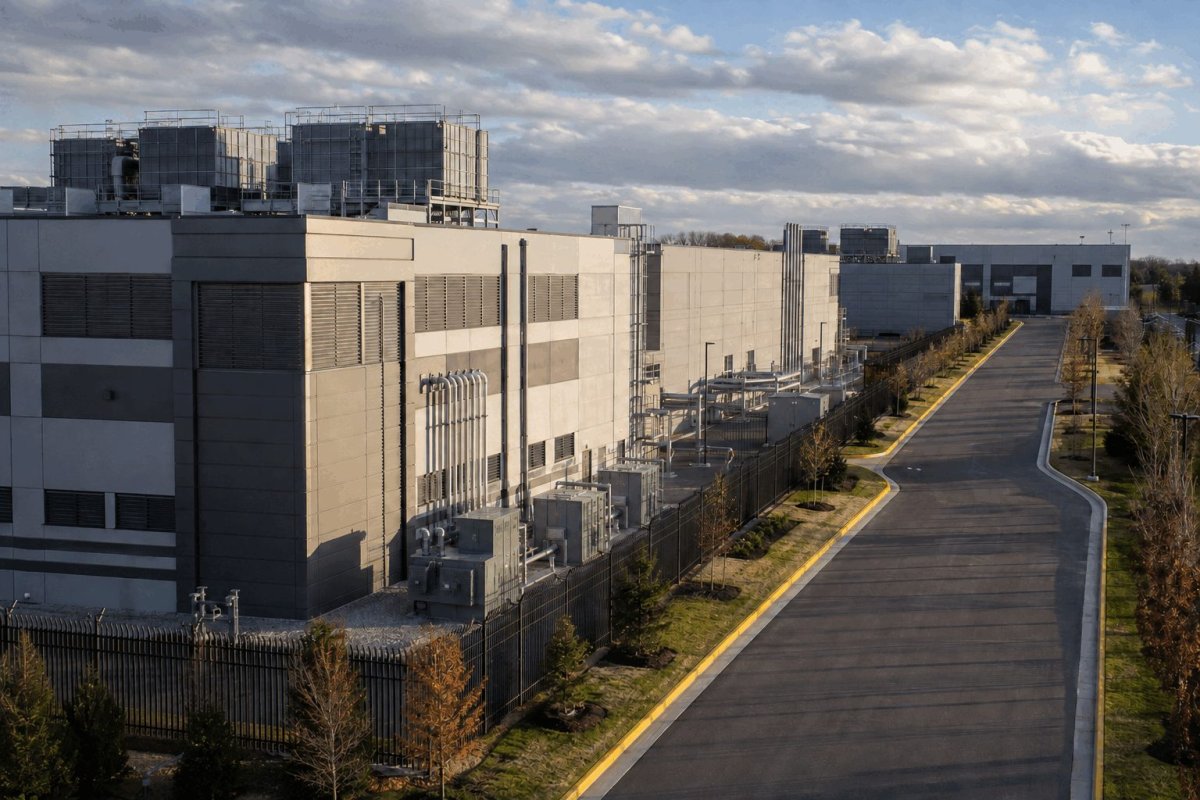
In a significant regulatory development, the U.S. Securities and Exchange Commission (SEC) has clarified that certain data-center securities do not fall under the definition of asset-backed securities (ABS). The ruling, issued in response to a letter from law firm Latham & Watkins, provides much-needed regulatory certainty for a rapidly expanding funding mechanism that has become critical for financing the buildout of massive data-center infrastructure.
The clarification means that data-center securitizations structured in the manner described in the letter will not be subject to the same regulatory requirements as traditional ABS, such as risk-retention rules and disclosure obligations. This is expected to lower compliance costs and streamline the issuance process, potentially attracting a broader base of debt investors. However, the SEC's decision does not extend to project execution risks, which remain a primary concern for lenders and investors.
Market Context and Investor Implications
The ruling comes at a time when data-center operators are facing unprecedented demand for computing power, driven by the rapid adoption of artificial intelligence and cloud services. Goldman Sachs Research projects that U.S. data-center power demand will more than double from 2025 to 2027, rising from 31 gigawatts (GW) to 66 GW, which would represent 8.5% of peak summer electricity usage by 2027. This explosive growth has created an urgent need for capital to fund land acquisition, energy infrastructure, cooling systems, and construction costs.
For investors, the SEC's clarification removes a layer of legal uncertainty but shifts the focus to operational readiness. According to Karen Fang, global head of infrastructure and sustainable finance at Bank of America, readiness entails securing all necessary permits, approvals, and local community support. Lenders, including JPMorgan Chase (NYSE:JPM), Morgan Stanley (NYSE:MS), and Bank of America (NYSE:BAC), are now scrutinizing these factors more closely as they assess credit risk.
Project Delays and Local Opposition
The physical pipeline of data-center projects remains fraught with challenges. Data Center Watch identified at least 75 U.S. projects, collectively valued at approximately $130 billion, that encountered blocks or delays during the first quarter. Local opposition has been a major obstacle, with more than 300 state bills introduced in the first six weeks of 2026, including 14 states proposing moratoriums on new data-center developments.
Notable cases include a $12.3 billion bond issuance for a project in El Paso, Texas, backed by BlackRock (NYSE:BLK) and Meta Platforms (NASDAQ:META), which faced local objections. In Sangamon County, Illinois, CyrusOne's $500 million development and $9.7 billion warehouse complex required permits and leases before construction could proceed. A $16 billion complex in Saline Township, Michigan, involving Related Digital and Oracle (NYSE:ORCL), continued despite community objections. Meanwhile, a project in Prince William County, Virginia, by QTS, owned by Blackstone (NYSE:BX), was cancelled over widespread opposition.
Lender Due Diligence and Covenants
Banks and private lenders are not relying solely on a single closing test. Instead, they are imposing ongoing financial covenants and monitoring requirements at each stage of construction financing. This approach provides some protection against delays but can also result in halted cash flows if milestones are missed. Morgan Stanley, for example, sources, syndicates, and commits capital while seeking ways to offset risk through asset distribution and exposure retention.
The SEC's ruling could lead to increased issuance, offering bond investors more selection and price transparency. However, it may also widen the gap between projects backed by solid tenants and final permits and those based on ambitious schedules. As the market adapts, investors are advised to assess spreads, covenants, and permit status carefully. While streamlined paperwork is significant, having a prepared site remains a higher priority.