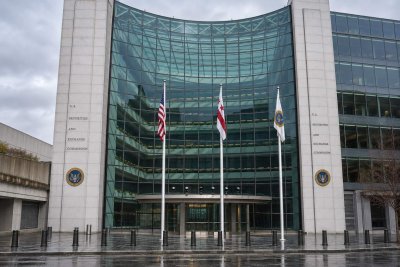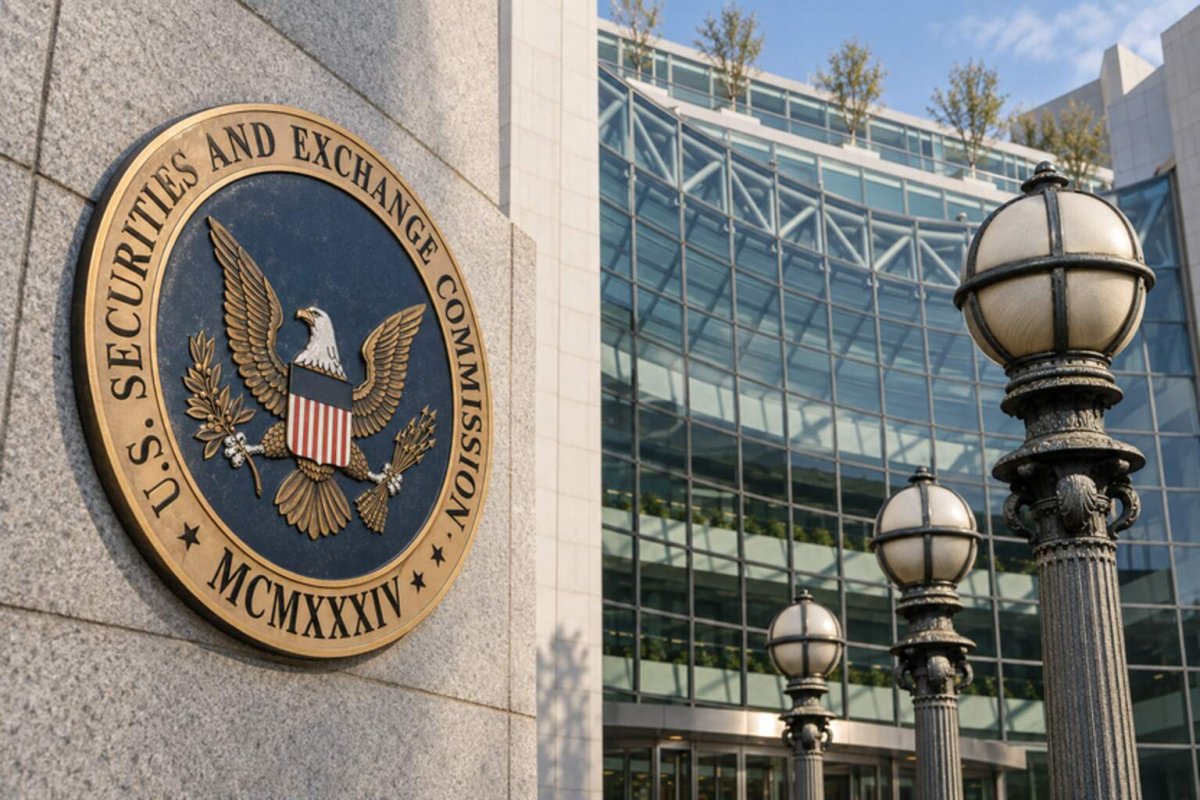
In a significant regulatory development, the U.S. Securities and Exchange Commission (SEC) has issued an order that establishes a conditional pathway for trading tokenized versions of real U.S. stocks. The order, effective September 17, provides a five-year window—through September 2031—for qualified platforms and liquidity providers to operate in this emerging space without needing to register as national securities exchanges or be classified as dealers.
Investors reacted positively, with Coinbase Global (COIN) climbing $8.34, or 5.07%, to $172.85 by 3:38 p.m. EDT Thursday. Circle Internet Group (CRCL) gained $4.58, or 5.69%, to $85.03. Robinhood Markets (HOOD), another potential beneficiary, was up 3.27% at $107.84. Trading volume was robust, with approximately 7.7 million Coinbase shares and 11.1 million Circle shares changing hands.
The SEC's order is not an endorsement of any specific company. Neither Coinbase nor Circle is named as a qualified venue, and no launch or contract has been announced in conjunction with the action. The immediate value lies in regulatory optionality—a clearer route for building, supplying, or settling on-chain markets for U.S. equities.
What the exemption permits
The SEC created two related exemptions. A qualifying “tokenized securities venue” (TSV) can operate without registering as a national securities exchange, and a covered trading firm or liquidity provider can transact on that venue without being treated as a dealer solely because of that activity. Both concessions are tied to detailed conditions rather than a blanket carve-out.
The eligible instrument must represent actual NMS stock, carrying the same economic and governance rights as the conventional share, including dividends and voting rights when applicable. Synthetic stock substitutes are excluded. Issuers can also opt out, limiting the speed at which a broad catalog can form.
Access must be permissioned, with controls for U.S. persons and sanctions compliance. Venues face symbol and volume limits, disclosure and transaction-data obligations, recordkeeping, technology safeguards, and coordination for trading halts. Existing antifraud and antimanipulation rules remain in force. SEC Chair Paul Atkins described the order as a bridge toward permanent rulemaking.
Why Coinbase and Circle are different bets
For Coinbase, the potential payoff is closest to market infrastructure. A tokenized-stock venue could extend its trading, custody, and institutional services beyond crypto assets. However, the order does not waive every requirement or confirm that Coinbase's existing systems meet the new conditions. Investors are valuing a route to a business, not reported business.
Circle's link is one step removed. Its USDC stablecoin is designed as blockchain-based dollar settlement money, so more regulated on-chain securities activity could increase demand for that type of cash leg. The SEC order neither requires a stablecoin nor selects USDC. Circle would still need a venue or intermediary to choose its network before the regulatory opening turns into fee income or reserve growth.
That distinction matters when reading the stocks' nearly identical percentage gains. Coinbase has a more direct platform opportunity; Circle has a potential network-effect opportunity. In both cases, the missing variables are commercial: which firms file to use the exemption, which shares issuers allow, how much volume migrates on-chain, and what fees providers can retain.
The strongest check on the rally
The bullish reading is that legal uncertainty had kept major U.S. platforms from committing capital, and a five-year window is long enough to support product development. The counterargument is that permissioned access, issuer opt-outs, and operating caps may produce a controlled pilot rather than a large parallel stock market. Conventional exchanges and broker-dealers retain deep liquidity, established clearing links, and issuer relationships.
The next useful evidence will not be another policy speech. It will be a public venue notice naming supported securities, an issuer response, actual trading volumes, and a Coinbase or Circle disclosure that connects the order to a product or customer. Until then, Thursday's gains price a plausible option whose revenue terms are still blank.
Market figures are based on delayed intraday quotes at 3:38 p.m. EDT on September 17, 2026, measured against the previous close.