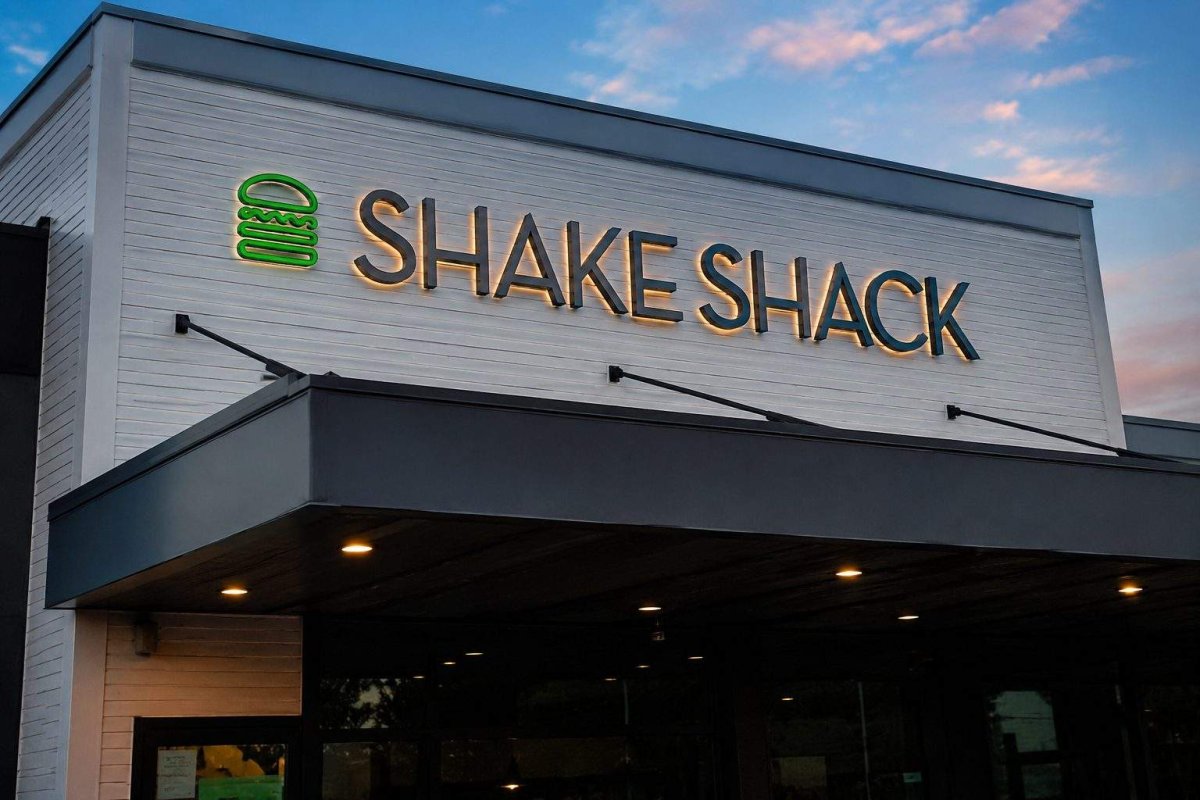
Shake Shack Inc. (SHAK) shares tumbled 10.3% to $55.82 in late-morning trading on Tuesday after the burger chain slashed its second-quarter and full-year 2026 sales and margin guidance, delivering a significant blow to investor sentiment. The update, which came with more than two-thirds of the quarter already completed, provided a clearer-than-usual picture of weakening demand and persistent cost pressures.
The company now expects second-quarter revenue of $415 million to $420 million, down from its prior range of $424 million to $428 million. Same-shack sales growth, a key metric for established company-operated restaurants, was trimmed to 2.5%-3.0% from 3.0%-5.0%. Restaurant-level profit margin, which measures revenue left after store operating costs, was cut to 22.0%-23.0% from 24.0%-24.5%.
Full-Year Forecasts Reduced
For the full year 2026, Shake Shack lowered its adjusted EBITDA forecast to $225 million-$235 million, compared to the previous $230 million-$245 million. The company also reduced its 2026 revenue outlook, though specific figures were not provided in the initial release.
CEO Rob Lynch attributed the downgrade to "macroeconomic uncertainty" and the "competitive landscape," while maintaining that the company's "fundamental business drivers remain strong." The update was issued ahead of a series of investor conferences this week, including the TD Cowen Consumer Conference in New York, where Lynch and new CFO Michelle Hook were scheduled to speak.
Market Reaction and Broader Context
The selloff intensified as the stock opened at $56.30 and touched an intraday low of $53.53, with volume exceeding 3.5 million shares. The broader market showed mixed signals: McDonald's (MCD) was little changed at $276.15, while Chipotle Mexican Grill (CMG) fell 4.4% to $29.20. The SPDR S&P 500 ETF (SPY) edged up 0.2%.
The guidance cut follows a difficult first quarter, during which Shake Shack swung to a net loss of $0.3 million, hurt by elevated beef costs and weak consumer spending. First-quarter revenue of $366.7 million, while up 14.3% year-over-year, fell short of analysts' estimate of $371.9 million, according to LSEG data.
Competitive Pressures and Cost Headwinds
Industry analysts have flagged broader signs of consumer strain across the restaurant sector. Michael Gunther, senior vice president at Consumer Edge, noted last month that "broader signs of consumer strain across restaurants" were evident, with elevated beef costs remaining a key issue. Competitors such as McDonald's and Chipotle have also warned of pressure from higher input costs and cautious consumer spending.
Shake Shack's licensing revenue guidance was left unchanged for the quarter, and the company still expects about eight licensed openings. However, Tuesday's stock move suggests investors are focused on sales performance rather than unit growth.
Outlook and Investor Risks
The risk for investors is that the guidance cut may not be a one-quarter reset. If diners continue to trade down, promotional efforts fail to lift traffic, or beef and labor costs remain high, Shake Shack could face further margin compression while pursuing its expansion plans. The company's ability to protect profitability while opening new restaurants will be a key focus in the coming quarters.
On the upside, the company's licensing business remains stable, and management has expressed confidence in the brand's long-term fundamentals. But with the stock now down significantly from recent highs, the market is demanding tangible evidence of a recovery in sales and margins.