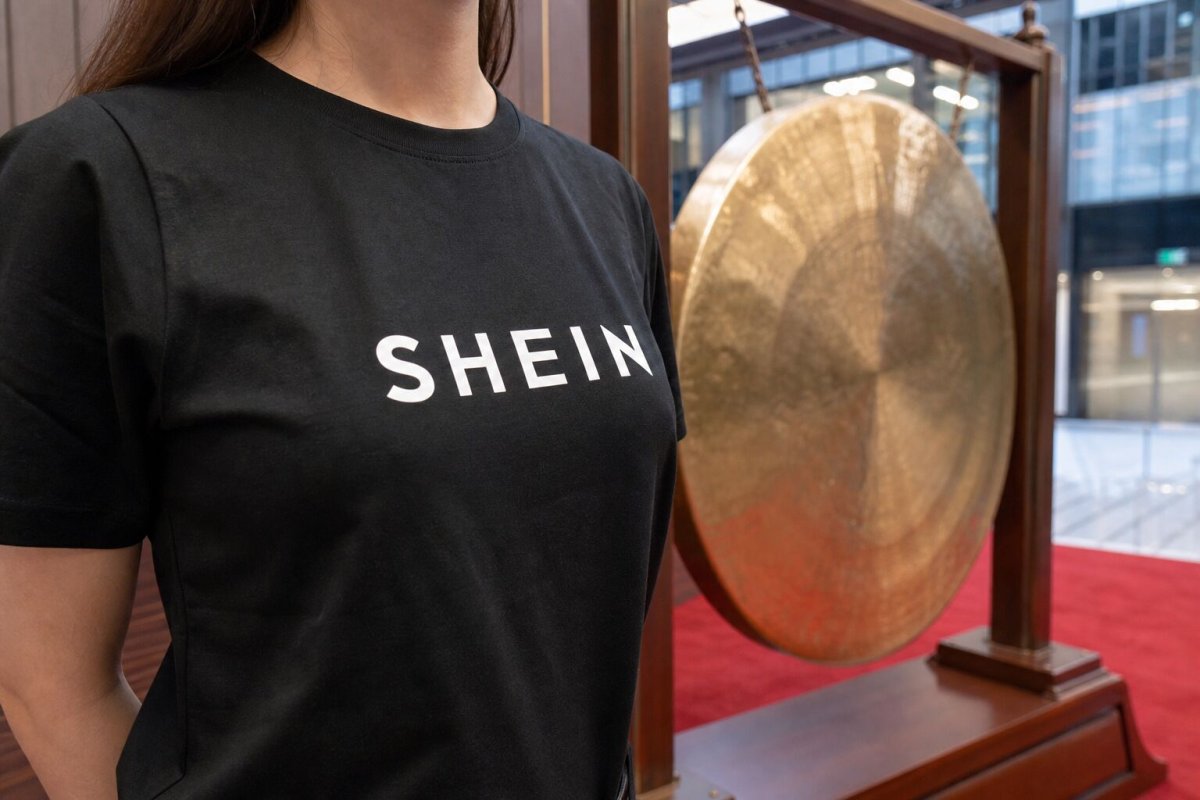
Shares of fast-fashion giant SHEIN Global Holdings (HKG:0625) closed their first day of trading in Hong Kong almost unchanged, recovering from a sharp intraday decline that saw the stock fall as much as 10%. The stock settled at HK$48.50, just 0.12% below its offer price of HK$48.56, after hitting a session low of HK$43.72.
The debut was marked by significant volatility, with the stock trading at HK$46.62 around midday before staging a late recovery. Trading volume reached 48.01 million shares, representing approximately HK$2.23 billion in turnover. This volume accounted for 17.1% of the offer shares but only 1.1% of the total shares outstanding, underscoring the limited free float available to investors.
Limited Float Raises Valuation Questions
The global offer comprised just 6.59% of the company's post-listing share capital, a relatively small proportion that makes price discovery challenging. This limited float means that even modest trading activity can lead to outsized price movements, a risk highlighted in the company's exchange filings. The offering generated gross proceeds of HK$13.60 billion, with net proceeds totaling HK$13.21 billion.
Cornerstone investors were allocated 61.89 million shares, representing 22.1% of the offer. Despite the relatively small float, demand appeared robust, with Hong Kong retail subscriptions reaching 5.63 times the available allocation and the international tranche seeing 2.59 times coverage.
Financial Performance Under Pressure
The company's first-quarter results showed slowing growth and compressed margins. Revenue increased just 1.1% year-over-year to $9.05 billion, while operating margin fell to 2.9% from 3.9% in the same period last year. This continues a trend of decelerating growth: revenue grew 41.1% in 2023, 20.7% in 2024, and 8.0% in 2025.
More concerning was the swing to a net loss of $99 million for the quarter, compared with a profit of $395 million in the year-ago period. The loss was primarily driven by a $328 million fair-value charge on preferred shares, but operational headwinds were also evident. U.S. revenue declined 14.3% to $2.0 billion, reflecting the impact of tariffs and increased logistics costs.
Management Guidance and Market Reaction
Management expects first-half revenue growth to match the first-quarter pace and projects a slight decline in operating margin, citing duties and higher logistics expenses. The company maintains a strong liquidity position with $14.83 billion in cash at the end of March, though operating cash flow fell to $392 million from $1.06 billion in the prior-year quarter.
Based on the closing price, SHEIN's market capitalization stands at HK$205.9 billion, calculated on 4.246 billion shares outstanding after the offering. This valuation is roughly in line with the IPO price but relies on a 2025 net income estimate of $2.06 billion, which may be optimistic given the weak start to 2026.
Analyst Perspectives
Gary Ng, an economist at Natixis, suggested that SHEIN "missed its golden listing window" due to tariff pressures and shifting investor interest toward artificial intelligence. The first-day trading range, despite the late recovery, appears to validate this caution.
Key risks remain concentrated in customs costs, regulatory hurdles, and the company's weighted voting rights structure. The limited tradable float could amplify both gains and losses until liquidity expands. The stabilization period ends on September 26, and the first full week of trading will be crucial in determining whether HK$48.50 acts as a support level or aligns with demand dynamics.
