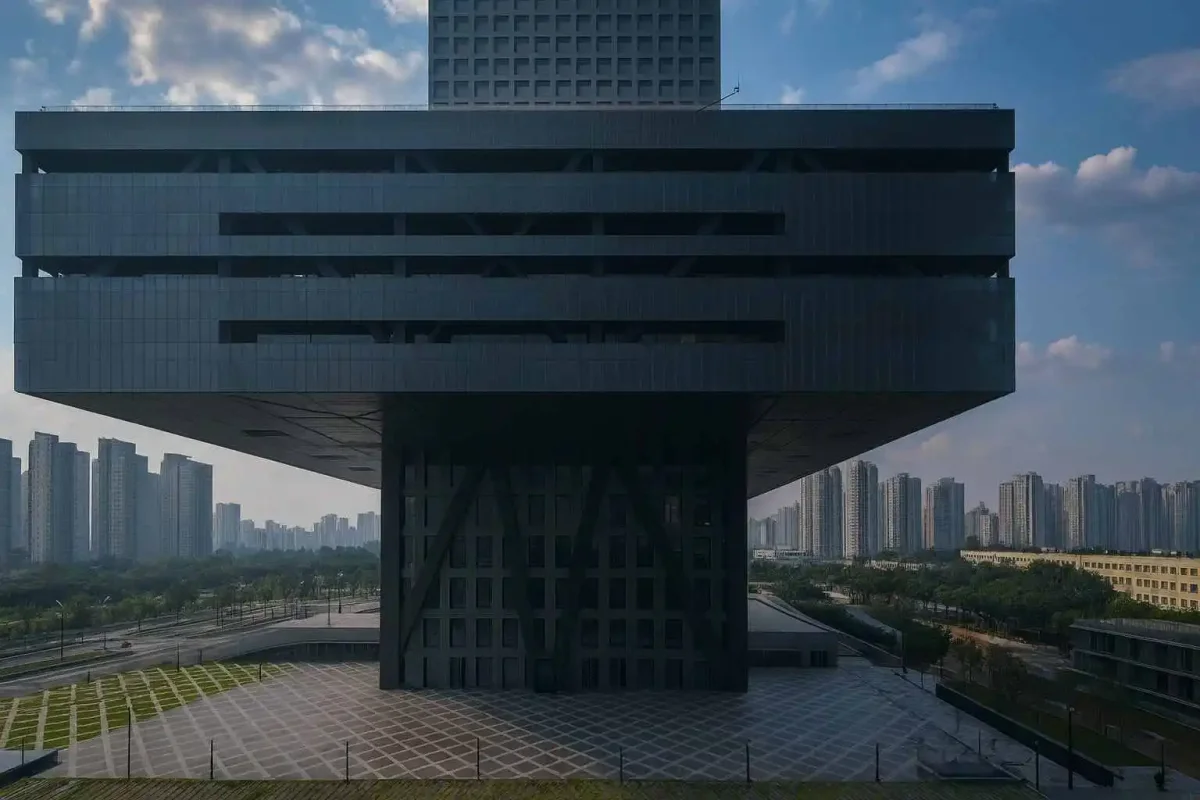
Equity markets in Shenzhen experienced significant downward pressure on Tuesday, March 31, 2026, with major indices closing deep in negative territory. The Shenzhen Component Index retreated 1.81% to settle at 13,478.06, while the technology-heavy ChiNext board faced steeper losses, declining 2.7% to finish the session at 3,184.95. This sell-off unfolded despite the release of encouraging economic indicators from China's manufacturing sector earlier in the day.
Economic Data Fails to Lift Sentiment
China's official manufacturing Purchasing Managers' Index (PMI) for March registered at 50.4, according to data from the National Bureau of Statistics. This figure represents an improvement from February's reading of 49.0 and moves the gauge back above the 50-point threshold that separates expansion from contraction. The non-manufacturing PMI also edged higher to 50.1. However, the modest nature of this recovery was insufficient to bolster market confidence, as traders focused on mounting macroeconomic headwinds.
Geopolitical and Inflationary Pressures Weigh
Market participants directed their attention to persistent risks emanating from the ongoing conflict in the Middle East. Analysts noted that investors are growing increasingly anxious that sustained hostilities could keep global energy prices elevated and introduce further disruptions to international supply chains. "The outlook for the second quarter remains unclear at this stage," remarked Zhiwei Zhang, chief economist at Pinpoint Asset Management. He identified high energy costs as a primary concern and highlighted growing investor apprehension regarding the potential for a global economic slowdown and continued supply-chain complications.
Dan Wang, director for China at the Eurasia Group, echoed these concerns, warning that "exports and PMI may face risks in the second half of the year." She pointed specifically to the potential for a worsening crisis involving Iran to tip major economies, particularly in Europe, into a recessionary environment.
Sector Performance and Broader Market Moves
The sell-off was particularly pronounced in risk-sensitive growth sectors. Shares of mainland Chinese companies in the new energy and semiconductor industries each slid approximately 3%, leading the declines. The weakness was not confined to Shenzhen; the benchmark Shanghai Composite Index also finished lower, dropping 0.8% to close at 3,891.86.
The downturn extends a challenging period for Chinese equities. Since the end of February, the Shenzhen Component Index has fallen roughly 7.0%, based on Tuesday's closing level. The Shanghai Composite has declined approximately 6.5% over the same period, while the ChiNext board has given up about 3.8%.
Divergence from Upbeat Analyst Views
The market's negative performance presents a notable contrast to increasingly optimistic research from several global financial institutions. J.P. Morgan recently designated China as its top investment pick in Asia for the month. HSBC has maintained its overweight rating on Chinese assets, and analysts at Goldman Sachs have argued that China's economy is positioned to weather an oil price shock more effectively than some other nations, noting that Chinese stocks outperformed those in Japan and South Korea throughout March.
Some economists have also cautioned that the strength shown in the March PMI data may not be as robust as the headline number suggests. They pointed to potential distortions caused by the timing of the Lunar New Year holiday. Furthermore, the National Bureau of Statistics reported a sharp increase in the sub-index measuring raw material purchase prices, which jumped to 63.9 in March from 54.8 in February. While new export orders showed improvement, they remained below the 50-point level, continuing to signal weak foreign demand.
Regulatory and Confidence-Building Measures
In a separate development aimed at restoring confidence in China's capital markets, Chinese prosecutors on Tuesday brought formal charges against Wang Jianjun, a former vice chairman of the China Securities Regulatory Commission (CSRC). He was charged with bribery and abuse of power. This action is part of a broader anti-corruption initiative that officials state is intended to enhance the regulator's reputation and attract long-term institutional investment.
The day's trading action underscores the complex challenges facing China's financial markets, where positive domestic economic signals are being counterbalanced by significant external uncertainties and sector-specific pressures.