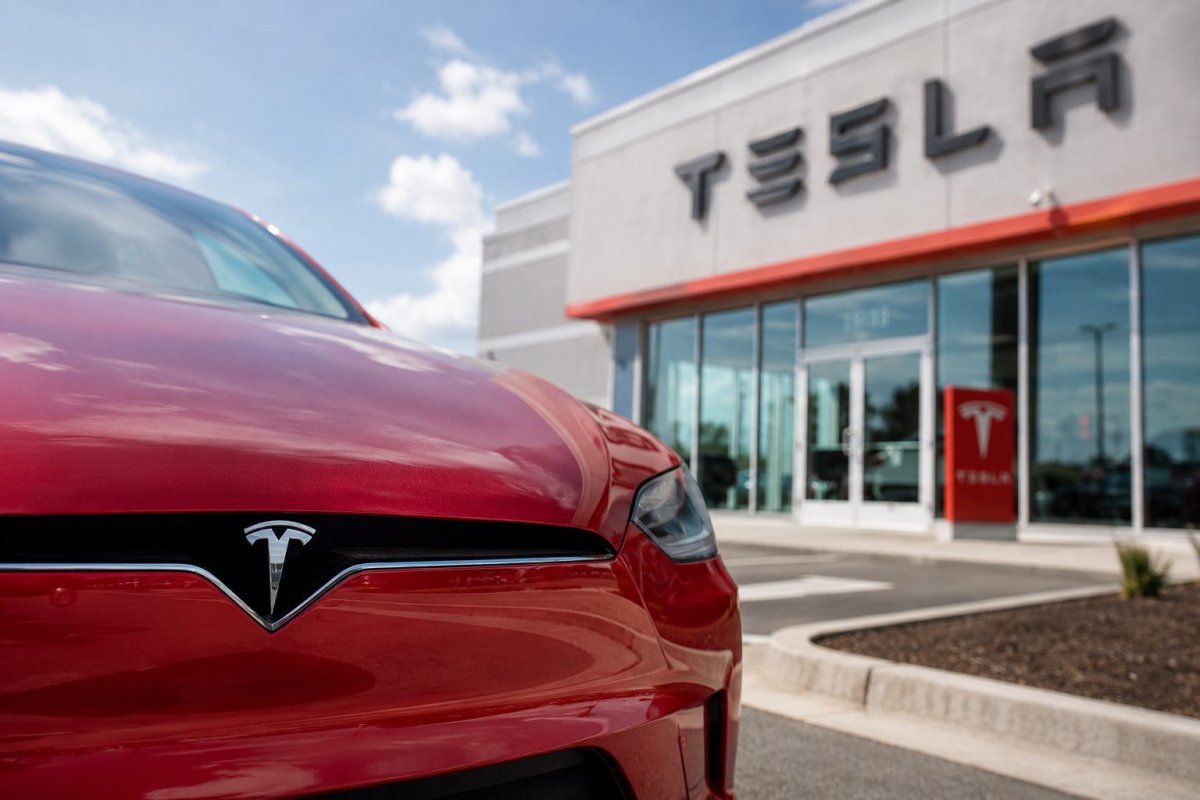
Shares of Tesla (TSLA) declined 2.6% on Tuesday, closing at $433.45 and snapping a four-session winning streak that had seen the stock surge roughly 14%. The pullback came as investors weighed a confluence of headwinds: regulatory uncertainty in China, underwhelming progress on the company's robotaxi ambitions, and fresh signs that U.S. inflation remains stubbornly high.
China: A Double-Edged Sword
The prospect of Tesla gaining wider approval for its Full Self-Driving (FSD) technology in China has been a key driver of recent bullish momentum. CEO Elon Musk is expected to accompany President Donald Trump on a trip to China, where Tesla is pushing for regulatory clearance to expand FSD in the world's largest auto market. The company is also seeking approvals for China-related supply needs, including solar manufacturing equipment, according to Reuters.
However, the path to regulatory approval is fraught with political and regulatory complexities. Reva Goujon, a geopolitical strategist at Rhodium Group, told Reuters that many executives on the trip are focused on "demands on critical input supply," not merely trade deal fanfare. The reality is that China's sign-off is as much about geopolitics as it is about technology, adding a layer of risk that investors are now pricing in.
Robotaxi Rollout Hits Speed Bumps
Investor enthusiasm for Tesla's autonomous driving ambitions was further tempered by a Reuters test of the company's robotaxi service in Austin. The test revealed lengthy wait times, frequent "no rides available" messages, confusing drop-off points, and a fleet of only about 50 vehicles. In contrast, Alphabet's Waymo operated over 250 vehicles in the same city, according to a city presentation cited by Reuters. The disparity underscores the significant gap between Tesla's autonomous ambitions and the current state of its network.
CEO Elon Musk has acknowledged that robotaxi revenue will not be "super material" this year, reducing the risk of a major disappointment but also highlighting the early stage of the initiative. The company's ability to scale its driverless network quickly remains a key question for investors.
Inflation Pressures Persist
Adding to the headwinds, April's Consumer Price Index (CPI) rose 0.6%, with energy goods accounting for over 40% of the increase. The hotter-than-expected inflation data reinforces expectations that the Federal Reserve will maintain its current interest rate stance. According to Reuters, the Fed is unlikely to cut rates before 2027. Higher interest rates increase the discount rate applied to future earnings, reducing the present value of growth-dependent companies like Tesla.
Prediction markets reflect this outlook. On Polymarket, the odds of the Fed holding rates steady in June hovered near 98%, while the probability of a 25-basis-point cut was just 1.4%. At Kalshi, the most likely scenario was no rate cuts at all in 2026, with a 63% probability.
Battery Investment in Berlin
Amid the broader challenges, Tesla announced plans to invest nearly $250 million in its Berlin-area facility to boost battery-cell production. The investment will increase the plant's planned annual output to 18 gigawatt hours (GWh), more than doubling the previously slated 8 GWh. For investors, this is not just about raw capacity—it signals Tesla's commitment to achieving scale, reducing costs, and securing its supply chain.
Global EV Demand: Mixed Signals
The broader electric vehicle market presents a mixed picture. According to Benchmark Mineral Intelligence, global registrations of battery-electric and plug-in hybrid vehicles reached 1.6 million in April, a 6% increase year-over-year. Rising petrol prices are nudging some consumers toward EVs, which supports the entire segment.
However, regional data tells a different story. EV registrations in China slipped 8% in April, while North American numbers tumbled 28%. In Europe, Chinese-made EVs captured a 22% share of EV and plug-in hybrid sales year-to-date, up from 19% in the same period last year. BYD, the global EV leader, has begun discussions with Stellantis and others about potentially taking over underutilized factories in Europe, signaling that the competitive landscape is shifting rapidly.
Financial Outlook and Valuation
Tesla's earnings call highlighted the tension between long-term investment and near-term profitability. The company raised its 2026 capital expenditure projection to over $25 billion, directing funds into AI, robotics, and chips. Musk called the increased budget "well justified," while CFO Vaibhav Taneja warned that Tesla expects negative free cash flow through the end of 2026. Free cash flow represents the cash remaining after operating expenses and capital investments.
This dynamic underscores the challenge for Tesla: it is asking investors to bet on a future of autonomous driving and AI, while the market is focused on current execution. With valuation already elevated, the stock is not priced for every Musk promise to materialize this week, but at least a few need to show real traction to sustain the bullish narrative.
Looking Ahead
As Tesla enters Wednesday's trading session, the story hangs in the balance. Bulls are betting on China approval for FSD, lower battery costs from Berlin, and signs that global EV demand is turning a corner. Bears point to valuation concerns, persistent inflation, competition from BYD and Waymo, and a robotaxi plan that remains in its early stages. The stock's next move will likely depend on which narrative gains the upper hand.