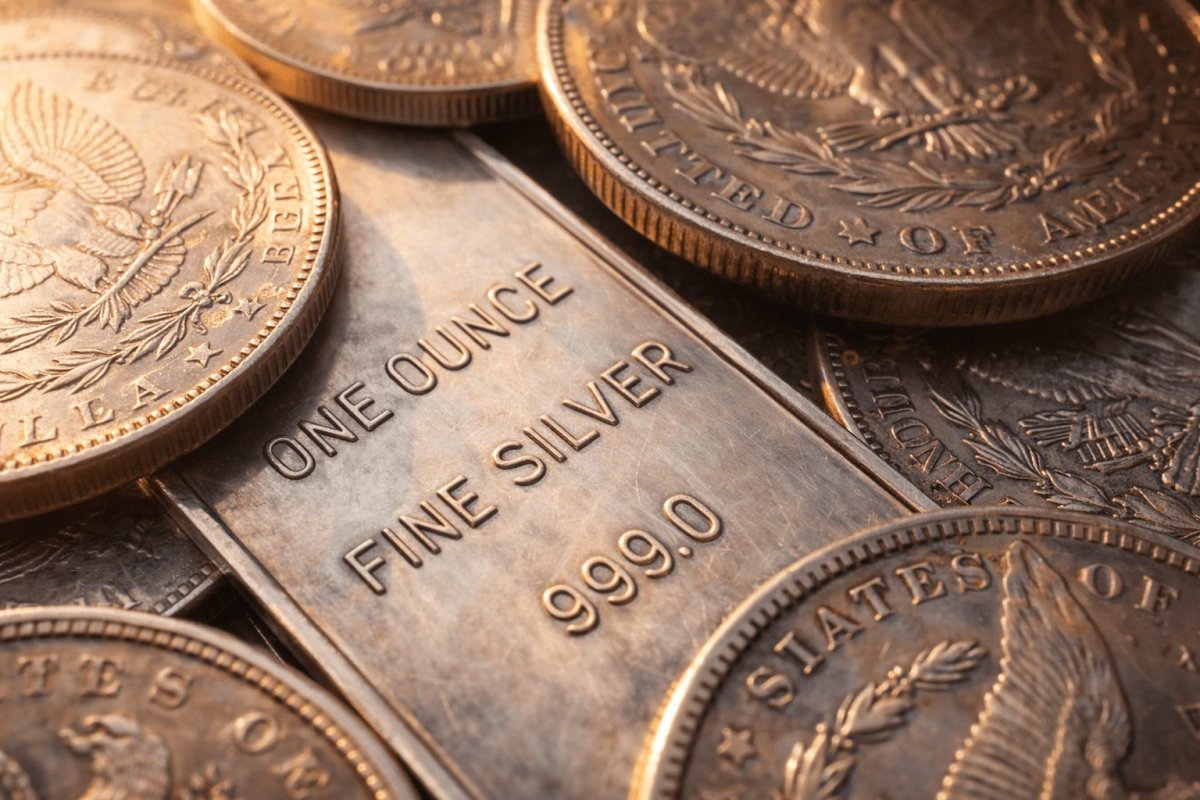
The silver market enters the new week hovering near the psychologically significant $70 per ounce threshold. The white metal's recent ascent is being fueled by a confluence of geopolitical uncertainty and recalibrated expectations for U.S. interest rates. Spot silver concluded the previous trading session with a gain of 2.2%, settling at $69.54.
Conflicting Forces at Play
Silver's trajectory is currently caught between opposing market currents. On one side, escalating tensions in the Middle East, particularly involving Iran, are bolstering its appeal as a traditional safe-haven asset. Conversely, strengthening movements in the U.S. dollar, Treasury yields, and crude oil prices are applying downward pressure, potentially capping further rallies. The U.S. 10-year Treasury yield recently climbed to 4.428%, reflecting a market consensus that the Federal Reserve may maintain a restrictive policy stance for an extended period.
Upcoming Economic Catalysts
The immediate focus for traders shifts to a series of high-impact economic events. Federal Reserve Chair Jerome Powell is scheduled to speak at Harvard University on Monday, with his comments likely to influence the dollar and interest rate forecasts. This will be followed by the Institute for Supply Management's manufacturing data as April trading commences.
The primary event, however, is the release of the U.S. nonfarm payrolls report for March on Friday, April 3rd. According to the Bureau of Labor Statistics, the data is set for release at 8:30 a.m. Eastern Time. Economists surveyed anticipate an addition of 55,000 jobs, with the unemployment rate expected to hold steady at 4.4%.
Trading Calendar Complications
Market dynamics will be complicated by the holiday schedule. U.S. equity markets, including the New York Stock Exchange, will be closed on April 3rd in observance of Good Friday. Furthermore, CME Group has confirmed that Good Friday will not be considered a delivery or payment day for COMEX metals futures. For contracts not settling on that date, end-of-day prices from Thursday, April 2nd, will be carried forward. This unusual timing is expected to concentrate significant trading activity and position adjustments into Thursday's New York session, potentially amplifying volatility.
Silver's Dual Nature and Market Fundamentals
Silver's price action is notoriously volatile, a characteristic stemming from its dual role as both a monetary metal and a critical industrial component. Its applications span electric vehicles, solar panels, and consumer electronics, linking its demand to global industrial cycles. The Silver Institute has projected a sixth consecutive annual structural deficit for the market in 2026, with demand continuing to outstrip supply. While industrial demand is forecast to ease by 2% to 650 million ounces, physical investment demand is anticipated to surge by 20% to 227 million ounces.
This fundamental backdrop helps explain the metal's extreme price swings earlier this year. After soaring to a historic peak of $121.6 on January 29th, silver prices subsequently collapsed by over 25% in a single session. Analysts now suggest a more sustainable trading range may be between $60 and $70 per ounce, placing Friday's close near the upper end of that band.
Geopolitical Backdrop and Labor Market Lag
The broader risk environment remains tense. Diplomatic efforts, including a recent meeting involving Pakistan, Turkey, Egypt, and Saudi Arabia, are underway to propose reopening the strategic Strait of Hormuz—a vital conduit for approximately 20% of the world's seaborne oil and liquefied natural gas. Meanwhile, Iran continues to issue warnings against a potential U.S. ground offensive.
Economic observers note that shocks from such events typically exhibit a lag before manifesting in labor market data. As one economist highlighted following recent jobless claims figures, economic conditions may deteriorate, but evidence of that decay has not yet appeared in employment statistics. For silver traders, this means the metal's near-term fate rests in a three-way tug-of-war between the payrolls report, Fed policy signals, and oil-driven inflation fears, which will determine whether $70 acts as a firm support level or a formidable resistance barrier.