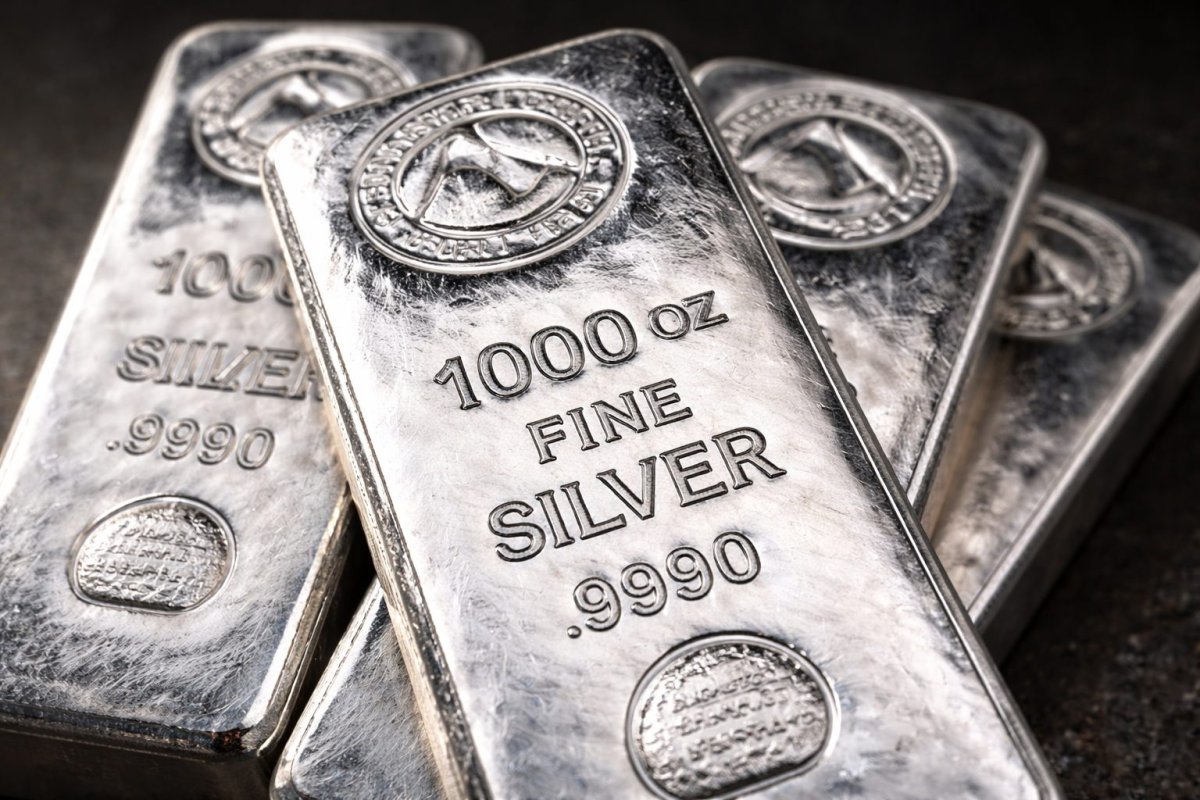
Spot silver prices experienced a significant rally on Tuesday, April 14, 2026, climbing 5.2% to reach $79.48 per ounce by the early afternoon trading session in New York. This marked a notable increase from the previous session's close of $75.71, as precious metals broadly benefited from shifting macroeconomic currents.
Dollar Weakness and Diplomatic Developments Fuel Rally
The rally in silver and other precious metals coincided with a 0.3% decline in the U.S. dollar index, which fell to 98.05, reaching its lowest level since early March. Concurrently, oil prices retreated, with Brent crude sliding to $96.72 per barrel and U.S. crude settling at $94.75. Market participants attributed this movement to growing speculation that Washington and Tehran might resume negotiations, potentially leading to a reopening of the strategically vital Strait of Hormuz and easing inflationary pressures stemming from energy markets.
Karl Schamotta, chief market strategist at Corpay, noted that Washington appeared to be "looking for an exit ramp," reflecting market hopes for a diplomatic resolution. This environment of a softer dollar and lower oil prices created a favorable backdrop for non-yielding assets like precious metals.
Inflation Data Provides Mixed Signals
The U.S. Labor Department's Producer Price Index (PPI) for March showed a 0.5% increase, coming in below economist forecasts of a 1.1% rise. This softer-than-expected print helped alleviate some immediate inflation concerns, allowing metals to rebound from recent declines driven by geopolitical tensions. Within the report, goods prices climbed 1.6% while services prices were flat. However, energy costs surged 8.5%, serving as a reminder that underlying inflationary pressures persist despite the headline miss.
Christopher Rupkey, chief economist at FWDBONDS, described the March PPI as "not as bad as feared," but cautioned that producers continue to face price increases above typical levels. This mixed inflation picture leaves silver vulnerable to volatility if price pressures prove more stubborn than anticipated, potentially delaying hopes for Federal Reserve interest rate cuts.
Silver Outperforms Precious Metals Complex
Silver's advance led the precious metals sector on Tuesday. Gold, often viewed as a primary safe-haven asset, advanced 2% to $4,831.78 per ounce. Platinum gained 1.3% to settle at $2,096.91, while palladium edged higher by 0.7%, closing at $1,585.21. Silver's dual role as both a monetary metal and an industrial commodity contributed to its standout performance.
Paul Wong of Sprott Asset Management highlighted lingering uncertainties around global oil supply as a potential catalyst for increased investment in solar energy, which would subsequently bolster industrial demand for silver. The Silver Institute reinforced this fundamental backdrop in a February report, projecting the market is headed for its sixth consecutive annual supply deficit in 2026, with demand expected to outpace supply once again.
Market Sentiment and Federal Reserve Implications
Market sentiment remained cautiously optimistic but tempered by realism. Charu Chanana at Saxo characterized the prevailing mood as "trading hope, not resolution." She warned that if oil prices spike again, market expectations could quickly swing back toward the Federal Reserve maintaining higher interest rates—or even implementing additional hikes—which typically exerts downward pressure on bullion since it offers no yield.
According to the CME FedWatch tool, which calculates probabilities based on federal funds futures, traders currently see approximately a one-in-three chance of a Fed rate cut occurring this year. This modest expectation for monetary policy easing provides limited support for metals in the near term, making silver's trajectory more dependent on external factors like diplomacy, oil market dynamics, and currency movements than on its own supply fundamentals.
Strategic Outlook and Trader Commentary
Bob Haberkorn, senior market strategist at RJO Futures, offered a straightforward assessment: "If we see positive news, metals will continue higher." His comment underscores the current event-driven nature of the precious metals market. The immediate direction for silver appears tethered less to traditional supply-demand metrics and more to developments in international diplomacy, particularly concerning the Middle East, alongside fluctuations in the U.S. dollar and crude oil benchmarks.
The day's price action demonstrates how interconnected global markets have become, where a potential diplomatic opening in one region can trigger cascading effects across currency, commodity, and metals markets worldwide. For silver specifically, its hybrid identity ensures it responds to both financial market currents and real-world industrial demand signals, creating a uniquely volatile and opportunity-rich trading environment for investors and speculators alike.