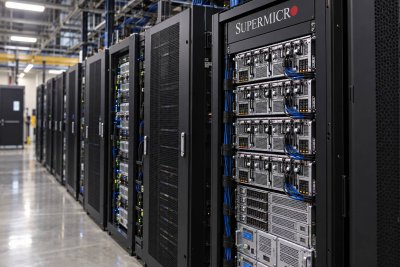
Super Micro Computer, Inc. (SMCI) enters Monday's trading session under significant pressure following one of the most pronounced reversals in the AI-infrastructure sector this month. The stock closed Friday at $30.46, down 4.7%, bringing its market capitalization to approximately $21.1 billion. The decline reflects growing investor scrutiny over the company's aggressive capital-raising strategy and its implications for existing shareholders.
The immediate catalyst for the sell-off is the pricing of a substantial financing package. Super Micro announced it priced 45,454,545 common shares at $27.50 each, alongside 75,000,000 depositary shares, each representing a 1/20th interest in newly issued 7.0% Series A mandatory convertible preferred stock. This hybrid security pays a dividend but is designed to convert into common stock at a later date, potentially diluting existing shareholders. The company also maintains a $1.25 billion at-the-market (ATM) program, allowing it to sell additional shares at prevailing market prices over time.
Dilution Fears and Balance Sheet Concerns
The market's reaction underscores a fundamental shift in how investors are evaluating Super Micro. While demand for AI servers remains robust, the focus has shifted to the capital required to fulfill those orders and the potential dilution to existing equity holders. The company's balance sheet reveals why additional capital is necessary: Super Micro used $6.6 billion of cash in operations during the March quarter and ended the period with only $1.3 billion in cash against $8.8 billion of bank debt and convertible notes. This financial strain explains why the market reacted negatively to yet another large capital raise.
The Bull Case Remains Intact
Despite the near-term headwinds, the bull case for Super Micro remains visible. The company stated it plans to use the proceeds from the offering to purchase components for approximately $39 billion of recent AI-server orders from more than 20 customers. This signals that demand for its rack-scale systems remains substantial. In May, CEO Charles Liang emphasized the company's robust business, noting margin recovery and rapid growth in its DCBBS (Direct Cooled Business) segment. Super Micro reported third-quarter sales of $10.2 billion, with a gross margin of 9.9%, net income of $483 million, and non-GAAP diluted EPS of $0.84. If these orders convert into shipments without further margin compression, the stock could appear inexpensive relative to its growth trajectory, especially with analysts' average price target at $37.25 versus the current $30.46.
Bearish Risks and Analyst Caution
However, the bear case is equally compelling. The company cautioned that the $39 billion in AI orders are not firm commitments and remain subject to cancellation, delays, and other conditions. This uncertainty, combined with the dilution risk from the latest capital raise, has led to a cautious analyst consensus. MarketScreener data shows a Hold rating from 19 analysts, with a high target of $58 and a low target of $15. Raymond James recently lowered its target to $39 from $45 on June 12, reflecting the growing caution.
Key Catalysts Ahead
The next near-term catalyst for SMCI is the expected closing of the depositary-share offering on Monday. A successful close could provide some temporary relief, but the bigger test lies ahead: whether Super Micro can convert its massive order backlog into cash-generating revenue. Investors will be closely watching the company's next quarterly results for evidence of improved cash flow, gross margin protection, and the ability to turn orders into profitable growth. For the stock to sustain a rally, the market needs proof that this financing is a bridge to profitable AI growth, not just a means to fund operations at the cost of weaker per-share economics.
In summary, Super Micro finds itself at a critical juncture. The stock is not expensive on trailing earnings, but it is being driven by balance-sheet confidence, dilution risk, and execution risk rather than headline AI demand. Monday's close will provide an initial read on investor sentiment, but the long-term trajectory depends on the company's ability to deliver on its massive order book while protecting shareholder value.