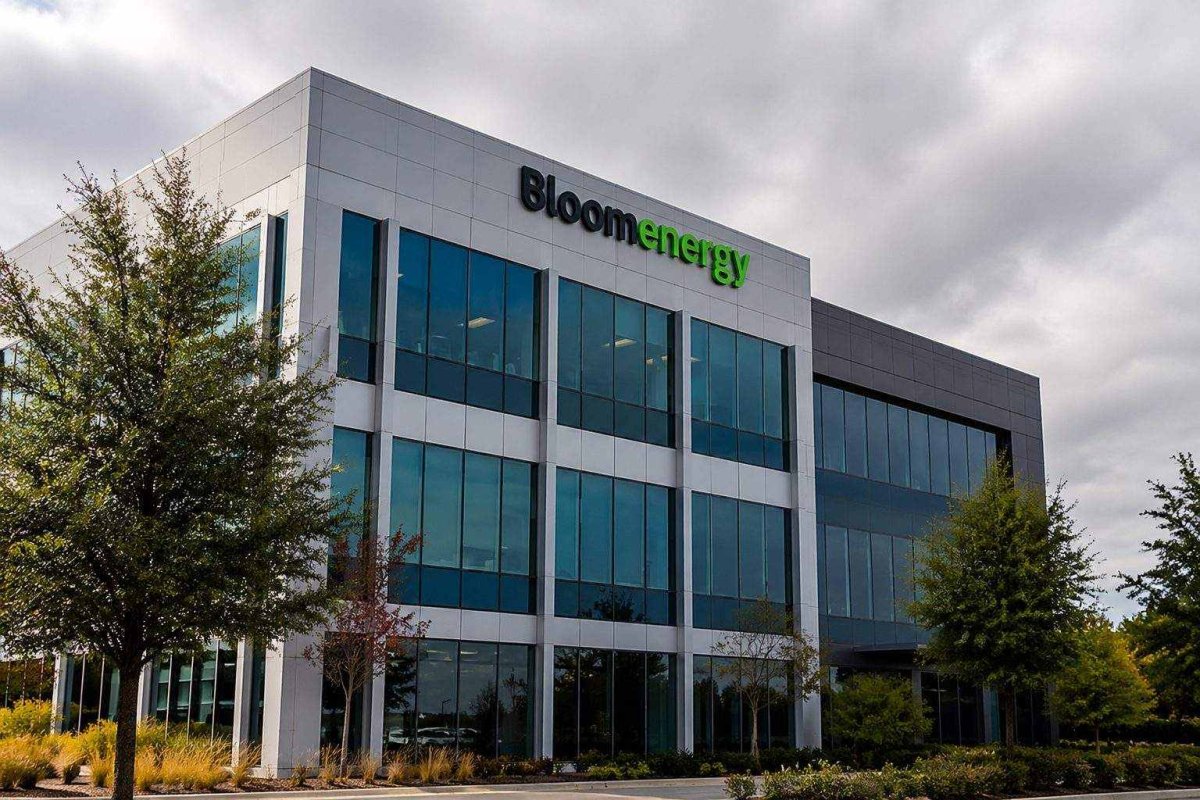
Bloom Energy (NYSE: BE) saw its shares surge 26% in early trading Thursday after the company disclosed that a single counterparty accounted for 73% of its second-quarter sales. The stock rose $43.25 to $207.00 by 9:51 a.m. EDT, following a 1.8% decline in the prior session.
The fuel-cell technology company reported Q2 revenue of $1.065 billion, surpassing the consensus estimate of $826.1 million by nearly 29%. Adjusted diluted earnings per share came in at $0.78, roughly double the $0.41 analysts had expected. The strong performance was largely attributed to one contractual partner contributing approximately $778 million in revenue.
GAAP gross margin improved to 33.4% from 26.7% in the year-ago quarter, while operating cash flow swung to positive $226.4 million from negative $213.1 million in Q2 2025. Revenue jumped 165.5% year-over-year, with product sales climbing 215.4%. Chief Executive KR Sridhar highlighted the company's role in AI onsite power, stating, "Bloom is now a standard for AI onsite power."
However, the concentration risk is notable. The top counterparty's share rose from 30% in Q2 2025 to 73% in the latest quarter, while the total share from reported counterparties remained steady at 73%. The company noted that its definition of "customer" can refer to a project-finance subsidiary rather than the ultimate end-user, which may skew the metric. Additionally, three clients accounted for 87% of receivables as of June 30, and warranty and product-performance obligations increased to $77.8 million from $20.0 million.
Management raised its 2026 revenue forecast for the second time this year. The updated midpoint of $4.05 billion is 26.6% higher than the February outlook, while the adjusted EPS midpoint of $2.70 is up 92% from the initial $1.41. To meet the midpoint, Bloom needs $2.234 billion in second-half revenue, averaging $1.117 billion per quarter—just 4.8% above Q2's level. The upper end of the range implies an average of $1.192 billion per quarter, or 11.9% above Q2.
Leading indicators offer some optimism. Customer deposits rose to $360.6 million from $78.2 million since December, and product and installation revenue under contract but not yet recognized grew 12% to $442.4 million. Despite these positive signs, the stock's valuation remains steep at 77 times the midpoint of adjusted EPS, and the lack of customer diversification continues to be a concern for investors.
The market's reaction reflects both the strong quarterly performance and the potential for future growth, but the concentration risk and high valuation suggest caution. As the company seeks to broaden its customer base, the path forward hinges on securing additional counterparties while maintaining its margin profile.