SoftBank Group Corp. reported a surge in quarterly net profit for the January-March period, with earnings more than tripling to ¥1.83 trillion (approximately $11.6 billion), driven largely by gains from its stake in OpenAI. The Japanese conglomerate's full-year net income attributable to owners of the parent soared to ¥5.002 trillion, up from ¥1.153 trillion a year earlier, marking the highest annual profit ever recorded by a Japanese company.
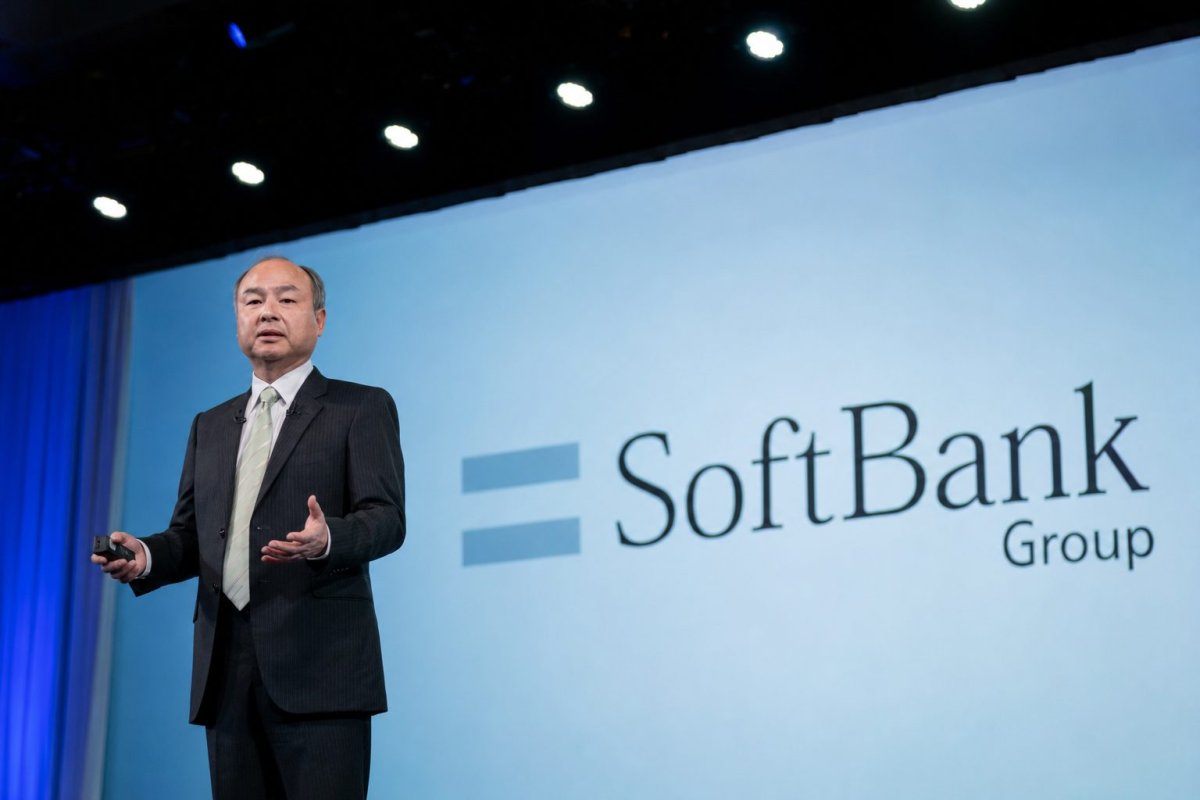
The results underscore the central role of Masayoshi Son's bet on artificial intelligence in SoftBank's earnings. The Vision Fund alone recorded a ¥3.1 trillion gain tied to OpenAI. Chief Financial Officer Yoshimitsu Goto highlighted the milestone, calling the roughly ¥5 trillion annual profit a record for any Japanese firm.
According to SoftBank's latest filing, the group had invested $34.6 billion in OpenAI as of March 31. The fair value of that stake reached $79.6 billion, representing a cumulative unrealized gain of $45.0 billion. However, the company has committed to significantly increasing its exposure. SoftBank reaffirmed its February pledge to invest $30 billion in OpenAI during 2026, with $10 billion already provided in April, another $10 billion expected in July, and a final $10 billion tranche in October. This would bring the total funded and committed investment to $64.6 billion.
The financing of these investments has raised questions. SoftBank drew $20 billion from a $40 billion bridge loan facility dated March 27, which is largely earmarked for additional OpenAI investments. The company repaid $2.5 billion in April, leaving $17.5 billion outstanding as of May 13. CFO Goto also floated the possibility of using the OpenAI holdings as collateral for a margin loan, describing the potential to leverage the ¥10 trillion asset as an exciting prospect.
However, the reliance on debt and the concentrated bet on OpenAI have drawn scrutiny. In March, S&P Global Ratings revised SoftBank's outlook to negative, warning that the increased allocation to OpenAI could squeeze liquidity and weaken asset quality. The gains from the OpenAI stake remain unrealized, as OpenAI is a private company, and any decline in its valuation would directly impact SoftBank's earnings.
Competition in the AI space is intensifying, with Alphabet Inc.'s Gemini and Anthropic's Claude among the challengers. The costs of developing and operating large AI models continue to climb. Nonetheless, Goto dismissed concerns, arguing that rivalry drives innovation and ultimately increases the overall value of the industry.
Prediction markets indicate uncertainty about OpenAI's path to public markets. On Polymarket, there is a 74% implied probability that OpenAI will not go public by the end of 2026. Contracts on Kalshi suggest roughly a 44% chance of an IPO announcement this year. These thinly traded contracts are not formal projections but highlight the unclear exit timeline for the private company.
Analysts have expressed caution. Jefferies' Atul Goyal described the funding dynamics as circular, noting that SoftBank's participation in funding rounds can inflate the value of its own stake. Richard Kaye of Comgest Asset Management acknowledged that SoftBank's track record as an investor is perhaps better than critics allow, pointing to support from assets like Arm Holdings and its Japanese telecom business.
SoftBank's stock closed 0.4% higher at ¥6,012 on the Tokyo Stock Exchange. The shares serve as one of the few public proxies for betting on OpenAI's valuation, making them sensitive to shifts in sentiment. For now, Son's OpenAI stake has delivered the profit boost he sought, but the real challenge lies in converting that paper windfall into sustainable cash flow without putting the balance sheet under pressure.