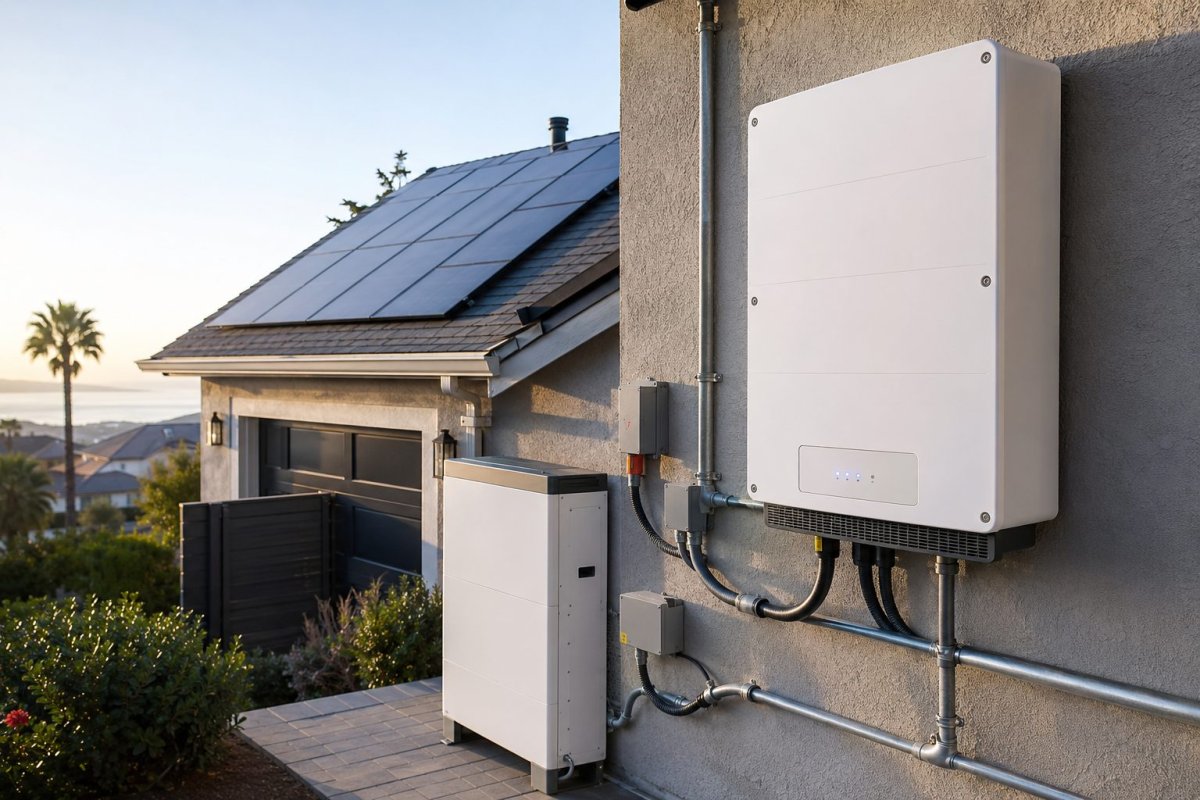
SolarEdge Technologies (NASDAQ: SEDG) experienced a significant stock surge on August 26, closing up 10.71% at $33.08, following a bullish analyst upgrade and a favorable regulatory development. The rally added approximately $197 million to the company's market capitalization, reflecting renewed investor optimism about its growth prospects.
The catalyst for the jump was a decision by UBS to raise its rating on SolarEdge from Neutral to Buy, while also increasing its price target from $36 to $42. This new target implies a potential upside of about 27% from the previous day's closing price. The upgrade was largely driven by recent U.S. restrictions on foreign-made connected inverters, which UBS believes could significantly benefit SolarEdge's domestic manufacturing presence.
FCC Rule Impact
On July 28, the Federal Communications Commission (FCC) placed foreign-made power inverters on its Covered List, making new devices from listed foreign entities ineligible for FCC certification. UBS estimates that suppliers affected by these measures account for more than half of the U.S. inverter market. This regulatory shift creates a substantial opportunity for SolarEdge, which produces commercial inverters at its Florida facility and residential units in Texas.
According to UBS, SolarEdge's domestic manufacturing footprint could enable the company to capture a larger market share and strengthen its pricing power. The broker's updated financial projections reflect this optimism, with adjusted EBITDA forecasts for 2027 and 2028 raised to $110 million and $190 million, respectively, up from $101 million and $173 million.
Trading Volume and Market Reaction
The stock's move was accompanied by heavy trading volume, with 6.53 million shares changing hands—more than double the three-month average of 3.08 million shares. This surge in activity underscores the heightened interest from institutional and retail investors alike, as they reassess SolarEdge's prospects in light of the regulatory tailwind.
Operational Snapshot
The policy-driven rally comes on the heels of a notable operational rebound. For the second quarter, SolarEdge reported revenue of $346.2 million, a 19.6% increase year-over-year. Gross margin improved significantly to 27.5%, up from 11.1% in the prior-year period. Battery shipments more than doubled to 426 megawatt-hours, indicating that energy storage is becoming a key growth driver, even as inverter shipments declined to 62,600 units from 86,200.
The company also generated $3.1 million in free cash flow during the quarter, and ended with $527.3 million in cash. However, inventory levels remain elevated at $599.8 million, a factor that could pressure near-term margins.
Short-Term Outlook and Analyst Sentiment
Despite the positive long-term outlook, SolarEdge's near-term guidance is less robust. The company projects third-quarter revenue of $325 million at the midpoint, which would represent a 6.1% decline from the second quarter. Management also expects gross margin to fall between 22% and 26%, reflecting ongoing cost pressures and competitive dynamics.
Analyst sentiment remains mixed. Among 25 analysts covering the stock, the consensus rating is Hold, with an average price target of $39.15, implying an 18.4% potential upside. Price targets range from $24 to $100, indicating a wide divergence in views on the company's trajectory.
Risks and Challenges
Investors should be mindful of several risks. The implementation of FCC rules could be delayed, subject to exemptions, or see changes in enforcement, which would diminish the competitive advantage SolarEdge currently enjoys. Additionally, demand for residential solar continues to be affected by high financing costs, which could temper growth. The stock's recent gains may have already priced in much of the expected regulatory benefit, leaving limited room for further upside if execution falls short.
Looking ahead, SolarEdge's key challenge is to convert the regulatory window into tangible sales growth while maintaining pricing discipline and avoiding inventory buildup. As of Wednesday's close, the market has largely embraced UBS's optimistic scenario, but the company must now deliver on its operational promises to sustain investor confidence.